Glucosamine
A naturally occurring amino sugar essential for building cartilage, widely used as a supplement for joint health and osteoarthritis management.
Evidence-led profile
Research snapshot
- Evidence stage
- Emerging research
- References
- 5 linked sources
- Research coverage
- 1 area
- Editorial review
- Mar 8, 2026
Published by the PepGuide Editorial Team using our research methodology.
Overview
Glucosamine is a naturally occurring amino monosaccharide that serves as a fundamental building block of glycosaminoglycans and proteoglycans, the structural components of cartilage, tendons, and ligaments. It is one of the most widely used dietary supplements worldwide, primarily taken for joint health support and the management of osteoarthritis symptoms. Glucosamine is available in several forms, including glucosamine sulfate, glucosamine hydrochloride, and N-acetylglucosamine.
The proposed mechanism of action involves providing the raw substrate needed for cartilage repair and maintenance. By supplementing exogenous glucosamine, the goal is to support chondrocyte metabolism and potentially slow the degradation of articular cartilage. Some studies suggest that glucosamine sulfate may also exert mild anti-inflammatory effects by modulating NF-kB signaling. Clinical evidence is mixed, with European studies showing moderate benefit for knee osteoarthritis while some large North American trials have been less conclusive.
Glucosamine is frequently combined with chondroitin sulfate in joint support formulations, and some protocols also include collagen peptides or hyaluronic acid for synergistic cartilage and joint fluid support. It is generally well tolerated, though individuals with shellfish allergies should exercise caution with shellfish-derived forms. Typical dosing ranges from 1,000–1,500 mg daily, and benefits may take 4–8 weeks of consistent supplementation to become apparent.
Research
Reported Effects
Delayed Onset:: Most users and studies note that benefits typically take 4-8 weeks of consistent use to become noticeable.. Sulfate vs. HCl:: Clinical consensus and user feedback suggest Glucosamine Sulfate is generally more effective than the Hydrochloride (HCl) version.. Synergistic Stacking:: Effectiveness is notably higher when combined with Chondroitin or MSM rather than taken alone.. Moderate Pain Focus:: It appears most effective for those with mild to moderate joint issues rather than severe, bone-on-bone arthritis.
Safety and Limitations
Safety Profile: Glucosamine
Common Side Effects
- Mild gastrointestinal symptoms (nausea, heartburn, diarrhea, constipation) are most frequently reported
- Bloating and abdominal pain
- Headache and drowsiness (uncommon but reported)
- Mild skin reactions (rash, itching) in sensitive individuals
- Shellfish-derived forms may cause allergic reactions in shellfish-allergic individuals
Serious Adverse Effects
- Blood glucose elevation: Glucosamine may impair glucose tolerance; clinically significant in diabetics or prediabetics, though recent evidence suggests the effect is modest in most people
- Hepatotoxicity: Rare case reports of elevated liver enzymes and cholestatic hepatitis
- Asthma exacerbation: Rare reports of worsening asthma symptoms
- Increased INR/bleeding: Case reports of potentiated warfarin effect
- Allergic reactions: Anaphylaxis possible with shellfish-derived glucosamine (rare)
Contraindications
- Known shellfish allergy (for shellfish-derived glucosamine; synthetic or vegetarian alternatives available)
- Poorly controlled diabetes mellitus (monitor blood glucose closely if used)
- Active bleeding disorders
- Pregnancy and lactation (insufficient safety data)
- Known hypersensitivity to glucosamine or any excipient
Drug Interactions
- Warfarin: May increase INR and bleeding risk; monitor coagulation parameters closely
- Diabetes medications (insulin, metformin, sulfonylureas): May counteract hypoglycemic effects; monitor blood glucose
- Tetracycline antibiotics: Glucosamine may increase absorption of tetracyclines
- NSAIDs: Generally compatible and may allow dose reduction, but monitor GI side effects
- Chemotherapy agents (topoisomerase II inhibitors): Theoretical concern of reduced efficacy based on in vitro data
- Acetaminophen: Combination is common and generally safe, but monitor hepatic function with prolonged use
Population-Specific Considerations
- Pregnancy/Lactation: Not recommended; no adequate controlled studies
- Diabetics: Monitor blood glucose regularly; effect on glycemic control is generally mild but variable
- Elderly: Well-tolerated; most clinical trial data come from older adults with osteoarthritis
- Children: Safety and efficacy not established for pediatric use
- Shellfish allergy: Use synthetic or vegetarian glucosamine (glucosamine hydrochloride from fermentation)
- Renal impairment: Limited data; use with caution at reduced doses
Common Side Effects
- Gastrointestinal Distress:: Some users report bloating, gas, or mild nausea, especially when taken on an empty stomach.
- Shellfish Allergy Risks:: Traditional glucosamine is derived from shellfish; users with allergies must seek 'vegan' or 'biofermented' versions.
- Asthma Warning:: Rare reports suggest potential for asthma exacerbations in predisposed individuals.
- Blood Sugar Impact:: Occasional user concerns regarding insulin sensitivity, though clinical data on this remains inconclusive.
Mechanism of Action
Glucosamine is an amino sugar (2-amino-2-deoxy-D-glucose) that serves as a fundamental building block for the synthesis of glycosaminoglycans (GAGs), proteoglycans, and glycoproteins that form the cartilage extracellular matrix. It enters cells through glucose transporters (GLUTs) and is processed through the hexosamine biosynthesis pathway (HBP), where it is converted to UDP-N-acetylglucosamine (UDP-GlcNAc), a critical precursor for the biosynthesis of hyaluronic acid, chondroitin sulfate, keratan sulfate, and heparan sulfate.
Beyond its role as a metabolic substrate, glucosamine exerts significant anti-inflammatory effects in chondrocytes through inhibition of the NF-κB signaling pathway. By preventing NF-κB activation, glucosamine downregulates the expression of pro-inflammatory cytokines such as IL-1β and TNF-α, as well as cartilage-degrading enzymes including matrix metalloproteinases (MMP-3, MMP-9, MMP-13) and aggrecanases. This dual action of promoting matrix synthesis while suppressing matrix degradation is central to its therapeutic rationale in osteoarthritis.
Glucosamine also suppresses inflammatory signaling by inhibiting phosphorylation of mitogen-activated protein kinases (p38, ERK, JNK) within chondrocytes. It does not act through a specific cell-surface receptor in the traditional ligand-receptor sense; rather, its effects are primarily metabolic and mediated through intracellular pathway modulation. The combination of substrate provision for cartilage repair and suppression of inflammatory catabolism makes glucosamine a dual-action compound for joint health maintenance.
Research protocol summary
- Typical Dose
- 1500 mg per day is the most common and clinically validated dosage used in studies.
These values summarize cataloged research protocols. They are not personal dosing instructions or medical guidance.
Molecular Structure
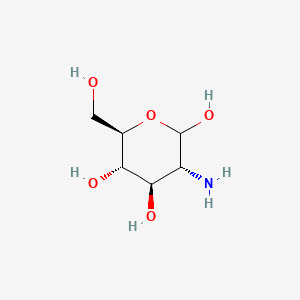
- Formula
- C6H13NO5
- Weight
- 179.17 Da
- PubChem CID
- 439213
- Exact Mass
- 179.0794 Da
- LogP
- -2.8
- TPSA
- 116 Ų
- H-Bond Donors
- 5
- H-Bond Acceptors
- 6
- Rotatable Bonds
- 1
- Complexity
- 155
Identifiers (SMILES, InChI)
InChI=1S/C6H13NO5/c7-3-5(10)4(9)2(1-8)12-6(3)11/h2-6,8-11H,1,7H2/t2-,3-,4-,5-,6?/m1/s1
MSWZFWKMSRAUBD-IVMDWMLBSA-NReferences (5)
- [4]Glucosamine and Chondroitin Use in Relation to C-Reactive Protein Concentration: Results by Supplement Form, Formulation, and Dose
→ This study found that regular glucosamine use is associated with lower levels of C-reactive protein (CRP), indicating its potential role in reducing systemic inflammation.
- [5]Glucosamine sulfate for osteoarthritis
→ A clinical review highlighting that glucosamine sulfate may act as a chondroprotective agent, potentially reversing or stopping the progression of joint disease.
- [1]Efficacy and tolerability of an undenatured type II collagen supplement in modulating knee osteoarthritis symptoms: a multicenter randomized, double-blind, placebo-controlled study
→ This study found that while glucosamine and chondroitin provided some relief for knee osteoarthritis, undenatured type II collagen was significantly more effective at reducing pain and improving functional scores.
- [2]Association of habitual glucosamine use with risk of cardiovascular disease: prospective study in UK Biobank
→ A large-scale prospective study suggesting that regular use of glucosamine supplements is associated with a lower risk of cardiovascular disease events and death.
- [3]Liquid combination of hyaluronan, glucosamine, and chondroitin as a dietary supplement for knee osteoarthritis patients with moderate knee pain
→ Researchers demonstrated that a daily liquid supplement containing glucosamine significantly improved physical function and quality of life in patients with moderate knee pain over 8 weeks.
Continue researching Glucosamine
Keep scientific evidence separate from commercial availability. Review how claims are evaluated, explore question-led research paths, or inspect disclosed source records without changing the editorial conclusions on this page.