Glycerol
A simple sugar alcohol used as a hyperhydrating agent in sports performance to increase plasma volume and improve endurance in hot conditions.
Evidence-led profile
Research snapshot
- Evidence stage
- Emerging research
- References
- 4 linked sources
- Research coverage
- 1 area
- Editorial review
- Mar 8, 2026
Published by the PepGuide Editorial Team using our research methodology.
Overview
Glycerol, also known as glycerin, is a three-carbon sugar alcohol that occurs naturally as the backbone of triglycerides and phospholipids. In the context of sports performance and supplementation, glycerol is used as a hyperhydrating agent due to its osmotic properties. When consumed with adequate fluids, glycerol increases total body water retention by creating an osmotic gradient that reduces urinary water loss, effectively expanding plasma volume by 300–700 mL.
The primary application of glycerol supplementation is in endurance sports and activities performed in hot or humid environments where thermoregulatory stress is significant. By increasing the body's water reservoir, glycerol hyperhydration has been shown to delay dehydration, lower core body temperature, and improve time to exhaustion in some studies. It has also been investigated for its potential to enhance cardiovascular efficiency during prolonged exercise by maintaining stroke volume and cardiac output. The typical loading protocol involves consuming 1–1.5 g/kg of glycerol with 25–30 mL/kg of fluid approximately 60–90 minutes before exercise.
Glycerol is sometimes included in pre-workout formulations alongside compounds like creatine and citrulline for a combined volumizing and performance effect. Side effects are generally mild and may include bloating, nausea, or headache at higher doses. It is worth noting that glycerol was previously on the World Anti-Doping Agency (WADA) prohibited list as a plasma expander but was removed in 2018. Athletes should always verify current regulatory status with their governing body.
Research
Reported Effects
Dose-Dependent Response:: Effectiveness strongly correlates with proper dosing protocol (1.0-1.2g/kg bodyweight) combined with adequate fluid intake. Form Matters:: Glycerol monostearate (65% glycerol) and pure glycerol powder show better results than lower-concentration forms. Timing Critical:: Most effective when consumed 30-60 minutes pre-workout with substantial water intake (20-26 mL/kg bodyweight). Individual Variation:: Response varies significantly based on hydration status, exercise intensity, and environmental conditions (heat, humidity)
Safety and Limitations
Safety Profile: Glycerol
Common Side Effects
- Headache (most frequently reported, especially with oral hyperhydration protocols)
- Nausea and vomiting (dose-dependent, common at >1 g/kg body weight)
- Bloating and gastrointestinal discomfort
- Diarrhea (osmotic effect at high oral doses)
- Excessive thirst and dry mouth
- Dizziness and lightheadedness
Serious Adverse Effects
- Hyperosmolarity: Large oral or IV doses can cause significant plasma hyperosmolarity, leading to cellular dehydration
- Intracranial hypertension rebound: When used to reduce intracranial pressure, rebound elevations may occur upon discontinuation
- Hemolysis: IV glycerol (if not properly diluted) can cause intravascular hemolysis
- Hyperglycemia: Glycerol is a gluconeogenic substrate; may elevate blood glucose
- Cardiac arrhythmias: Fluid and electrolyte shifts can precipitate arrhythmias in susceptible individuals
- Pulmonary edema: Risk with aggressive IV administration due to osmotic fluid shifts
Contraindications
- Severe dehydration or anuria
- Congestive heart failure (fluid overload risk)
- Severe renal impairment (impaired clearance)
- Diabetic ketoacidosis or poorly controlled diabetes
- Hyperosmolar states
- Known hypersensitivity to glycerol
Drug Interactions
- Diuretics: Additive dehydration and electrolyte imbalance effects
- Insulin/hypoglycemics: Glycerol may increase blood glucose via gluconeogenesis
- Antihypertensives: Fluid shifts may affect blood pressure control
- Corticosteroids: Combined fluid retention and metabolic effects
- Mannitol: Additive osmotic effects; avoid concurrent use for ICP management without close monitoring
- Alcohol: Glycerol is metabolized via alcohol dehydrogenase; competition may alter metabolism of both substances
Population-Specific Considerations
- Pregnancy/Lactation: Generally recognized as safe (GRAS) in food amounts; medicinal doses lack adequate safety data
- Diabetes: Monitor blood glucose closely; glycerol is a gluconeogenic substrate
- Cardiovascular disease: Use with caution due to fluid shifts and volume expansion
- Renal impairment: Reduce dose or avoid; impaired clearance increases risk of hyperosmolarity
- Athletes: Glycerol hyperhydration protocols (1-1.2 g/kg) were banned by WADA prior to 2018; now permitted but monitor for GI side effects
- Elderly: Increased sensitivity to fluid and electrolyte shifts; start with lower doses
Common Side Effects
- Gastrointestinal Distress:: Some users report nausea, bloating, or stomach discomfort, particularly with higher doses or insufficient acclimation period
- Light-Headedness:: Occasional reports of dizziness or feeling off-balance, especially when not consumed with adequate fluids
- Frequent Urination:: While glycerol promotes fluid retention, some users still experience increased urination, particularly during initial adaptation
- Headaches:: Rare reports of headaches, possibly related to rapid fluid shifts or electrolyte imbalances when not properly hydrated
Mechanism of Action
Glycerol (glycerin) is a three-carbon polyol that functions primarily through its osmotic properties in the context of sports physiology and hydration. When consumed with adequate fluid, glycerol increases the osmolality of body fluids, creating an osmotic gradient that promotes water retention by the kidneys and reduces urine output. This results in hyperhydration—an expansion of both intracellular and extracellular fluid volumes that can delay dehydration during prolonged exercise in hot environments.
Glycerol distributes rapidly across body water compartments through aquaporin channels, particularly AQP3, AQP7, and AQP9, which are glycerol-permeable aquaglyceroporins expressed in kidney, adipose tissue, and liver respectively. In the liver, glycerol serves as a gluconeogenic substrate: it is phosphorylated by glycerol kinase to glycerol-3-phosphate, oxidized to dihydroxyacetone phosphate (DHAP), and then converted to glucose through the gluconeogenic pathway. This provides a supplementary energy source during prolonged exercise.
Additionally, glycerol participates in the glycerol-3-phosphate shuttle, transferring cytosolic NADH reducing equivalents to the mitochondrial electron transport chain for ATP production. In adipose tissue, glycerol is released during lipolysis as triglycerides are hydrolyzed, serving as an indicator of fat mobilization. The hyperhydration effect of glycerol is its primary ergogenic mechanism, improving thermoregulation and cardiovascular function during heat stress by maintaining plasma volume and supporting sweat production.
Molecular Structure
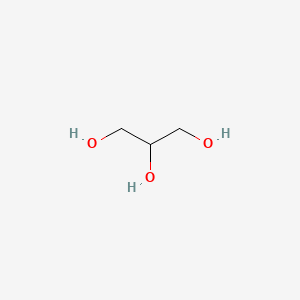
- Formula
- C3H8O3
- Weight
- 92.09 Da
- PubChem CID
- 753
- Exact Mass
- 92.0473 Da
- LogP
- -1.8
- TPSA
- 60.7 Ų
- H-Bond Donors
- 3
- H-Bond Acceptors
- 3
- Rotatable Bonds
- 2
- Complexity
- 25
Identifiers (SMILES, InChI)
InChI=1S/C3H8O3/c4-1-3(6)2-5/h3-6H,1-2H2
PEDCQBHIVMGVHV-UHFFFAOYSA-NReferences (4)
- [1]Guidelines for Glycerol Use in Hyperhydration and Rehydration Associated with Exercise
→ Endurance athletes intending to hyperhydrate with glycerol should ingest 1.2 g/kg bodyweight in 26 mL/kg bodyweight of fluid over 60 minutes, 30 minutes prior to exercise. Glycerol ingestion before, during, or following exercise is likely to improve hydration state and performance.
- [2]Glycerol: Biochemistry, Pharmacokinetics and Clinical and Practical Applications
→ Comprehensive review of glycerol's mechanism as a hyperhydrating agent through osmotic gradient creation in circulation, examining its pharmacokinetics and applications in athletic performance and medical settings.
- [3]The Effect of Glycerol Supplements on Aerobic and Anaerobic Performance of Athletes and Sedentary Subjects
→ Study comparing glycerol supplementation effects on both trained athletes and sedentary individuals, finding improvements in both aerobic endurance capacity and anaerobic performance measures when properly dosed.
- [4]Glycerol Use in Hyperhydration and Rehydration: Scientific Update
→ Updated scientific review examining the efficacy of glycerol for both pre-exercise hyperhydration protocols and post-exercise rehydration strategies, confirming benefits for maintaining plasma volume and delaying dehydration.
Continue researching Glycerol
Keep scientific evidence separate from commercial availability. Review how claims are evaluated, explore question-led research paths, or inspect disclosed source records without changing the editorial conclusions on this page.