Huperzine A
A potent, naturally-derived acetylcholinesterase inhibitor from Chinese club moss that enhances memory, neuroprotection, and cognitive function.
Evidence-led profile
Research snapshot
- Evidence stage
- Emerging research
- References
- 7 linked sources
- Research coverage
- 1 area
- Editorial review
- Mar 8, 2026
Published by the PepGuide Editorial Team using our research methodology.
Overview
Huperzine A is a sesquiterpene alkaloid originally isolated from the Chinese club moss Huperzia serrata (Qian Ceng Ta), a plant used in Traditional Chinese Medicine for centuries to treat fever, inflammation, and cognitive complaints. It is one of the most potent naturally occurring reversible inhibitors of acetylcholinesterase (AChE), with a binding affinity and selectivity that rivals or exceeds synthetic AChE inhibitors such as donepezil and rivastigmine. By preventing the breakdown of acetylcholine in the synaptic cleft, huperzine A enhances cholinergic neurotransmission — a mechanism directly relevant to memory formation, attention, and learning.
Beyond AChE inhibition, huperzine A possesses multiple neuroprotective mechanisms that distinguish it from conventional cholinesterase inhibitors. It acts as an NMDA receptor antagonist, protecting neurons from glutamate-induced excitotoxicity — a key driver of neurodegeneration in Alzheimer's disease and ischemic brain injury. It also reduces oxidative stress, attenuates mitochondrial dysfunction, upregulates nerve growth factor (NGF) expression, and inhibits beta-amyloid peptide aggregation. Chinese clinical trials involving patients with Alzheimer's disease and vascular dementia have reported significant improvements in cognitive scores (MMSE and ADL scales) at doses of 200–400 mcg/day, though larger Western trials are needed to confirm these findings.
As a nootropic, huperzine A is popular in cognitive enhancement stacks, often combined with alpha-gpc (which supplies the acetylcholine precursor choline) and lion-s-mane for complementary neurotrophic support. Its long duration of action (half-life of approximately 10–14 hours) allows once-daily dosing but also necessitates cycling protocols — commonly 2–4 weeks on followed by 1–2 weeks off — to prevent cholinergic side effects such as nausea, diarrhea, and vivid dreams. Huperzine A's dual mechanism (cholinergic enhancement plus NMDA antagonism) makes it particularly interesting for age-related cognitive decline and complements other neuroprotective compounds like honokiol and bacopa-monnieri.
Research
Reported Effects
Potent AChE Inhibitor:: More selective than donepezil.. Long-Lasting:: Effects persist due to long half-life.. Synergy:: Works well with choline sources.
Safety and Limitations
Safety Profile: Huperzine A
Common Side Effects
- Nausea and vomiting (most commonly reported, dose-dependent)
- Diarrhea and abdominal cramps
- Dizziness and headache
- Sweating (increased cholinergic activity)
- Blurred vision
- Muscle twitching and fasciculations
- Insomnia (if taken later in the day)
- Loss of appetite
- Increased salivation and rhinorrhea
Serious Adverse Effects
- Cholinergic crisis: Excessive acetylcholinesterase inhibition can lead to severe cholinergic toxicity (bradycardia, hypotension, bronchospasm, excessive secretions, seizures) — particularly at high doses or in combination with other cholinesterase inhibitors
- Cardiac effects: Bradycardia and heart block due to excessive vagal tone from cholinergic stimulation
- Seizures: Paradoxical seizure activity reported at high doses despite neuroprotective properties at lower doses
- Respiratory depression: Severe cholinergic excess can cause bronchospasm and respiratory failure
- GI hemorrhage: Increased gastric acid secretion may exacerbate peptic ulcers
Contraindications
- Known hypersensitivity to huperzine A or Huperzia serrata
- Concurrent use of other cholinesterase inhibitors (donepezil, rivastigmine, galantamine) — risk of cholinergic crisis
- Active peptic ulcer disease or GI bleeding (increased acid secretion)
- Asthma or COPD (bronchospasm risk from cholinergic stimulation)
- Cardiac conduction disorders (sick sinus syndrome, AV block) — bradycardia risk
- Urinary tract or intestinal obstruction (increased smooth muscle activity)
- Seizure disorders (variable effects on seizure threshold)
- Pregnancy and lactation
Drug Interactions
- Cholinesterase inhibitors (donepezil, rivastigmine, galantamine): Additive cholinergic toxicity; never combine
- Cholinergic agonists (bethanechol, pilocarpine): Enhanced cholinergic effects
- Anticholinergic drugs (atropine, diphenhydramine, oxybutynin): Pharmacological antagonism; may reduce efficacy of both
- Beta-blockers: Additive bradycardic effects
- Succinylcholine and other depolarizing neuromuscular blockers: Prolonged neuromuscular blockade
- NSAIDs: Increased GI bleeding risk due to elevated gastric acid
- Anesthetics: Discontinue before surgery; interactions with anesthetic agents and muscle relaxants
Population-Specific Considerations
- Alzheimer's/dementia patients: Most studied indication; appears modestly effective but must not be combined with prescription cholinesterase inhibitors
- Pregnancy/Lactation: Avoid; no safety data. Cholinergic stimulation may affect uterine smooth muscle
- Children/Adolescents: Limited studies in cognitive enhancement; safety not well-established
- Elderly: Primary target population but higher sensitivity to cholinergic side effects; start at lowest dose (50 mcg twice daily)
- Cardiac patients: Avoid in bradycardia or conduction disorders; ECG monitoring recommended
- Respiratory disease: Contraindicated in asthma/COPD due to bronchoconstriction risk
Common Side Effects
- Cholinergic Effects:: Nausea, headache, muscle twitching possible.
- GI Issues:: Digestive discomfort in some users.
- Accumulation:: Can build up due to long half-life.
- Not with AChE Inhibitors:: Avoid combining with donepezil or similar drugs.
Mechanism of Action
Huperzine A is a sesquiterpene alkaloid isolated from the Chinese club moss (Huperzia serrata) that acts as a highly potent, reversible, and selective inhibitor of acetylcholinesterase (AChE). By binding to the active site gorge of AChE, it prevents the hydrolysis of acetylcholine in the synaptic cleft, increasing both the concentration and duration of action of this neurotransmitter at cholinergic synapses. This enhanced cholinergic transmission directly improves cognitive functions including memory formation, learning, and sustained attention. Huperzine A demonstrates greater AChE selectivity than many pharmaceutical inhibitors (donepezil, rivastigmine), with minimal inhibition of butyrylcholinesterase (BuChE), resulting in a favorable side-effect profile.
Beyond cholinergic enhancement, Huperzine A provides neuroprotection through NMDA receptor antagonism. It acts as a non-competitive antagonist at NMDA-type glutamate receptors, reducing excessive calcium influx that occurs during glutamate excitotoxicity -- a pathological process implicated in neuronal death in Alzheimer's disease, stroke, and traumatic brain injury. This dual mechanism (AChE inhibition plus NMDA antagonism) is unique among cholinesterase inhibitors and provides both symptomatic cognitive improvement and disease-modifying neuroprotection.
Additional neuroprotective mechanisms include mitochondrial protection -- Huperzine A preserves mitochondrial membrane integrity, reduces cytochrome c release, and prevents activation of apoptotic caspase cascades, particularly under conditions of beta-amyloid toxicity and oxidative stress. It also demonstrates direct antioxidant activity, reducing reactive oxygen species (ROS) production and lipid peroxidation in neuronal tissues. These combined properties -- enhanced cholinergic transmission, glutamate excitotoxicity protection, mitochondrial stabilization, and antioxidant defense -- make Huperzine A one of the most comprehensively studied natural nootropics for cognitive enhancement and Alzheimer's disease management.
Research protocol summary
- Typical Dose
- 50-200mcg once or twice daily.
These values summarize cataloged research protocols. They are not personal dosing instructions or medical guidance.
Molecular Structure
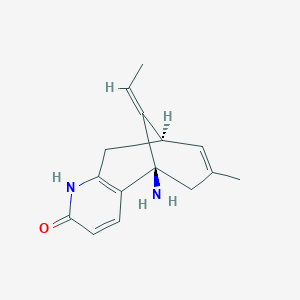
- Formula
- C15H18N2O
- Weight
- 242.32 Da
- PubChem CID
- 854026
- Exact Mass
- 242.1419 Da
- LogP
- 0
- TPSA
- 55.1 Ų
- H-Bond Donors
- 2
- H-Bond Acceptors
- 2
- Rotatable Bonds
- 0
- Complexity
- 551
Identifiers (SMILES, InChI)
InChI=1S/C15H18N2O/c1-3-11-10-6-9(2)8-15(11,16)12-4-5-14(18)17-13(12)7-10/h3-6,10H,7-8,16H2,1-2H3,(H,17,18)/b11-3+/t10-,15+/m0/s1
ZRJBHWIHUMBLCN-YQEJDHNASA-NReferences (7)
- [1]Huperzine A and Its Neuroprotective Molecular Signaling in Alzheimer's Disease
→ Reviews how Huperzine A, an alkaloid from club moss, interacts with molecular pathways including Wnt signaling, synaptic mechanisms, and amyloid-β accumulation to provide neuroprotection.
- [2]Ginkgolides and Huperzine A for complementary treatment of Alzheimer's disease
→ Highlights positive outcomes from plant-based therapies including Huperzine A in improving cognitive function and neuropsychiatric symptoms in Alzheimer's patients.
- [3]Delineating biosynthesis of Huperzine A, A plant-derived medicine for the treatment of Alzheimer's disease
→ Explores alternative production methods for Huperzine A, including biosynthesis and pathway engineering, to address supply constraints from slow-growing plant sources.
- [4]Disease-Modifying Activity of Huperzine A on Alzheimer's Disease: Evidence from Preclinical Studies on Rodent Models
→ Animal studies demonstrate Huperzine A's potential to improve memory and reduce harmful brain substances, though findings require further confirmation.
- [5]The effects of Huperzine A on dementia and mild cognitive impairment: An overview of systematic reviews
→ Meta-analysis finding Huperzine A may benefit Alzheimer's patients with cognitive function but lacks sufficient evidence for other cognitive impairments.
- [6]Neuroprotective effect of huperzine-A against cadmium chloride-induced Huntington's disease in Drosophila melanogaster model
→ Laboratory studies suggest Huperzine A reduces neurodegenerative symptoms in cell and fly models, indicating promise for Huntington's disease.
- [7]Huperzine A injection ameliorates motor and cognitive abnormalities via regulating multiple pathways in a murine model of Parkinson's disease
→ Injectable Huperzine A improved motor and cognitive function in mice with Parkinson's disease by reducing inflammation and oxidative stress.
Continue researching Huperzine A
Keep scientific evidence separate from commercial availability. Review how claims are evaluated, explore question-led research paths, or inspect disclosed source records without changing the editorial conclusions on this page.