L-Theanine
A unique amino acid found primarily in tea leaves that promotes calm alertness by modulating alpha brain waves, GABA, and glutamate neurotransmission without sedation.
Evidence-led profile
Research snapshot
- Evidence stage
- Emerging research
- References
- 10 linked sources
- Research coverage
- 1 area
- Editorial review
- Mar 8, 2026
Published by the PepGuide Editorial Team using our research methodology.
Overview
L-Theanine (gamma-glutamylethylamide) is a non-proteinogenic amino acid found almost exclusively in Camellia sinensis (tea plant) and certain species of Boletus mushrooms. It is the compound primarily responsible for the characteristic "calm focus" associated with tea drinking — an effect distinct from the stimulation of caffeine alone. L-Theanine crosses the blood-brain barrier within approximately 30 minutes of ingestion and exerts its effects through multiple neurochemical pathways: it increases alpha-wave EEG activity (the brainwave pattern associated with relaxed, wakeful attention), enhances GABA and dopamine levels, modulates serotonin, and — critically — acts as a structural analog of glutamate that binds to glutamate receptors (AMPA, kainate, and to a lesser extent NMDA) to attenuate excitatory neurotransmission without causing sedation.
The synergistic pairing of L-theanine with caffeine is one of the most well-validated nootropic combinations in human research. Multiple randomized controlled trials demonstrate that 100–200 mg of L-theanine combined with 50–100 mg of caffeine improves attention, task switching, alertness, and accuracy to a greater degree than either compound alone, while reducing caffeine's tendency to produce jitteriness, anxiety, and blood pressure elevation. This combination naturally occurs in green tea (which contains roughly 25 mg of L-theanine per cup) and has become a foundational stack in cognitive enhancement protocols. EEG studies confirm that L-theanine increases alpha-wave activity within 30–45 minutes, with peak effects lasting 2–3 hours.
Beyond cognitive enhancement, L-theanine demonstrates anxiolytic effects comparable to low-dose benzodiazepines in some studies, without the cognitive impairment, tolerance, or dependence associated with GABAergic drugs. Clinical trials in generalized anxiety, ADHD (as an adjunct), and sleep quality (particularly at 200–400 mg before bed) have shown positive results. L-theanine also supports immune function by enhancing gamma-delta T cell activity and has shown neuroprotective properties against glutamate excitotoxicity in preclinical models. It complements other calming compounds such as ashwagandha for adaptogenic stress support, magnesium-l-threonate for magnesium-based relaxation, and lemon-balm for combined GABAergic anxiolysis. With its excellent safety profile, absence of sedation, and broad availability, L-theanine is among the most accessible and evidence-supported compounds for stress management and cognitive optimization.
Research
Reported Effects
Caffeine Synergy:: Most popular use is with caffeine for focused energy.. Fast Acting:: Effects typically felt within 30-60 minutes.. Consistent Results:: Reliably produces calming effects.
Safety and Limitations
Safety Profile: L-Theanine
Common Side Effects
- Very well-tolerated in most individuals at doses of 100–400 mg/day
- Mild drowsiness or relaxation (intended effect but may be excessive in sensitive individuals)
- Headache (uncommon, usually mild and transient)
- Gastrointestinal discomfort: mild nausea or stomach upset (rare)
- Dizziness at higher doses (>400 mg)
- Slight reduction in blood pressure (usually subclinical)
Serious Adverse Effects
- Significant adverse effects are rare at typical supplemental doses
- Excessive sedation when combined with other GABAergic or sedative substances
- Theoretical concern for excessive blood pressure reduction in individuals already on antihypertensives (may cause hypotension or dizziness)
- Very rare allergic reactions to theanine supplements (may relate to excipients or tea-derived contaminants rather than theanine itself)
- No organ toxicity documented in human clinical trials at doses up to 900 mg/day for 8 weeks
- Animal studies show safety at extremely high doses (>4000 mg/kg); human lethal dose has not been established
Contraindications
- Known hypersensitivity to L-theanine or tea-derived products
- Caution in individuals with significantly low blood pressure (chronic hypotension)
- Not an absolute contraindication, but caution advised when combining with sedative medications or alcohol
Drug Interactions
- Antihypertensives (ACE inhibitors, ARBs, beta-blockers, calcium channel blockers): additive blood pressure–lowering effects; monitor blood pressure
- Sedatives and anxiolytics (benzodiazepines, zolpidem, gabapentin): additive sedation and CNS depression
- Stimulants (caffeine, amphetamines, methylphenidate): L-theanine may modulate stimulant effects — often used deliberately in combination with caffeine, but may reduce desired stimulatory effects at higher theanine doses
- Chemotherapy agents: some in vitro studies suggest theanine may enhance the efficacy of certain chemotherapeutics (doxorubicin); clinical relevance and safety of this interaction are not established
- Alcohol: additive CNS depression; may increase drowsiness and impair coordination
Population-Specific Considerations
- Pregnancy: L-theanine is found naturally in tea; however, supplemental doses have not been adequately studied in pregnancy; limit to amounts naturally present in moderate tea consumption
- Lactation: present in tea; supplemental doses not studied; moderate tea consumption is generally considered safe
- Children: limited formal studies; some research supports use for ADHD symptom management at 200–400 mg/day in children aged 8+, but medical supervision is recommended
- Elderly: well-suited as a mild anxiolytic with good tolerability; monitor for additive effects with existing medications, particularly antihypertensives and sedatives
- Caffeine-sensitive individuals: L-theanine combined with caffeine (as in green tea) may mitigate caffeine jitteriness but does not eliminate caffeine side effects entirely
Common Side Effects
- Extremely Safe:: Very few side effects reported.
- Possible Drowsiness:: At high doses, some may feel sleepy.
- Lower Blood Pressure:: May slightly reduce blood pressure.
- Drug Interactions:: Minimal; generally safe with most substances.
Mechanism of Action
L-Theanine (gamma-glutamylethylamide) is a non-proteinogenic amino acid found primarily in Camellia sinensis (tea plant) that readily crosses the blood-brain barrier via the leucine-preferring transport system. Its primary mechanism involves structural similarity to L-glutamate, allowing it to bind to glutamate receptors (AMPA, kainate, and NMDA subtypes) as a weak antagonist, thereby reducing excessive glutamatergic neurotransmission without fully blocking receptor activity. This partial antagonism at glutamate receptors produces anxiolytic effects without the sedation associated with full receptor blockade.
L-Theanine increases brain levels of GABA (gamma-aminobutyric acid), serotonin, and dopamine by modulating their respective biosynthetic enzymes. It enhances GABA production by serving as a substrate for glutamate decarboxylase and by increasing glutamine availability for GABA synthesis. The compound promotes alpha brain wave activity (8-14 Hz), particularly in the occipital and parietal regions, which is associated with a state of relaxed alertness and creative thinking. This alpha wave enhancement occurs within 30-40 minutes of ingestion and is the neurophysiological basis for L-theanine's characteristic promotion of calm focus without drowsiness. The combination with caffeine produces synergistic effects on attention and task-switching performance.
Beyond its neurotransmitter effects, L-theanine modulates the hypothalamic-pituitary-adrenal (HPA) axis, reducing cortisol and corticosterone levels during acute stress. It inhibits cortical neuron excitotoxicity by attenuating glutamate-induced calcium influx and reducing oxidative stress through enhanced glutathione synthesis. L-theanine also demonstrates neuroprotective properties by upregulating brain-derived neurotrophic factor (BDNF) and by inhibiting lipid peroxidation in neuronal membranes. In the periphery, it supports immune function by enhancing gamma-delta T-cell proliferation and potentiating the innate immune response against microbial pathogens.
Research protocol summary
- Typical Dose
- 100-400mg daily.
These values summarize cataloged research protocols. They are not personal dosing instructions or medical guidance.
Molecular Structure
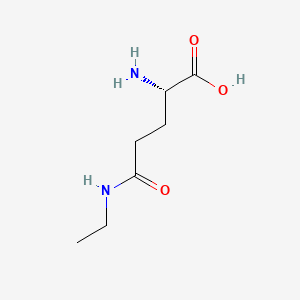
- Formula
- C7H14N2O3
- Weight
- 174.20 Da
- PubChem CID
- 439378
- Exact Mass
- 174.1004 Da
- LogP
- -3.6
- TPSA
- 92.4 Ų
- H-Bond Donors
- 3
- H-Bond Acceptors
- 4
- Rotatable Bonds
- 5
- Complexity
- 170
Identifiers (SMILES, InChI)
InChI=1S/C7H14N2O3/c1-2-9-6(10)4-3-5(8)7(11)12/h5H,2-4,8H2,1H3,(H,9,10)(H,11,12)/t5-/m0/s1
DATAGRPVKZEWHA-YFKPBYRVSA-NReferences (10)
- [2]L-Theanine and Immunity: A Review
→ L-theanine enhances immune function, reduces immunosuppression, and serves as an immunomodulator for inflammation management.
- [1]l-Theanine: An astounding sui generis integrant in tea
→ L-theanine offers potential health benefits including anti-stress and neuroprotective effects with modulation of anti-neoplastic agents.
- [3]l-Theanine Activates the Browning of White Adipose Tissue Through the AMPK Axis and Ameliorates Diet-Induced Obesity
→ L-theanine triggers white adipose tissue browning and reduces diet-induced obesity by enhancing thermogenesis.
- [4]l-Theanine reduces psychological and physiological stress responses
→ L-theanine intake decreases stress responses through inhibition of cortical neuron excitation during acute stress.
- [5]L-theanine: an astounding sui generis amino acid in poultry nutrition
→ L-theanine demonstrates antioxidant, growth-promoting, immune-boosting, and anti-stress benefits in poultry applications.
- [6]L-theanine relieves symptoms in patients with schizophrenia: an 8-week, randomized, double-blind study
→ L-theanine augmentation of antipsychotic therapy improves positive, activation, and anxiety symptoms in schizophrenia.
- [7]l-Theanine regulates glucose, lipid, and protein metabolism via insulin and AMP-activated protein kinase signaling
→ L-theanine regulates metabolism in rats through insulin and AMPK signaling mechanisms.
- [8]Psychotropic effects of L-theanine and its clinical properties
→ L-theanine demonstrates promising therapeutic potential for managing anxiety disorders and stress.
- [9]L-theanine in the adjunctive treatment of generalized anxiety disorder
→ L-theanine showed limited efficacy for anxiety reduction but may improve sleep satisfaction in those with insomnia symptoms.
- [10]An overview of biological production of L-theanine
→ Bacterial enzymes demonstrate potential for producing L-theanine for human health and food applications.
Continue researching L-Theanine
Keep scientific evidence separate from commercial availability. Review how claims are evaluated, explore question-led research paths, or inspect disclosed source records without changing the editorial conclusions on this page.