Omega-3
A family of essential polyunsaturated fatty acids — primarily EPA and DHA — derived from marine and plant sources, with well-established anti-inflammatory, cardiovascular, and neuroprotective properties supported by extensive clinical evidence.
Evidence-led profile
Research snapshot
- Evidence stage
- Emerging research
- References
- 8 linked sources
- Research coverage
- 1 area
- Editorial review
- Mar 8, 2026
Published by the PepGuide Editorial Team using our research methodology.
Overview
Omega-3 fatty acids are a class of polyunsaturated fatty acids (PUFAs) characterized by a double bond at the third carbon from the methyl terminus. The three biologically most important omega-3s are alpha-linolenic acid (ALA, 18:3n-3) from plant sources, eicosapentaenoic acid (EPA, 20:5n-3) and docosahexaenoic acid (DHA, 22:6n-3) from marine sources. ALA is an essential fatty acid that cannot be synthesized de novo, while EPA and DHA can theoretically be produced from ALA through elongation and desaturation — though conversion rates in humans are extremely low (typically <5% for EPA and <0.5% for DHA), making dietary or supplemental intake of preformed EPA and DHA practically essential. DHA constitutes approximately 40% of the polyunsaturated fatty acids in brain gray matter phospholipids and over 60% of fatty acids in retinal photoreceptor outer segments, underscoring its structural importance in neural tissue.
The therapeutic effects of omega-3 fatty acids are mediated through multiple interconnected mechanisms. EPA and DHA serve as substrates for specialized pro-resolving mediators (SPMs) — resolvins, protectins, and maresins — that actively resolve inflammation rather than merely suppressing it, representing a paradigm shift in understanding anti-inflammatory pharmacology. EPA competes with arachidonic acid for cyclooxygenase and lipoxygenase enzymes, reducing production of pro-inflammatory 2-series prostaglandins and 4-series leukotrienes. Cardiovascular benefits include triglyceride reduction (30–50% at pharmacological doses), anti-arrhythmic effects, improved endothelial function, and reduced platelet aggregation. The REDUCE-IT trial demonstrated a 25% relative risk reduction in cardiovascular events with high-dose EPA (icosapent ethyl 4 g/day). Neurologically, DHA is critical for synaptic membrane fluidity, neurotransmitter receptor function, and BDNF expression, with observational data linking higher omega-3 status to reduced risk of cognitive decline and depression.
Standard supplemental doses range from 1–4 g combined EPA/DHA daily, with higher EPA ratios (2:1 or greater) preferred for mood and inflammation, and higher DHA ratios for cognitive and neurological support. Omega-3s are frequently combined with curcumin for synergistic anti-inflammatory effects, vitamin D for immune and mood support, and phosphatidylserine for cognitive enhancement. Fish oil, krill oil, and algal oil are the primary delivery forms, with triglyceride and phospholipid forms showing superior bioavailability to ethyl esters. Side effects are generally mild and include fishy aftertaste, mild gastrointestinal discomfort, and a theoretical (but clinically negligible at standard doses) increase in bleeding time.
Research
Reported Effects
Timeline:: Most users report noticeable mood benefits within 2-4 weeks, though cardiovascular and anti-inflammatory effects may take months to manifest measurably. Individual Variation:: Approximately 30% of users report no noticeable subjective effects despite taking recommended doses, though objective biomarkers often still improve. Deficiency Response:: Users with pre-existing omega-3 deficiency or inflammatory conditions report most dramatic benefits, while those with adequate dietary intake see more subtle improvements. Quality Matters:: Users emphasize that third-party tested, triglyceride-form omega-3s produce better results than cheap ethyl ester forms, despite higher cost
Safety and Limitations
Common side effects include fishy aftertaste, gastrointestinal upset, and loose stools. High doses (above 3g/day) may increase bleeding risk, particularly in individuals taking anticoagulant or antiplatelet medications. People with fish or shellfish allergies should use caution with fish-derived supplements, and omega-3s should be discontinued before surgical procedures.
Common Side Effects
- Fishy Burps:: Most common complaint, largely mitigated by taking with food, choosing high-quality products, or refrigerating capsules
- Blood Thinning:: Users taking high doses (>5g/day) report increased bleeding tendency and nosebleeds due to anticoagulant effects
- Digestive Issues:: Some users experience nausea or loose stools, particularly with cheap brands or when taken on empty stomach
- Minimal Negatives:: Overall, omega-3 has one of the best side effect profiles among supplements, with most users reporting zero negative effects at standard doses
Mechanism of Action
Omega-3 polyunsaturated fatty acids, primarily eicosapentaenoic acid (EPA, 20:5n-3) and docosahexaenoic acid (DHA, 22:6n-3), exert their effects through multiple interconnected mechanisms. Upon dietary intake, EPA and DHA are incorporated into cell membrane phospholipids, partially replacing arachidonic acid (AA). This displacement reduces the availability of AA as substrate for cyclooxygenase (COX) and lipoxygenase (LOX) enzymes, decreasing production of pro-inflammatory prostaglandins (PGE2), thromboxanes (TXA2), and leukotrienes (LTB4). When EPA and DHA are themselves metabolized by these enzymes, they produce less inflammatory or anti-inflammatory eicosanoids, including 3-series prostaglandins and 5-series leukotrienes.
Critically, EPA and DHA serve as precursors for specialized pro-resolving mediators (SPMs): EPA generates E-series resolvins, while DHA produces D-series resolvins, protectins (including neuroprotectin D1), and maresins. These SPMs actively promote resolution of inflammation by enhancing macrophage phagocytosis of apoptotic cells and debris, reducing neutrophil infiltration, and lowering pro-inflammatory cytokine production. This represents an active resolution process rather than merely suppressing inflammatory initiation.
At the signaling level, omega-3 fatty acids activate the anti-inflammatory receptor GPR120 (FFA4) on macrophages and adipocytes, triggering beta-arrestin-2-mediated suppression of NF-kB and JNK pathways. They also serve as ligands for peroxisome proliferator-activated receptors (PPAR-gamma and PPAR-alpha), modulating gene expression related to lipid metabolism and inflammation. DHA enrichment in neuronal membranes influences membrane fluidity, lipid raft organization, and the function of embedded receptors and ion channels, contributing to neuroprotective effects.
Research protocol summary
- Typical Dose
- Most users take 1-3g combined EPA/DHA daily, with 2-2.5g being the most commonly reported effective dose for general health
These values summarize cataloged research protocols. They are not personal dosing instructions or medical guidance.
Molecular Structure
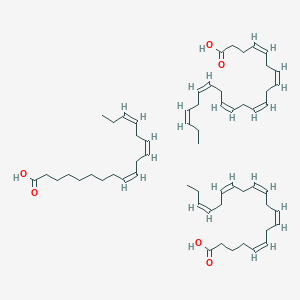
- Formula
- C60H92O6
- Weight
- 909.4 Da
- PubChem CID
- 56842239
- Exact Mass
- 908.6894 Da
- TPSA
- 112 Ų
- H-Bond Donors
- 3
- H-Bond Acceptors
- 6
- Rotatable Bonds
- 40
- Complexity
- 1160
Identifiers (SMILES, InChI)
InChI=1S/C22H32O2.C20H30O2.C18H30O2/c1-2-3-4-5-6-7-8-9-10-11-12-13-14-15-16-17-18-19-20-21-22(23)24;1-2-3-4-5-6-7-8-9-10-11-12-13-14-15-16-17-18-19-20(21)22;1-2-3-4-5-6-7-8-9-10-11-12-13-14-15-16-17-18(19)20/h3-4,6-7,9-10,12-13,15-16,18-19H,2,5,8,11,14,17,20-21H2,1H3,(H,23,24);3-4,6-7,9-10,12-13,15-16H,2,5,8,11,14,17-19H2,1H3,(H,21,22);3-4,6-7,9-10H,2,5,8,11-17H2,1H3,(H,19,20)/b4-3-,7-6-,10-9-,13-12-,16-15-,19-18-;4-3-,7-6-,10-9-,13-12-,16-15-;4-3-,7-6-,10-9-
QPEOIOLHJXXJFN-GNGJDXFDSA-NReferences (8)
- [1]Omega-3 fatty acids for the primary and secondary prevention of cardiovascular disease
→ Large systematic review of 86 studies with 162,796 participants found that omega-3 supplementation provides cardiovascular benefits, particularly in people with heart disease or high triglycerides, though evidence for primary prevention in healthy individuals is less clear.
- [2]Omega-3 fatty acid supplementation and fecundability
→ Prospective study of 900 women found that omega-3 supplement use was associated with increased probability of natural conception, suggesting reproductive benefits beyond cardiovascular health.
- [3]Omega-3 fatty acids supplements for dry eye - Are they effective or ineffective
→ Randomized controlled study of 470 VDT users found that omega-3 supplementation (EPA 180mg + DHA 120mg twice daily) significantly improved dry eye symptoms, tear film quality, and omega-3 index compared to placebo over 6 months.
- [4]Critical Differences Between Dietary Supplement and Prescription Omega-3 Fatty Acids
→ Review highlighting that prescription omega-3 products are FDA-approved for severe hypertriglyceridemia with consistent quality and dosing, while dietary supplement omega-3s have insufficient and inconsistent evidence for clinical benefits due to variable quality and content.
- [5]The effects of omega-3, DHA, EPA, Souvenaid in Alzheimer's disease: A systematic review and meta-analysis
→ Meta-analysis examining omega-3 supplementation in Alzheimer's disease found some evidence for cognitive benefits, particularly with DHA-rich formulations, though effects were modest and varied by disease stage.
- [6]The Potential Uses of Omega-3 Fatty Acids in Dermatology
→ Review of 38 studies found omega-3 supplementation benefits for psoriasis, atopic dermatitis, acne, skin ulcers, reduced skin cancer incidence, and decreased severity of drug-associated skin side effects.
- [7]A Multi-Year Rancidity Analysis of 72 Marine and Microalgal Oil Omega-3 Supplements
→ Analysis of 72 omega-3 supplements from 2014-2020 revealed significant variability in oxidation levels, with many products exceeding recommended freshness standards, highlighting the importance of quality testing and proper storage.
- [8]Bioavailability and conversion of plant based sources of omega-3 fatty acids
→ Scoping review found that while plant-based ALA can convert to EPA and DHA, conversion rates are limited (under 15%), and marine or algal sources provide more direct and bioavailable EPA/DHA for vegetarians and vegans.
Continue researching Omega-3
Keep scientific evidence separate from commercial availability. Review how claims are evaluated, explore question-led research paths, or inspect disclosed source records without changing the editorial conclusions on this page.