Pramlintide
A synthetic analog of amylin (islet amyloid polypeptide) approved as an adjunctive therapy for type 1 and type 2 diabetes, slowing gastric emptying, suppressing postprandial glucagon, and promoting satiety to improve glycemic control.
Evidence-led profile
Research snapshot
- Evidence stage
- Emerging research
- References
- 10 linked sources
- Research coverage
- 3 areas
- Editorial review
- Jul 7, 2026
Published by the PepGuide Editorial Team using our research methodology.
Overview
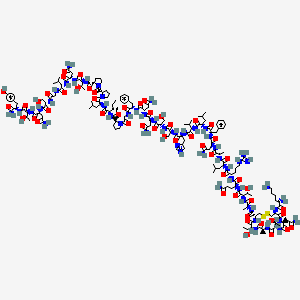
Pramlintide is a synthetic 37-amino-acid peptide analog of human amylin, a hormone co-secreted with insulin by pancreatic beta cells in response to nutrient ingestion. Native amylin is prone to aggregation and amyloid fibril formation, rendering it unsuitable for therapeutic use. Pramlintide overcomes this limitation through three proline substitutions (at positions 25, 28, and 29) that confer solubility and stability while preserving full biological activity. Marketed as Symlin, pramlintide is FDA-approved as an adjunct to mealtime insulin in patients with type 1 or type 2 diabetes who have failed to achieve adequate glycemic control with insulin alone. It is the only amylin-based therapy currently available and addresses a hormonal deficit that insulin monotherapy cannot correct.
Pramlintide exerts its glycemic effects through three complementary mechanisms. First, it slows gastric emptying, reducing the rate at which glucose from ingested food enters the bloodstream and thereby blunting postprandial glucose spikes. Second, it suppresses postprandial glucagon secretion — a critical action, since inappropriate glucagon release contributes significantly to hyperglycemia in diabetes. Third, pramlintide activates central satiety pathways in the area postrema and hypothalamus, reducing caloric intake and promoting weight loss — a benefit that distinguishes it from most antidiabetic agents, which tend to be weight-neutral or cause weight gain. Clinical trials have demonstrated HbA1c reductions of 0.3-0.6% alongside weight loss of 1-3 kg when pramlintide is added to insulin therapy.
Pramlintide is administered via subcutaneous injection immediately before meals, typically starting at 15-60 mcg and titrating upward based on tolerability. The most common side effect is nausea, which generally diminishes over time. A critical safety consideration is the risk of insulin-induced hypoglycemia, as pramlintide's glucose-lowering effects are additive with insulin — mealtime insulin doses must be reduced by approximately 50% when initiating pramlintide. It complements other diabetes-related compounds including semaglutide, tirzepatide, and insulin, and its satiety-promoting effects overlap mechanistically with GLP-1 receptor agonists, though through distinct neuroanatomical pathways.
Research
Reported Effects
Adjunctive Therapy:: Most effective when combined with insulin therapy in patients who have not achieved adequate glycemic control with insulin alone. Type-Specific Response:: Shows efficacy in both type 1 and insulin-requiring type 2 diabetes, with benefits varying by diabetes phenotype. Postprandial Control:: Particularly effective at normalizing post-meal glucose spikes through multiple complementary mechanisms. Time to Effect:: Peak serum levels reached within 30 minutes of subcutaneous administration with relatively short half-life of 30-50 minutes
Amylin replacement in diabetes
Pramlintide is a synthetic analog of amylin, the beta-cell hormone co-secreted with insulin that is deficient in insulin-dependent diabetes. It complements insulin by slowing gastric emptying, suppressing inappropriate postprandial glucagon, and increasing satiety. Randomized trials in type 1 and type 2 diabetes showed reductions in HbA1c and body weight when added to mealtime insulin, supporting FDA approval (Symlin). Injection burden, mealtime dosing, and gastrointestinal side effects limit real-world uptake; it must be injected separately from insulin.
- Reduces postprandial glucose via delayed gastric emptying and glucagon suppression
- Lowers HbA1c and body weight as an adjunct to mealtime insulin
- Requires mealtime insulin reduction at initiation to avoid hypoglycemia
Weight regulation and obesity
Because amylin agonism promotes satiety and weight loss, pramlintide and next-generation amylin analogs (e.g., cagrilintide) are actively studied for obesity, including in combination with GLP-1 receptor agonists. Pramlintide itself produces modest weight reduction and has served as proof-of-concept for the amylin pathway in weight management.
- Consistent modest weight loss across diabetes trials
- Proof-of-concept for amylin agonism in obesity
- Basis for longer-acting amylin analogs now in development
Safety and Limitations
Safety Profile: Pramlintide
Common Side Effects
- Nausea (most common, reported in 30–50% of patients): dose-dependent and typically improves over weeks
- Vomiting, anorexia, and reduced appetite (often therapeutic but can be excessive)
- Headache and fatigue
- Abdominal pain and bloating
- Injection site reactions: erythema, bruising, and pruritus
Serious Adverse Effects
- Severe hypoglycemia: The most critical risk, particularly when combined with insulin; insulin dose reduction of 50% is typically required at pramlintide initiation
- Hypoglycemia-associated falls and loss of consciousness, especially in type 1 diabetes
- Rare but severe gastroparesis exacerbation
- Weight loss may be excessive in underweight patients
Contraindications
- Hypoglycemia unawareness: Absolute contraindication due to severe hypoglycemia risk
- Confirmed gastroparesis or significant GI motility disorders
- HbA1c > 9% with recurrent hypoglycemia or poor compliance with insulin regimen
- Known hypersensitivity to pramlintide or metacresol (preservative)
- Pediatric patients (not approved for use in children)
Drug Interactions
- Insulin: Mandatory 50% insulin dose reduction at initiation; careful titration required
- Oral medications requiring rapid absorption: Pramlintide slows gastric emptying; administer oral drugs 1 hour before or 2 hours after injection
- Alpha-glucosidase inhibitors (acarbose, miglitol): Additive GI slowing; avoid combination
- Anticholinergics: May compound gastroparesis risk
Population-Specific Considerations
- Type 1 diabetes: FDA-approved; requires meticulous blood glucose monitoring during titration
- Type 2 diabetes: FDA-approved as adjunct to mealtime insulin
- Pregnancy: Category C; use only if benefit outweighs risk
- Elderly: Increased hypoglycemia risk; start at lowest dose with close monitoring
- Eating disorders: Weight-loss effect may be exploited; screen appropriately
Common Side Effects
- Gastrointestinal:: Nausea is the most common side effect, typically transient and diminishing over time with continued use
- Hypoglycemia Risk:: Increased risk of insulin-induced hypoglycemia, particularly in the 3 hours following administration, requiring careful insulin dose adjustment
- Injection Site:: Local injection site reactions may occur with subcutaneous administration
- Area Postrema Effects:: Can cause nausea and vomiting through stimulation of the area postrema in the brain
Mechanism of Action
Pramlintide is a synthetic analog of human amylin (islet amyloid polypeptide, IAPP), a 37-amino acid peptide hormone co-secreted with insulin from pancreatic beta cells. Pramlintide contains three proline substitutions (positions 25, 28, and 29) that prevent the amyloid aggregation seen with native human amylin while preserving full receptor binding activity. It acts through amylin receptors (AMY1R, AMY2R, AMY3R), which are heterodimeric complexes consisting of the calcitonin receptor (CTR), a class B G protein-coupled receptor, paired with receptor activity-modifying proteins (RAMP1, RAMP2, or RAMP3) that increase amylin binding potency (Gostynska et al., Science Signaling 2025).
Activation of amylin receptors triggers Gαs-mediated cAMP signaling cascades in target neurons, particularly in the area postrema and nucleus tractus solitarius of the brainstem. This produces three principal glucoregulatory effects: (1) slowing gastric emptying, which prevents rapid postprandial glucose spikes; (2) suppression of inappropriate glucagon secretion from pancreatic alpha cells, reducing hepatic glucose output; and (3) promotion of satiety through hypothalamic signaling, reducing food intake and caloric consumption. The satiety effect involves activation of histaminergic and dopaminergic pathways in the ventral tegmental area. Recent research has revealed that amylin agonist binding differentially modulates AMYR subunit assembly in a RAMP-specific manner, influencing the extent of downstream cAMP signaling. These combined mechanisms make pramlintide a valuable adjunct to insulin therapy in both type 1 and type 2 diabetes.
Pharmacokinetic Profile
- Half-life
- 0.8 h
- Tmax
- 0.3333333333333333 h
Molecular Structure
- Formula
- C171H267N51O53S2
- Weight
- 3949 Da
- PubChem CID
- 70691388
- Exact Mass
- 3947.9240 Da
- LogP
- -15.7
- TPSA
- 1740 Ų
- H-Bond Donors
- 56
- H-Bond Acceptors
- 59
- Rotatable Bonds
- 110
- Complexity
- 9660
Identifiers (SMILES, InChI)
InChI=1S/C171H267N51O53S2/c1-21-81(12)130(163(268)207-110(56-78(6)7)169(274)222-53-33-42-118(222)170(275)221-52-32-41-117(221)160(265)219-135(89(20)230)167(272)206-109(66-125(180)238)151(256)212-128(79(8)9)161(266)186-68-126(239)192-111(70-223)154(259)203-107(64-123(178)236)152(257)218-134(88(19)229)166(271)195-98(136(181)241)57-92-43-45-94(231)46-44-92)214-159(264)116-40-31-51-220(116)127(240)69-187-141(246)101(58-90-34-24-22-25-35-90)199-148(253)105(62-121(176)234)201-149(254)106(63-122(177)235)202-155(260)112(71-224)209-156(261)113(72-225)208-146(251)103(60-93-67-184-75-188-93)205-162(267)129(80(10)11)213-150(255)100(55-77(4)5)198-145(250)102(59-91-36-26-23-27-37-91)200-147(252)104(61-120(175)233)196-137(242)82(13)189-144(249)99(54-76(2)3)197-142(247)96(39-30-50-185-171(182)183)193-143(248)97(47-48-119(174)232)194-165(270)132(86(17)227)215-138(243)83(14)190-157(262)114-73-276-277-74-115(210-140(245)95(173)38-28-29-49-172)158(263)204-108(65-124(179)237)153(258)217-131(85(16)226)164(269)191-84(15)139(244)216-133(87(18)228)168(273)211-114/h22-27,34-37,43-46,67,75-89,95-118,128-135,223-231H,21,28-33,38-42,47-66,68-74,172-173H2,1-20H3,(H2,174,232)(H2,175,233)(H2,176,234)(H2,177,235)(H2,178,236)(H2,179,237)(H2,180,238)(H2,181,241)(H,184,188)(H,186,266)(H,187,246)(H,189,249)(H,190,262)(H,191,269)(H,192,239)(H,193,248)(H,194,270)(H,195,271)(H,196,242)(H,197,247)(H,198,250)(H,199,253)(H,200,252)(H,201,254)(H,202,260)(H,203,259)(H,204,263)(H,205,267)(H,206,272)(H,207,268)(H,208,251)(H,209,261)(H,210,245)(H,211,273)(H,212,256)(H,213,255)(H,214,264)(H,215,243)(H,216,244)(H,217,258)(H,218,257)(H,219,265)(H4,182,183,185)/t81-,82-,83-,84-,85+,86+,87+,88+,89+,95-,96-,97-,98-,99-,100-,101-,102-,103-,104-,105-,106-,107-,108-,109-,110-,111-,112-,113-,114-,115-,116-,117-,118-,128-,129-,130-,131-,132-,133-,134-,135-/m0/s1
TZIRZGBAFTZREM-MKAGXXMWSA-NResearch Indications
Other Effects / Investigational
Slows gastric emptying and increases satiety, producing modest weight loss.
Amylin agonism studied for weight loss, including combinations with GLP-1 agonists.
Approved Indications
Synthetic amylin analog added to mealtime insulin; the only FDA-approved non-insulin adjunct for type 1 diabetes.
Adjunct to mealtime insulin to improve postprandial glucose and support weight control.
References (10)
- [4]Pramlintide, the synthetic analogue of amylin: physiology, pathophysiology, and effects on glycemic control, body weight, and selected biomarkers of vascular risk
→ Pramlintide use in type 1 and insulin-requiring type 2 diabetes showed modest HbA1c reductions often accompanied by weight loss, with favorable effects on lipids and atherosclerotic disease biomarkers, though nausea is the most common side effect.
- [2]Amylin: Pharmacology, Physiology, and Clinical Potential
→ Comprehensive review of 25 years of amylin research demonstrating its effects across multiple organ systems as a pancreatic β-cell hormone that activates specific receptors to produce therapeutic effects in diabetes management.
- [3]The role of amylin and glucagon in the dampening of glycemic excursions in children with type 1 diabetes
→ Study in type 1 diabetic children showed that pramlintide with usual insulin dosing normalized postprandial glucose excursions by suppressing glucagon secretion, demonstrating effective glycemic control comparable to control subjects.
- [5]Pramlintide acetate
→ Clinical trials demonstrated that pramlintide suppresses postmeal glucagon secretion, slows gastric emptying, reduces postprandial glucose levels, and improves glycemic control while managing weight loss, with decreases in hemoglobin A1c, serum fructosamine, and total cholesterol levels.
- [6]Managed care perspective on three new agents for type 2 diabetes
→ Review of pramlintide as one of three novel diabetes agents with unique mechanisms of action, evaluating its efficacy, safety, and place in therapy given relatively high cost and unknown long-term outcomes as of 2008.
- [7]Effects of pramlintide on energy intake and food preference in rats given a choice diet
→ Animal study showed systemic pramlintide injection reduced high-fat diet intake at 3 hours post-injection, suggesting potential preferential reduction of highly palatable, energy-dense food consumption relevant to obesity treatment.
- [8]Insulin Resistance in Type 1 Diabetes: Pathophysiological, Clinical, and Therapeutic Relevance
→ Comprehensive review discussing how people with type 1 diabetes frequently feature insulin resistance alongside β-cell failure, with pramlintide mentioned as a therapeutic consideration for addressing complex metabolic dysfunction.
- [1]Amylin: From Mode of Action to Future Clinical Potential in Diabetes and Obesity
→ Reviews amylin's role in postprandial glucose homeostasis and its potential cardiovascular and neuroprotective functions, highlighting its importance in precision diabetology and weight-favorable therapeutic approaches for diabetes treatment.
- [9]Edelman S, Garg S, Frias J, et al. A double-blind, placebo-controlled trial assessing pramlintide treatment in the setting of intensive insulin therapy in type 1 diabetes Diabetes Care (2006)
→ In 296 patients, pramlintide with proactive mealtime insulin reduction lowered HbA1c and weight while limiting hypoglycemia when titrated carefully.
- [10]Ratner RE, Dickey R, Fineman M, et al. Amylin replacement with pramlintide as an adjunct to insulin therapy improves long-term glycaemic and weight control in Type 1 diabetes mellitus: a 1-year, randomized controlled trial Diabetic Medicine (2004)
→ In 651 type 1 diabetes patients over 52 weeks, mealtime pramlintide reduced HbA1c and body weight (up to ~1.2 kg advantage vs placebo) without increased insulin use.
Continue researching Pramlintide
Keep scientific evidence separate from commercial availability. Review how claims are evaluated, explore question-led research paths, or inspect disclosed source records without changing the editorial conclusions on this page.