VITAMIN D3
Vitamin D3 (cholecalciferol) is a fat-soluble secosteroid primarily synthesized in the skin upon UVB exposure. It is crucial for calcium and phosphate homeostasis, bone health, and immune system modulation after being metabolized into its active form, calcitriol.
Evidence-led profile
Research snapshot
- Evidence stage
- Emerging research
- References
- 8 linked sources
- Research coverage
- 1 area
- Editorial review
- Jul 7, 2026
Published by the PepGuide Editorial Team using our research methodology.
Overview
Vitamin D3 (cholecalciferol) is a fat-soluble vitamin that plays a crucial role in calcium absorption, bone health, immune function, and various cellular processes throughout the body. It can be synthesized in the skin through UVB exposure or obtained through diet and supplementation. D3 is converted in the liver to 25-hydroxyvitamin D and then to its active form in the kidneys, regulating calcium homeostasis and influencing gene expression in multiple organ systems.
Research
Reported Effects
Cofactor Dependency:: Effectiveness dramatically increases when taken with magnesium (for absorption) and vitamin K2 (for proper calcium distribution), with many users reporting no benefits until adding these cofactors. Dosage Response:: 2000 IU often insufficient to raise levels significantly; most users find 5000-10,000 IU daily more effective, with some requiring 20,000+ IU in northern climates or with severe deficiency. Time to Effect:: Most users report noticeable improvements within 2-4 weeks, though optimal blood levels may take 3-6 months to achieve with consistent supplementation. Testing Essential:: Blood testing before and during supplementation crucial for determining adequate dosing, as individual absorption rates vary significantly
Safety and Limitations
Safety Profile: Vitamin D3 (Cholecalciferol)
Common Side Effects
- Generally well tolerated at doses up to 4000 IU/day (the Tolerable Upper Intake Level for adults)
- Mild gastrointestinal discomfort including nausea, constipation, and metallic taste at higher doses
- Headache and fatigue reported at supraphysiological doses
- Dry mouth and increased thirst
Serious Adverse Effects
- Hypercalcemia: The primary toxicity of vitamin D excess; occurs typically at sustained doses >10,000 IU/day or serum 25(OH)D levels >150 ng/mL; symptoms include nausea, vomiting, confusion, polyuria, polydipsia, muscle weakness, and cardiac arrhythmias
- Hypercalciuria and nephrolithiasis: Increased calcium absorption leads to elevated urinary calcium; risk of calcium kidney stones
- Nephrocalcinosis and renal failure: Prolonged hypercalcemia can cause calcium deposition in renal tissue and irreversible kidney damage
- Vascular calcification: Chronic vitamin D toxicity promotes calcium deposition in blood vessels, heart valves, and soft tissues
- Cardiac arrhythmias: Severe hypercalcemia can cause shortened QT interval, heart block, and cardiac arrest
Contraindications
- Hypercalcemia or conditions predisposing to hypercalcemia (primary hyperparathyroidism, sarcoidosis, other granulomatous diseases)
- Hypervitaminosis D
- Severe hypercalciuria or active calcium nephrolithiasis
- Known hypersensitivity to cholecalciferol or formulation components
- Williams syndrome (increased sensitivity to vitamin D with hypercalcemia risk)
Drug Interactions
- Thiazide diuretics: Reduce renal calcium excretion; combined with vitamin D may cause hypercalcemia; monitor calcium levels
- Cardiac glycosides (digoxin): Hypercalcemia from vitamin D toxicity potentiates digoxin toxicity and cardiac arrhythmias
- Corticosteroids: Reduce calcium absorption and may decrease vitamin D efficacy; higher supplemental doses may be needed
- Orlistat, cholestyramine, and other fat absorption inhibitors: Reduce vitamin D absorption (fat-soluble vitamin)
- CYP3A4 inducers (phenytoin, phenobarbital, rifampin): Accelerate vitamin D metabolism, increasing supplementation requirements
Population-Specific Considerations
- Elderly: Higher risk of deficiency; 1000–2000 IU/day commonly recommended; monitor serum 25(OH)D and calcium
- Dark-skinned individuals: Reduced cutaneous vitamin D synthesis; often require higher supplemental doses
- Obese individuals: Vitamin D is sequestered in adipose tissue; may require 2–3x standard doses to achieve adequate serum levels
- Kidney disease patients: Impaired conversion of 25(OH)D to active 1,25(OH)2D; may require calcitriol or alfacalcidol instead
- Pregnant women: 600–4000 IU/day generally considered safe; adequate vitamin D is critical for fetal skeletal development
Common Side Effects
- Magnesium Depletion:: Without adequate magnesium, users report insomnia, leg cramps, muscle pain, headaches, and feeling 'hot' at night - symptoms resolve with magnesium supplementation
- Calcium Imbalance:: Taking high doses without K2 can lead to improper calcium distribution, with rare reports of hypercalcemia symptoms, though this is uncommon at recommended doses
- Stomach Issues:: Taking on empty stomach can cause nausea and discomfort; fat-soluble nature requires consumption with meals containing dietary fat for optimal absorption
- Lanolin Sensitivity:: Rare allergic reactions to lanolin-derived D3 supplements causing anger, rage, or headaches; lichen-derived vegan D3 serves as alternative
Molecular Structure
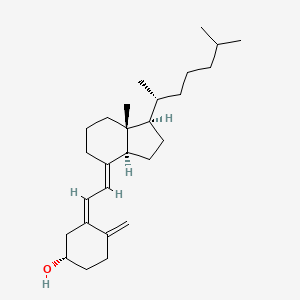
- Formula
- C27H44O
- Weight
- 384.6 Da
- PubChem CID
- 5280795
- Exact Mass
- 384.3392 Da
- LogP
- 7.9
- TPSA
- 20.2 Ų
- H-Bond Donors
- 1
- H-Bond Acceptors
- 1
- Rotatable Bonds
- 6
- Complexity
- 610
Identifiers (SMILES, InChI)
InChI=1S/C27H44O/c1-19(2)8-6-9-21(4)25-15-16-26-22(10-7-17-27(25,26)5)12-13-23-18-24(28)14-11-20(23)3/h12-13,19,21,24-26,28H,3,6-11,14-18H2,1-2,4-5H3/b22-12+,23-13-/t21-,24+,25-,26+,27-/m1/s1
QYSXJUFSXHHAJI-YRZJJWOYSA-NReferences (8)
- [1]Comparison of vitamin D2 and vitamin D3 supplementation in raising serum 25-hydroxyvitamin D status: a systematic review and meta-analysis
→ Systematic review demonstrating that vitamin D3 is more effective than vitamin D2 at raising and maintaining serum 25(OH)D levels in humans.
- [2]Vitamin D Supplementation: A Review of the Evidence Arguing for a Daily Dose of 2000 International Units (50 µg) of Vitamin D for Adults in the General Population
→ Comprehensive review supporting 2000 IU daily supplementation for adults to maintain adequate vitamin D status and prevent deficiency-related health issues.
- [3]What is the impact of daily oral supplementation of vitamin D3 (cholecalciferol) plus calcium on the incidence of hip fracture in older people? A systematic review and meta-analysis
→ Meta-analysis of seven RCTs showing that combined vitamin D3 and calcium supplementation significantly reduces hip fracture risk in older adults.
- [4]Effect of Vitamin D3 and Omega-3 Fatty Acid Supplementation on Risk of Frailty: An Ancillary Study of a Randomized Clinical Trial
→ Large randomized trial examining whether vitamin D3 supplementation affects frailty risk in older adults, providing insights into anti-aging effects.
- [5]Vitamin D(3) and marine ω-3 fatty acids supplementation and leukocyte telomere length: 4-year findings from the VITamin D and OmegA-3 TriaL (VITAL)
→ Four-year randomized controlled trial investigating whether vitamin D3 supplementation affects cellular aging markers through telomere length maintenance.
- [6]Effects of Vitamin D Supplementation on Muscle Strength in Athletes: A Systematic Review
→ Systematic review finding that vitamin D3 supplementation positively impacts muscle strength in athletes, while vitamin D2 was ineffective, with dosages ranging from 600 to 5000 IU daily.
- [7]Vitamin D3 Supplement Attenuates Blood-Brain Barrier Disruption and Cognitive Impairments in a Rat Model of Traumatic Brain Injury
→ Animal study demonstrating vitamin D3's neuroprotective effects, reducing brain edema and blood-brain barrier disruption following traumatic brain injury.
- [8]National Institutes of Health, Office of Dietary Supplements Vitamin D - Health Professional Fact Sheet NIH Office of Dietary Supplements (2023)
→ Adult RDA is 600-800 IU (15-20 mcg)/day; common supplemental doses are 1000-2000 IU/day, with a tolerable upper limit of 4000 IU (100 mcg)/day.
Continue researching VITAMIN D3
Keep scientific evidence separate from commercial availability. Review how claims are evaluated, explore question-led research paths, or inspect disclosed source records without changing the editorial conclusions on this page.