VITAMIN E
Vitamin E is a collective term for eight fat-soluble compounds, primarily alpha-tocopherol in humans, functioning as a potent antioxidant to protect cell membranes from lipid peroxidation. It also supports immune function and aids in red blood cell formation.
Evidence-led profile
Research snapshot
- Evidence stage
- Emerging research
- References
- 7 linked sources
- Research coverage
- 1 area
- Editorial review
- Jul 7, 2026
Published by the PepGuide Editorial Team using our research methodology.
Overview
Vitamin E is a fat-soluble antioxidant compound, primarily in the form of alpha-tocopherol, that protects cells from oxidative damage by neutralizing free radicals. It functions as both a nutrient and a hormone-like molecule, binding to cellular receptors to regulate gene expression and support immune function, cardiovascular health, and cellular protection. Vitamin E is commonly supplemented for antioxidant support, though its role in disease prevention remains controversial.
Research
Reported Effects
Minimal Standalone Impact:: Most users report no noticeable effects when taking vitamin E alone, unlike more immediately perceptible supplements like magnesium or vitamin D. Research Contradictions:: Scientific literature shows mixed results with many studies finding insufficient evidence for disease prevention benefits. Stack Component:: Works best as part of a comprehensive supplement regimen rather than as a primary intervention. Long-Term vs Short-Term:: Benefits appear oriented toward long-term cellular protection rather than acute symptom relief
Safety and Limitations
Safety Profile: Vitamin E
Common Side Effects
- Generally well tolerated at doses up to 400 IU/day
- Gastrointestinal symptoms including nausea, diarrhea, and abdominal cramps
- Mild fatigue and headache
- Skin rash or contact dermatitis (more common with topical application)
- Easy bruising due to antiplatelet effects
Serious Adverse Effects
- Increased all-cause mortality: Meta-analyses suggest that high-dose vitamin E supplementation (≥400 IU/day) is associated with a small but significant increase in all-cause mortality
- Hemorrhagic stroke: High-dose vitamin E increases the risk of hemorrhagic stroke by approximately 22% (SELECT trial and meta-analyses)
- Prostate cancer risk: The SELECT trial demonstrated a statistically significant 17% increase in prostate cancer risk in men taking 400 IU/day of vitamin E alone
- Bleeding complications: Vitamin E inhibits platelet aggregation and antagonizes vitamin K-dependent coagulation; significant bleeding risk at doses >800 IU/day
- Heart failure: In patients with vascular disease or diabetes, high-dose vitamin E was associated with increased risk of heart failure hospitalization (HOPE-TOO trial)
Contraindications
- Known hypersensitivity to tocopherols or formulation excipients
- Active bleeding disorders or therapeutic anticoagulation (without close INR monitoring)
- Vitamin K deficiency (vitamin E antagonizes vitamin K; may worsen coagulopathy)
- Upcoming surgery (discontinue 2–4 weeks prior due to bleeding risk)
- History of hemorrhagic stroke
Drug Interactions
- Anticoagulants/Antiplatelets (warfarin, aspirin, clopidogrel): Significant additive bleeding risk; vitamin E inhibits platelet aggregation and antagonizes vitamin K; monitor INR closely
- Statins and niacin: Vitamin E may blunt the HDL-raising effects of statin-niacin combination therapy
- Chemotherapy and radiation: Antioxidant effects may protect cancer cells from oxidative damage-based therapies; consult oncologist
- Cyclosporine: Vitamin E may affect cyclosporine absorption and levels
- Iron supplements: Vitamin E may impair iron absorption; separate dosing by 2 hours
Population-Specific Considerations
- Elderly: Avoid high-dose supplementation (>400 IU/day) given mortality and hemorrhagic stroke data; 15 mg/day (RDA) is adequate for most
- Men: SELECT trial data warrant caution regarding prostate cancer risk at 400 IU/day
- Surgical patients: Discontinue at least 2 weeks before elective procedures
- Cancer patients: Discuss with oncologist; may interfere with oxidative therapies
- Premature infants: Historically used to prevent retinopathy; doses must be carefully controlled to avoid toxicity
Common Side Effects
- Nausea in Stacks:: Vitamin E in multivitamins occasionally contributes to nausea, though typically in combination with other nutrients like zinc
- Minimal Adverse Reports:: Users rarely report specific side effects from vitamin E supplementation at standard doses
- Absorption Competition:: May compete with other fat-soluble vitamins (A, D, K) if taken in excessive amounts
- Exercise Adaptation Interference:: Research suggests high-dose vitamin E may impair training adaptations by blocking cellular stress signals
Research protocol summary
- Typical Dose
- Most multivitamins and user stacks contain 15-400 IU of vitamin E as part of daily supplementation
These values summarize cataloged research protocols. They are not personal dosing instructions or medical guidance.
Molecular Structure
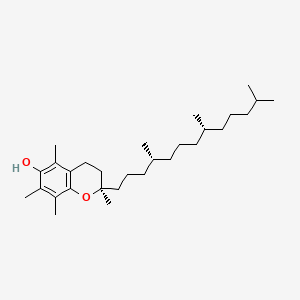
- Formula
- C29H50O2
- Weight
- 430.7 Da
- PubChem CID
- 14985
- Exact Mass
- 430.3811 Da
- LogP
- 10.7
- TPSA
- 29.5 Ų
- H-Bond Donors
- 1
- H-Bond Acceptors
- 2
- Rotatable Bonds
- 12
- Complexity
- 503
Identifiers (SMILES, InChI)
InChI=1S/C29H50O2/c1-20(2)12-9-13-21(3)14-10-15-22(4)16-11-18-29(8)19-17-26-25(7)27(30)23(5)24(6)28(26)31-29/h20-22,30H,9-19H2,1-8H3/t21-,22-,29-/m1/s1
GVJHHUAWPYXKBD-IEOSBIPESA-NReferences (7)
- [2]Antioxidants and Exercise Performance: With a Focus on Vitamin E and C Supplementation
→ Found that vitamin E supplementation does not appear beneficial for most athletes except those training at altitude or seeking short-term performance enhancement, and may actually impair training adaptations by blocking anabolic signaling pathways.
- [1]Vitamin E: How much is enough, too much and why!
→ Comprehensive review explaining vitamin E's role as a required dietary nutrient, discussing optimal dosing, bioavailability, mechanisms for tissue enrichment via TTPA protein, and evaluation of safety and potential benefits in chronic disease prevention.
- [3]Vitamin E at a high dose as an anti-ferroptosis drug and not just a supplement for COVID-19 treatment
→ Proposes that high-dose vitamin E may function as an anti-ferroptosis drug rather than just a dietary supplement, potentially having therapeutic applications beyond basic nutritional supplementation.
- [4]Association of vitamin E on the risk of ovarian cancer: a meta-analysis
→ Meta-analysis of 14 studies including 4,597 patients found a summary relative risk of 0.95 for ovarian cancer with vitamin E intake, suggesting minimal to no protective effect against ovarian cancer.
- [5]Vitamin E supplementation in pregnancy
→ Cochrane systematic review of 21 trials involving 22,129 pregnant women found insufficient evidence to support routine vitamin E supplementation during pregnancy for preventing complications like pre-eclampsia.
- [6]Vitamin, Mineral, and Multivitamin Supplementation to Prevent Cardiovascular Disease and Cancer: US Preventive Services Task Force Recommendation Statement
→ US Preventive Services Task Force concluded there is insufficient evidence to recommend routine vitamin supplementation, including vitamin E, for preventing cardiovascular disease or cancer in generally healthy adults.
- [7]National Institutes of Health, Office of Dietary Supplements Vitamin E - Health Professional Fact Sheet NIH Office of Dietary Supplements (2021)
→ Adult RDA is 15 mg (22.4 IU natural)/day alpha-tocopherol; tolerable upper intake level is 1000 mg/day of supplemental alpha-tocopherol.
Continue researching VITAMIN E
Keep scientific evidence separate from commercial availability. Review how claims are evaluated, explore question-led research paths, or inspect disclosed source records without changing the editorial conclusions on this page.