Magnesium Glycinate
A highly bioavailable chelated form of magnesium bound to glycine, valued for its superior absorption, gentle gastrointestinal profile, and calming properties that support sleep, relaxation, and overall magnesium repletion.
Evidence-led profile
Research snapshot
- Evidence stage
- Emerging research
- References
- 4 linked sources
- Research coverage
- 1 area
- Editorial review
- Mar 8, 2026
Published by the PepGuide Editorial Team using our research methodology.
Overview
Magnesium Glycinate is a chelated mineral supplement in which elemental magnesium is bound to two molecules of glycine, the smallest and simplest amino acid. This chelation confers several pharmacokinetic advantages: the organic amino acid carrier facilitates intestinal absorption via peptide transport pathways rather than relying solely on paracellular mineral channels, resulting in significantly higher bioavailability compared to inorganic forms such as magnesium oxide or magnesium sulfate. The glycine ligand also buffers the osmotic effect that causes the laxative action common to other magnesium salts, making glycinate one of the best-tolerated oral magnesium preparations available.
The dual-benefit profile of Magnesium Glycinate stems from both its magnesium and glycine components. Magnesium itself is a cofactor in over 300 enzymatic reactions, including ATP synthesis, DNA replication, neuromuscular function, and cardiac rhythm regulation. Glycine, meanwhile, is an inhibitory neurotransmitter that acts on glycine receptors and serves as a co-agonist at NMDA receptors, contributing to the calming and sleep-promoting effects frequently reported with this form. Clinical studies suggest that glycine supplementation at bedtime can improve subjective sleep quality and reduce next-day fatigue, effects that complement magnesium's own role in GABA-ergic neurotransmission and melatonin regulation. This makes Magnesium Glycinate a preferred choice for individuals seeking support for sleep, anxiety, and stress — distinguishing it from forms like Magnesium L-Threonate, which targets cognitive function, or Magnesium Taurate, which is favored for cardiovascular support.
Magnesium deficiency is remarkably prevalent, with estimates suggesting that up to 50% of the U.S. population consumes less than the estimated average requirement. Subclinical deficiency contributes to muscle cramps, fatigue, irritability, arrhythmias, and impaired glucose metabolism. Magnesium Glycinate is commonly dosed at 200–400 mg of elemental magnesium daily, often taken in the evening due to its relaxing properties. It pairs well with other calming agents such as melatonin, L-theanine, and magnolia bark in comprehensive sleep and stress protocols. Among the various magnesium chelates — including Magnesium Orotate for cardiac energy metabolism and Malic Acid-bound forms for energy production — glycinate remains the most broadly recommended for general supplementation and relaxation.
Research
Reported Effects
Individual Variability:: Effectiveness is highly dependent on individual biochemistry, particularly NMDA receptor sensitivity and glutamate regulation, with some users thriving while others experience severe adverse reactions. Glycine Sensitivity:: The glycine component acts as both an inhibitory and excitatory neurotransmitter, making it beneficial for some but agitating for others, especially those with altered NMDA receptor function or conditions like MCAS or Long COVID. Time to Effect:: Users who respond positively typically notice benefits within the first few nights, while those with negative reactions also experience symptoms quickly, making it easy to identify compatibility. Comparison to Other Forms:: Many users who react poorly to glycinate find success with magnesium threonate, malate, or taurate, suggesting the magnesium itself isn't the issue but rather the chelating agent
Safety and Limitations
Magnesium glycinate is generally well-tolerated and gentler on the stomach than other magnesium forms, though high doses can still cause diarrhea and nausea. Individuals with kidney disease, myasthenia gravis, or certain heart conditions should exercise caution. It may interact with antibiotics, diuretics, and bisphosphonates.
Common Side Effects
- Insomnia and Hyperarousal:: Significant number of users report severe insomnia, racing heart, increased anxiety, night sweats, and feeling 'wired' rather than relaxed, often lasting several days after stopping
- Exhausting Dream Activity:: While many enjoy vivid dreams initially, they frequently become exhausting over time, with users waking feeling unrested despite adequate sleep duration
- Mineral Imbalances:: Taking magnesium without adequate calcium can cause symptoms like eye twitching, and copper supplementation may be needed as magnesium can deplete it
- Mood Alterations:: Some users report negative thinking, intrusive thoughts, depression, or emotional numbness, particularly when combined with other supplements or in those with specific genetic mutations
Mechanism of Action
Magnesium glycinate (magnesium bisglycinate) is a chelated form in which elemental magnesium is bound to two molecules of the amino acid glycine through coordinate covalent bonds. This chelation structure provides several pharmacokinetic advantages: the small molecular size of glycine allows the chelate to be absorbed intact through intestinal dipeptide transporters (PepT1/SLC15A1) in addition to standard magnesium ion channels (TRPM6/7), significantly increasing bioavailability. The chelate's neutral charge and organic nature allow it to traverse the unstirred water layer of the intestinal mucosa more efficiently than ionic magnesium. Because the magnesium remains chelated during intestinal transit, it does not draw water into the lumen osmotically, resulting in minimal laxative effect compared to magnesium citrate or oxide.
The glycine component provides independent and synergistic neurological benefits. Glycine is the primary inhibitory neurotransmitter in the brainstem and spinal cord, acting at strychnine-sensitive glycine receptors (GlyR) to increase chloride conductance and hyperpolarize neurons. Glycine is also a co-agonist at the NMDA receptor, binding the glycine/D-serine site (GluN1 subunit) required for channel activation. This dual role—both direct inhibitory activity and NMDA receptor co-agonism—gives glycine a complex modulatory effect on neural excitability. At inhibitory glycine receptors, supplemental glycine promotes relaxation and sleep quality; at NMDA receptors, it supports synaptic plasticity and cognitive function while the magnesium component simultaneously provides voltage-dependent channel block to prevent excitotoxicity.
The combined delivery of magnesium and glycine makes this form particularly effective for sleep, anxiety, and stress-related conditions. Magnesium modulates the HPA axis by regulating ACTH-stimulated cortisol release and by acting as a GABA-A receptor positive allosteric modulator, enhancing chloride conductance at GABAergic synapses. Glycine independently reduces core body temperature by promoting peripheral vasodilation through activation of NMDA receptors in the suprachiasmatic nucleus, which facilitates sleep onset. Magnesium is also required as a cofactor for serotonin N-acetyltransferase (AANAT), the rate-limiting enzyme in melatonin synthesis, linking magnesium status to circadian rhythm regulation. The chelated form ensures sustained magnesium release without the plasma spikes associated with ionic forms, providing steady-state tissue loading.
Research protocol summary
- Typical Dose
- 200-450mg taken 1-3 hours before bedtime is most commonly reported, with 300-350mg being the sweet spot for most users
These values summarize cataloged research protocols. They are not personal dosing instructions or medical guidance.
Molecular Structure
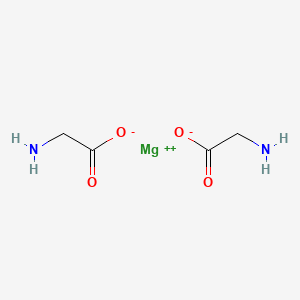
- Formula
- C4H8MgN2O4
- Weight
- 172.42 Da
- PubChem CID
- 84645
- Exact Mass
- 172.0334 Da
- TPSA
- 132 Ų
- H-Bond Donors
- 2
- H-Bond Acceptors
- 6
- Rotatable Bonds
- 0
- Complexity
- 37
Identifiers (SMILES, InChI)
InChI=1S/2C2H5NO2.Mg/c2*3-1-2(4)5;/h2*1,3H2,(H,4,5);/q;;+2/p-2
AACACXATQSKRQG-UHFFFAOYSA-LReferences (4)
- [1]Dose-Dependent Absorption Profile of Different Magnesium Compounds
→ Research demonstrated that organic magnesium compounds, including magnesium glycinate, show better absorption profiles compared to inorganic magnesium compounds across different dosage levels.
- [3]Effect of chronic administration of magnesium supplement (magnesium glycinate) on male albino wistar rats' intestinal motility, body weight changes, food and water intake
→ Chronic administration of magnesium glycinate in rats showed effects on intestinal motility and physiological parameters, providing insights into long-term supplementation effects.
- [4]Magnesium yields opposite effects on the nuclear and cytosolic cascades of apoptosis in different rat brain regions
→ Eight-week administration of magnesium glycinate and citrate showed complex effects on brain tissue, with reductions in certain apoptotic markers while increasing protective protein levels in different brain regions.
- [2]Bioavailability of magnesium diglycinate vs magnesium oxide in patients with ileal resection
→ In patients with impaired magnesium absorption, magnesium diglycinate showed substantially greater absorption (23.5% vs 11.8%) compared to magnesium oxide and was better tolerated by all patients.
Continue researching Magnesium Glycinate
Keep scientific evidence separate from commercial availability. Review how claims are evaluated, explore question-led research paths, or inspect disclosed source records without changing the editorial conclusions on this page.