Melatonin
An endogenous indoleamine neurohormone produced by the pineal gland that regulates circadian rhythm, promotes sleep onset, and exhibits potent antioxidant, anti-inflammatory, and immunomodulatory properties.
Evidence-led profile
Research snapshot
- Evidence stage
- Emerging research
- References
- 8 linked sources
- Research coverage
- 1 area
- Editorial review
- Mar 8, 2026
Published by the PepGuide Editorial Team using our research methodology.
Overview
Melatonin (N-acetyl-5-methoxytryptamine) is a phylogenetically ancient molecule produced primarily by the pineal gland in response to darkness, serving as the master chronobiological signal that synchronizes circadian rhythms with the light-dark cycle. Synthesized from tryptophan via serotonin through the sequential actions of arylalkylamine N-acetyltransferase (AANAT) and hydroxyindole-O-methyltransferase (HIOMT), melatonin acts on MT1 and MT2 G-protein-coupled receptors in the suprachiasmatic nucleus (SCN) of the hypothalamus to modulate the circadian clock. Beyond its chronobiotic role, melatonin is one of the most potent endogenous antioxidants known, with the ability to directly scavenge hydroxyl radicals, peroxynitrite, and singlet oxygen while also upregulating antioxidant enzymes (superoxide dismutase, glutathione peroxidase, catalase) and downregulating pro-oxidant enzymes.
As a sleep aid, melatonin is one of the most widely used supplements globally, with robust evidence supporting its efficacy for reducing sleep onset latency (by approximately 7–12 minutes on average across meta-analyses), improving subjective sleep quality, and resynchronizing disrupted circadian rhythms in jet lag, shift work, and delayed sleep-wake phase disorder. Exogenous melatonin at physiological doses (0.3–1 mg) is most effective as a chronobiotic when timed 1–2 hours before desired sleep onset, while pharmacological doses (3–10 mg) are commonly used for their mild hypnotic and anxiolytic effects. Prolonged-release formulations better mimic the endogenous secretion profile and are particularly beneficial for sleep maintenance in older adults, who often exhibit diminished natural melatonin production.
The therapeutic scope of melatonin extends considerably beyond sleep. It demonstrates significant anti-inflammatory activity through suppression of NF-kB, NLRP3 inflammasome inhibition, and modulation of pro-inflammatory cytokines. Oncological research has identified melatonin as an anti-cancer agent that inhibits tumor proliferation, angiogenesis, and metastasis through multiple mechanisms including epigenetic modulation, immune surveillance enhancement, and circadian gene regulation. Melatonin also shows neuroprotective effects in neurodegenerative disease models and has been studied for migraine prophylaxis, IBS, tinnitus, and perioperative anxiety. It synergizes well with magnesium glycinate, magnolia bark, and glycine in comprehensive sleep protocols. Side effects are generally mild (next-day grogginess, vivid dreams) and melatonin has an exceptionally wide therapeutic index with no established lethal dose in humans.
Research
Reported Effects
Dose-Dependent Response:: Effectiveness varies significantly with dosage, with 0.5-3mg often being more effective than standard 5-10mg doses for most users. Individual Variability:: Success rates are highly individual, with some users experiencing no benefits while others report life-changing improvements in sleep quality. Combination Synergy:: Works significantly better when combined with magnesium glycinate, L-theanine, or glycine rather than as a standalone supplement. Diminishing Returns:: Many users report tolerance development and reduced effectiveness with daily long-term use, requiring cycling or breaks to maintain efficacy
Safety and Limitations
Common side effects include dizziness, headache, nausea, and daytime drowsiness. It may not be suitable for pregnant or breastfeeding women, individuals with autoimmune diseases, or those taking certain medications. Melatonin can interact with blood thinners, anticonvulsants, and blood pressure medications, so consultation with a healthcare provider is recommended.
Common Side Effects
- Vivid Nightmares:: Extremely common complaint of intense, disturbing dreams and nightmares, particularly with doses above 3mg or daily use
- Morning Hangover:: Persistent grogginess, brain fog, and difficulty waking up reported frequently, especially with higher doses or extended-release forms
- Hormonal Concerns:: Users note concerns about long-term hormonal effects since melatonin is a hormone, with some experiencing mood changes
- Sleep Architecture Disruption:: Some users report waking up at 3-4am regularly despite taking melatonin, suggesting potential sleep cycle fragmentation
Mechanism of Action
Melatonin (N-acetyl-5-methoxytryptamine) is an indoleamine neurohormone synthesized from serotonin in the pineal gland that acts through both receptor-dependent and receptor-independent mechanisms. Its primary actions are mediated by two G protein-coupled receptors: MT1 (MTNR1A) and MT2 (MTNR1B). MT1 receptors, coupled to Gi/o proteins, inhibit adenylyl cyclase and reduce cAMP/PKA signaling in the suprachiasmatic nucleus (SCN) of the hypothalamus, acutely suppressing neuronal firing to promote sleep onset. MT1 also activates phospholipase C-beta through Gq coupling in certain tissues, mobilizing intracellular calcium. MT2 receptors, primarily expressed in the SCN and retina, phase-shift circadian rhythms by modulating the molecular clock machinery—specifically the transcription-translation feedback loops involving CLOCK, BMAL1, PER, and CRY genes.
Independent of receptor activation, melatonin functions as a potent direct free radical scavenger, neutralizing hydroxyl radicals, peroxyl radicals, singlet oxygen, and peroxynitrite through electron donation from its indole ring system. Each melatonin molecule can scavenge up to 10 reactive oxygen/nitrogen species through a cascade of metabolites (cyclic 3-hydroxymelatonin, AFMK, AMK) that themselves retain antioxidant activity. Melatonin also upregulates antioxidant enzyme expression—including superoxide dismutase, glutathione peroxidase, and catalase—through Nrf2/ARE pathway activation, while simultaneously inhibiting pro-oxidant enzymes such as nitric oxide synthase and lipoxygenase.
Additional mechanisms include immunomodulation through MT1/MT2 receptors on T lymphocytes and NK cells, enhancing IL-2 and IFN-gamma production while suppressing excessive inflammatory responses. Melatonin stabilizes mitochondrial membrane potential, inhibits mitochondrial permeability transition pore (mPTP) opening, and enhances electron transport chain efficiency at Complex I and Complex IV. These pleiotropic actions support its therapeutic roles in circadian rhythm disorders, insomnia, neurodegeneration, cancer adjunctive therapy, and cardiovascular protection.
Pharmacokinetic Profile
- Half-life
- 0.8333333333333334 h
- Tmax
- 0.75 h
Molecular Structure
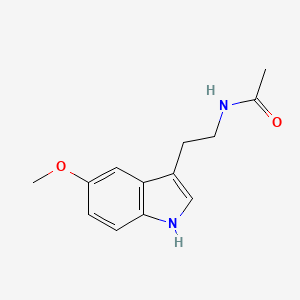
- Formula
- C13H16N2O2
- Weight
- 232.28 Da
- PubChem CID
- 896
- Exact Mass
- 232.1212 Da
- LogP
- 0.8
- TPSA
- 54.1 Ų
- H-Bond Donors
- 2
- H-Bond Acceptors
- 2
- Rotatable Bonds
- 4
- Complexity
- 270
Identifiers (SMILES, InChI)
InChI=1S/C13H16N2O2/c1-9(16)14-6-5-10-8-15-13-4-3-11(17-2)7-12(10)13/h3-4,7-8,15H,5-6H2,1-2H3,(H,14,16)
DRLFMBDRBRZALE-UHFFFAOYSA-NReferences (8)
- [1]Effect of melatonin supplementation on sleep quality: a systematic review and meta-analysis of randomized controlled trials
→ Meta-analysis found melatonin supplementation significantly improved sleep quality as measured by the Pittsburgh Sleep Quality Index across various disease populations, with consistent benefits observed in adults.
- [3]The effects of melatonin and magnesium in a novel supplement delivery system on sleep scores, body composition and metabolism
→ Combined melatonin and magnesium supplementation significantly improved sleep scores and metabolic parameters in healthy individuals with sleep disturbances, demonstrating synergistic effects when used together.
- [5]Melatonin Natural Health Products and Supplements: Presence of Serotonin and Significant Variability of Melatonin Content
→ Analysis of 31 commercial melatonin supplements revealed significant variability in content (-83% to +478% of labeled amount) and lot-to-lot inconsistency, raising concerns about supplement quality and standardization.
- [4]Role of melatonin in sleep deprivation-induced intestinal barrier dysfunction in mice
→ Study demonstrated melatonin's protective effects against sleep deprivation-induced intestinal damage, reducing inflammation and preserving gut barrier integrity through its antioxidant and anti-inflammatory properties.
- [6]Exercise-induced oxidative stress and melatonin supplementation: current evidence
→ Review found melatonin supplementation strengthens antioxidant status in trained athletes and helps protect against exercise-induced oxidative damage through its potent free radical scavenging properties.
- [7]Effect of tart cherry juice (Prunus cerasus) on melatonin levels and enhanced sleep quality
→ Tart cherry juice concentrate significantly increased urinary melatonin levels and improved sleep quality measures compared to placebo, suggesting dietary sources can effectively boost melatonin.
- [8]The efficacy of exogenous melatonin supplement in ameliorating irritable bowel syndrome severity: A meta-analysis
→ Meta-analysis of randomized controlled trials demonstrated melatonin supplementation significantly reduced IBS severity scores and improved quality of life in patients with irritable bowel syndrome.
- [2]Is Melatonin the 'Next Vitamin D'?: A Review of Emerging Science, Clinical Uses, Safety, and Dietary Supplements
→ Comprehensive review highlighting melatonin's potent antioxidant, immune-active, and mitochondrial regulatory properties, with emerging applications in cancer, Alzheimer's disease, fertility, and COVID-19 beyond its traditional sleep-promoting role.
Continue researching Melatonin
Keep scientific evidence separate from commercial availability. Review how claims are evaluated, explore question-led research paths, or inspect disclosed source records without changing the editorial conclusions on this page.