Phosphatidylserine
An essential aminophospholipid concentrated in brain cell membranes that supports cognitive function, cortisol regulation, and neuronal signaling, with FDA-qualified health claims for reducing dementia risk.
Evidence-led profile
Research snapshot
- Evidence stage
- Emerging research
- References
- 11 linked sources
- Research coverage
- 4 areas
- Editorial review
- Jul 7, 2026
Published by the PepGuide Editorial Team using our research methodology.
Overview
Phosphatidylserine (PS) is an aminophospholipid found predominantly in the inner leaflet of cell membrane bilayers, where it contributes to membrane fluidity, cell signaling, and apoptotic pathways. While present in all tissues, PS is particularly concentrated in the brain, where it constitutes approximately 15% of total phospholipid content in the cerebral cortex. PS facilitates neurotransmitter release by supporting synaptic vesicle fusion, activates protein kinase C (PKC) — a key enzyme in memory consolidation — and modulates receptor function for dopamine, acetylcholine, and glutamate. These mechanisms underpin its well-documented role in supporting cognitive function, particularly memory, attention, and processing speed.
Clinical trials investigating PS supplementation, primarily in elderly populations with cognitive decline, have yielded sufficiently positive results that the U.S. FDA permits two qualified health claims: that PS "may reduce the risk of dementia in the elderly" and "may reduce the risk of cognitive dysfunction in the elderly." Studies using 100-300 mg/day of PS have shown improvements in verbal recall, name-face recognition, and attention in subjects with age-associated memory impairment. PS also exerts a notable cortisol-modulating effect — blunting the cortisol response to physical and psychological stress — which has attracted interest from athletes seeking to optimize recovery and reduce exercise-induced cortisol elevation. This anti-cortisol effect complements the adaptogenic actions of compounds like ashwagandha and rhodiola.
Historically, PS supplements were derived from bovine brain cortex (BC-PS), but concerns over prion disease shifted production to plant-based sources, primarily soy and sunflower lecithin. Plant-derived PS (soy-PS) contains different fatty acid profiles than BC-PS, though clinical evidence supports efficacy for both forms. PS works synergistically with phosphatidylcholine, omega-3 fatty acids (particularly DHA, which is highly concentrated in brain PS species), and acetyl-L-carnitine for comprehensive brain health support. PS-omega-3 conjugates, in which DHA or EPA is directly esterified to the PS molecule, represent an emerging delivery form designed to enhance both brain uptake and cognitive benefits.
Research
Reported Effects
Response Variability:: Effectiveness varies significantly between individuals, with some experiencing immediate benefits while others notice minimal effects or need extended use. Cortisol-Specific Benefits:: Most effective for users with high cortisol levels or stress-related issues; those without cortisol imbalances may see less benefit. Honeymoon Effect:: Some users report strong initial effects that may diminish over time, suggesting potential tolerance development or adaptation. Synergistic Effects:: Often works better when combined with other supplements like magnesium, omega-3s, or adaptogens, particularly for cognitive and stress benefits
Memory and age-related cognitive decline
Phosphatidylserine is an aminophospholipid concentrated in neuronal membranes, where it supports membrane fluidity, neurotransmitter release, and receptor signaling. Early trials used bovine-cortex PS and showed benefit in age-associated memory impairment and mild cognitive decline. After bovine-derived material was withdrawn over prion-transmission concerns, soy- and sunflower-derived PS became standard; these show smaller and more variable effects, generally clearest in older adults with mild deficits.
- Randomized trials support modest memory benefit in age-related decline
- Effect is most reliable in lower-baseline, non-demented older adults
- Bovine-cortex PS data are stronger but the source is obsolete; plant-derived PS is now used
Stress, cortisol and exercise
Phosphatidylserine has been studied for its ability to dampen hypothalamic-pituitary-adrenal axis activation. Several small trials report attenuation of the ACTH and cortisol response to acute mental and exercise stress, which underlies its popular use for stress, overtraining and perceived exertion, though the evidence base is limited and heterogeneous.
- Blunts ACTH/cortisol response to acute stressors in small studies
- May reduce exercise-induced cortisol and perceived exertion
- Evidence remains preliminary and dose/formulation-dependent
Formulation and mechanism
Research increasingly focuses on formulation: soy versus sunflower sources, and PS complexed with omega-3 fatty acids (PS-DHA) to enhance delivery of DHA to neuronal membranes. Mechanistically PS supports membrane repair, acetylcholine and dopamine signaling, nerve growth factor responsiveness, and glucose metabolism in aging neurons.
- PS-DHA formulations aim to combine membrane and omega-3 benefits
- Supports cholinergic and dopaminergic neurotransmission
- Generally well tolerated with a strong safety record
Safety and Limitations
Safety Profile: Phosphatidylserine
Common Side Effects
- Generally well-tolerated at recommended doses (100-300 mg/day)
- Mild gastrointestinal discomfort including nausea, bloating, and gas
- Insomnia when taken late in the day (due to cognitive-activating effects)
- Mild headache (uncommon)
- Stomach upset at doses above 300 mg/day
Serious Adverse Effects
- No serious adverse effects reported in clinical trials at doses up to 600 mg/day
- Theoretical concern about prion disease transmission with bovine-derived PS (historically sourced from cow brains); modern supplements use soy or sunflower-derived PS, eliminating this risk
- Allergic reactions in soy-sensitive individuals (soy-derived preparations)
- Very high doses (above 600 mg/day) not well-studied and may increase bleeding risk
Contraindications
- Soy allergy (if using soy-derived phosphatidylserine)
- Known hypersensitivity to phosphatidylserine or formulation components
- Pregnancy and breastfeeding (insufficient safety data for supplemental doses)
- Concurrent use of anticoagulant or antiplatelet therapy (at high doses)
- Avoid bovine-derived PS products due to theoretical prion contamination risk
Drug Interactions
- Anticoagulants (warfarin, heparin): Phospholipids may have mild anticoagulant properties at high doses; monitor INR
- Anticholinergic medications: PS supports cholinergic function; may partially counteract anticholinergic effects
- Acetylcholinesterase inhibitors (donepezil, galantamine): Additive cholinergic effects; potential synergy for cognitive support
- Blood thinning herbs and supplements (fish oil, ginkgo, vitamin E): Additive effects on bleeding time at high PS doses
- Thyroid medications: No known direct interaction, but PS may affect cortisol levels indirectly
Population-Specific Considerations
- Cognitive decline and elderly: Most well-studied population; 100-300 mg/day shown to improve memory and cognitive function in multiple clinical trials
- Athletes: 400-800 mg/day studied for cortisol reduction and exercise recovery; generally well-tolerated
- Children with ADHD: Limited studies suggest benefit at 200 mg/day; use only under medical supervision
- Source matters: Soy-derived and sunflower-derived PS are considered safe and are standard; avoid bovine cortex-derived products entirely
Common Side Effects
- Sleep Disturbances:: Paradoxically, some users report insomnia or wakefulness despite PS being promoted for sleep, with timing of dose being critical
- Emotional Blunting:: A subset of users report reduced emotional range or feeling emotionally flat, similar to effects reported with some adaptogens
- Physical Sensations:: Rare reports of unusual effects like subcutaneous sweating or elevated blood pressure in sensitive individuals
- Source-Dependent Effects:: Soy-derived PS may be less effective than bovine-derived for cortisol reduction, with some formulations showing no effect at doses up to 750mg
Mechanism of Action
Phosphatidylserine (PS) is an anionic phospholipid that constitutes 2-10% of total cellular membrane lipids and is actively maintained on the inner (cytoplasmic) leaflet of the plasma membrane by ATP-dependent flippases (aminophospholipid translocases). This asymmetric distribution is critical for cellular signaling. The negative charge contributed by PS on the inner leaflet creates an electrostatic environment that recruits and activates proteins containing C2 domains, PH domains, and polybasic motifs, including protein kinase C (PKC), Akt, and Raf-1 kinase.
During apoptosis, calcium-activated scramblases randomize PS distribution, exposing it on the outer leaflet. This externalized PS serves as an 'eat-me' signal recognized by receptors on phagocytes (including TIM-1, TIM-4, BAI1, and Stabilin-2), triggering engulfment of dying cells and release of anti-inflammatory cytokines. PS externalization also provides a catalytic surface for assembly of coagulation factor complexes (prothrombinase and tenase), which is essential for normal blood clotting.
In the brain, PS is particularly enriched in neuronal membranes where it supports synaptic vesicle fusion and neurotransmitter release by facilitating SNARE complex assembly and calcium-dependent exocytosis via synaptotagmin (a PS-binding C2 domain protein). Supplemental PS has been shown to modulate the hypothalamic-pituitary-adrenal (HPA) axis, blunting cortisol responses to stress, and to support acetylcholine release and dopaminergic neurotransmission. PS also activates Na+/K+-ATPase, maintaining neuronal membrane potential and excitability.
Research protocol summary
- Typical Dose
- 100-200mg taken once or twice daily, commonly recommended for cognitive support and general use
These values summarize cataloged research protocols. They are not personal dosing instructions or medical guidance.
Molecular Structure
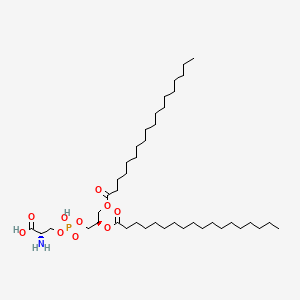
- Formula
- C42H82NO10P
- Weight
- 792.1 Da
- PubChem CID
- 9547096
- Exact Mass
- 791.5676 Da
- LogP
- 12.1
- TPSA
- 172 Ų
- H-Bond Donors
- 3
- H-Bond Acceptors
- 11
- Rotatable Bonds
- 44
- Complexity
- 937
Identifiers (SMILES, InChI)
InChI=1S/C42H82NO10P/c1-3-5-7-9-11-13-15-17-19-21-23-25-27-29-31-33-40(44)50-35-38(36-51-54(48,49)52-37-39(43)42(46)47)53-41(45)34-32-30-28-26-24-22-20-18-16-14-12-10-8-6-4-2/h38-39H,3-37,43H2,1-2H3,(H,46,47)(H,48,49)/t38-,39+/m1/s1
TZCPCKNHXULUIY-RGULYWFUSA-NResearch Indications
Cognitive / Neurological
Best-studied use; randomized trials show modest improvement in learning and memory, most consistent in older adults with mild, non-dementia decline and lower baseline performance.
Classic multicenter trials (largely with bovine-cortex PS) showed behavioral and cognitive benefit; soy-derived PS shows smaller, more equivocal effects.
Small trials suggest PS may improve attention and impulsivity in children; evidence is preliminary.
Stress, Mood and Performance
PS has been shown to blunt the ACTH/cortisol response to acute stress and exercise, underpinning its use for stress and overtraining.
Marketed to reduce exercise-induced cortisol and perceived exertion; limited controlled data.
References (11)
- [2]Effects of a food supplement containing phosphatidylserine on cognitive function in Chinese older adults with mild cognitive impairment
→ Randomized controlled trial demonstrating that PS supplementation improved cognitive function in older adults with mild cognitive impairment over 13 weeks.
- [6]Improvement of short-term memory performance in aged beagles by a nutraceutical supplement containing phosphatidylserine
→ PS-containing supplement improved short-term visuospatial memory in aged dogs in a crossover trial, with effects being long-lasting, suggesting neuroprotective benefits.
- [1]Phosphatidylserine and the human brain
→ Review of 127 articles concluding that PS (300-800 mg/day) is efficiently absorbed, crosses the blood-brain barrier, and safely slows or reverses biochemical alterations in nerve cells, supporting cognitive functions including short-term memory formation.
- [4]A Randomized, Double-Blind, Placebo-Controlled, Parallel Study Investigating the Efficacy of a Whole Coffee Cherry Extract and Phosphatidylserine Formulation
→ 42-day study in 138 healthy adults (40-65 years) with self-reported memory problems showed PS-containing supplement improved memory, accuracy, focus, concentration, and learning.
- [5]The Effects of Phosphatidylserine and Omega-3 Fatty Acid-Containing Supplement on Late Life Depression
→ Study found that PS combined with omega-3 fatty acids (100mg PS, 119mg DHA, 70mg EPA three times daily) improved depression symptoms in elderly patients over 12 weeks, as measured by clinical evaluations and salivary cortisol levels.
- [7]A Magtein®, Magnesium L-Threonate, -Based Formula Improves Brain Cognitive Functions in Healthy Chinese Adults
→ Double-blind study showing a formula containing magnesium L-threonate and phosphatidylserine improved cognitive test performance in 109 healthy adults aged 18-65 years at 2g/day dosage.
- [3]The effect of phosphatidylserine administration on memory and symptoms of attention-deficit hyperactivity disorder
→ Double-blind study showing 200 mg/day PS supplementation significantly improved ADHD symptoms, short-term auditory memory, and mental performance in children aged 4-14 years over 2 months.
- [8]Crook TH, Tinklenberg J, Yesavage J, Petrie W, Nunzi MG, Massari DC Effects of phosphatidylserine in age-associated memory impairment Neurology (1991)
→ In 149 patients with age-associated memory impairment, bovine-cortex phosphatidylserine 100 mg three times daily for 12 weeks improved learning and everyday-memory task performance versus placebo, most in those with lower baseline function.
- [9]Cenacchi T, Bertoldin T, Farina C, Fiori MG, Crepaldi G Cognitive decline in the elderly: a double-blind, placebo-controlled multicenter study on efficacy of phosphatidylserine administration Aging (Milano) (1993)
→ In 494 elderly patients with cognitive decline, phosphatidylserine 300 mg/day for 6 months significantly improved behavioral and cognitive measures versus placebo.
- [10]Kato-Kataoka A, Sakai M, Ebina R, Nonaka C, Asano T, Miyamori T Soybean-derived phosphatidylserine improves memory function of the elderly Japanese subjects with memory complaints Journal of Clinical Biochemistry and Nutrition (2010)
→ In 78 elderly with memory complaints, soy-derived phosphatidylserine (100-300 mg/day) for 6 months improved memory scores in the subgroup with lower baseline performance.
- [11]Vakhapova V, Richter Y, Cohen T, Herzog Y, Korczyn AD Safety of phosphatidylserine containing omega-3 fatty acids in non-demented elderly: a double-blind placebo-controlled trial followed by an open-label extension BMC Neurology (2011)
→ PS-DHA (phosphatidylserine with attached omega-3 fatty acids) was safe and well tolerated in non-demented elderly with memory complaints over 15 weeks plus extension, with signals of memory benefit.
Continue researching Phosphatidylserine
Keep scientific evidence separate from commercial availability. Review how claims are evaluated, explore question-led research paths, or inspect disclosed source records without changing the editorial conclusions on this page.