Pregnenolone
A steroid hormone synthesized from cholesterol that serves as the master precursor to all other steroid hormones, with emerging evidence for direct neurosteroid activity supporting memory, mood, and neuroprotection.
Evidence-led profile
Research snapshot
- Evidence stage
- Emerging research
- References
- 7 linked sources
- Research coverage
- 1 area
- Editorial review
- Mar 8, 2026
Published by the PepGuide Editorial Team using our research methodology.
Overview
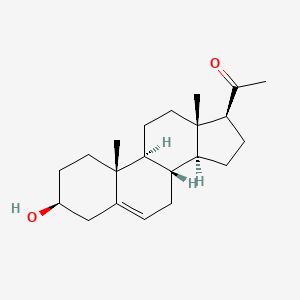
Pregnenolone is a C21 steroid hormone derived from cholesterol via the side-chain cleavage enzyme CYP11A1 (P450scc), a reaction that occurs primarily in the adrenal cortex, gonads, and brain. As the first steroid produced in the steroidogenic cascade, pregnenolone occupies a unique position as the universal precursor to virtually all other steroid hormones — it is metabolized downstream into DHEA and the androgens, progesterone and the progestins, cortisol and the glucocorticoids, aldosterone and the mineralocorticoids, and estradiol and the estrogens. This branching biosynthetic tree makes pregnenolone the "mother of all steroid hormones," and its levels decline significantly with age, paralleling the broader decline in steroid hormone production.
Beyond its role as a precursor, pregnenolone and its sulfated conjugate (pregnenolone sulfate) function as potent neurosteroids — steroid molecules synthesized locally in the brain that directly modulate neurotransmitter receptor activity. Pregnenolone sulfate is a positive allosteric modulator of NMDA glutamate receptors and a negative modulator of GABA-A and glycine receptors, producing net excitatory and pro-cognitive effects. Animal studies have consistently demonstrated that pregnenolone sulfate enhances learning, memory consolidation, and hippocampal long-term potentiation. In rodent models of aging, pregnenolone levels in the hippocampus correlate directly with spatial memory performance. These neurosteroid actions are independent of pregnenolone's conversion to downstream hormones and represent a distinct pharmacological mechanism.
Clinical interest in pregnenolone supplementation spans cognitive decline, mood disorders, and schizophrenia. Preliminary clinical trials in schizophrenia have shown improvements in negative symptoms and cognitive function at doses of 100-500 mg/day. In age-related cognitive decline, pregnenolone's dual action — as both a neurosteroid and a precursor that can replenish declining hormone levels — offers theoretical advantages over single-hormone replacement. However, because pregnenolone can be converted to multiple hormones, its supplementation carries unpredictable downstream effects that vary by individual enzyme expression. Pregnenolone is available as an over-the-counter supplement in the United States. It works within the same neuroendocrine axis as DHEA, progesterone, and testosterone, and its neurosteroid effects complement those of other cognitive-supporting compounds like phosphatidylserine and lion's mane.
Research
Reported Effects
Individual Variability:: Effectiveness is highly individual due to unpredictable hormone conversion patterns - some users experience dramatic benefits while others see no effects or adverse reactions. Dose-Dependent Response:: Starting doses of 5-10mg are often more effective than higher doses (50-100mg), with many users reporting better results at lower amounts. Time to Effect:: Most positive responders notice benefits within 3-7 days, though some effects on energy and mood can be immediate while cognitive benefits may take 2-3 weeks. Gender Differences:: Women may experience stronger effects on mood and energy, while men report more variable results with concerns about estrogen conversion
Safety and Limitations
Safety Profile: Pregnenolone
Common Side Effects
- Acne and oily skin due to downstream androgenic metabolite conversion
- Mood changes: irritability, anxiety, or euphoria
- Headache and dizziness
- Insomnia or vivid dreams
- Mild hair growth or hair loss (androgenic effects)
- Breast tenderness in both men and women
Serious Adverse Effects
- Hormonal disruption: As the "mother hormone," pregnenolone feeds into cortisol, DHEA, progesterone, estrogen, and testosterone pathways; supplementation can unpredictably alter multiple hormone levels
- Potential acceleration of hormone-sensitive cancers (breast, prostate, endometrial)
- Heart palpitations and arrhythmias reported at high doses
- Adrenal suppression with chronic high-dose use (HPA axis feedback)
- Rare mood destabilization including manic episodes in bipolar-prone individuals
Contraindications
- Hormone-sensitive cancers or history thereof (breast, prostate, ovarian, endometrial)
- Polycystic ovary syndrome (may worsen androgenic symptoms)
- Active liver disease (hepatic metabolism required for conversion)
- Pregnancy and lactation (potent hormonal effects on fetal development)
- Children and adolescents (may interfere with normal hormonal development)
Drug Interactions
- HRT / oral contraceptives: Unpredictable interactions via shared hormone pathways
- CYP3A4 inducers/inhibitors: Alter pregnenolone metabolism and downstream conversion
- Ketoconazole and other steroidogenesis inhibitors: May block pregnenolone conversion
- Corticosteroids: Combined adrenal axis effects; risk of excess cortisol or suppression
- Anticonvulsants: Pregnenolone sulfate modulates GABA and NMDA receptors; may alter seizure threshold
Population-Specific Considerations
- Elderly: Often marketed for anti-aging; baseline hormone panel essential before use
- Athletes: May trigger positive doping test due to steroid metabolite conversion
- Mental health patients: Some research suggests benefit in schizophrenia, but use only under psychiatric supervision
- Regular monitoring: Hormone panels (DHEA-S, cortisol, estradiol, testosterone) recommended every 3–6 months
Common Side Effects
- Hormonal Imbalances:: Risk of gynecomastia in men, increased estrogen, progesterone dominance, and disruption of natural hormone production, especially at higher doses
- Anxiety and Stimulation:: Some users report increased anxiety, restlessness, tingling sensations in hands/feet, and overstimulation particularly in first few days or at high doses
- Hair Loss:: Reports of accelerated hair loss and premature graying in some users, possibly due to downstream hormone conversion
- Sleep Disruption:: Insomnia if taken too late in day, though paradoxically some users experience improved sleep quality at appropriate timing and dosing
Mechanism of Action
Pregnenolone is the master precursor neurosteroid synthesized from cholesterol via the cytochrome P450scc (CYP11A1) enzyme in mitochondria of the brain, adrenal glands, and gonads. As the biosynthetic precursor to all other steroid hormones—including progesterone, DHEA, cortisol, testosterone, and estradiol—pregnenolone occupies a central position in steroidogenesis. Its mechanism of action involves both genomic effects through downstream hormone production and rapid non-genomic effects as a direct neuromodulator acting on membrane-bound ion channels and receptors.
Pregnenolone sulfate (PS), its sulfated metabolite, acts as a negative allosteric modulator of GABAA receptors, reducing inhibitory neurotransmission and thereby increasing neuronal excitability and alertness. PS simultaneously functions as a positive allosteric modulator of NMDA receptors, enhancing glutamatergic excitatory transmission critical for synaptic plasticity, long-term potentiation (LTP), and memory formation (Bairamova et al., Research Results in Pharmacology 2023). Pregnenolone also activates sigma-1 receptors, which modulate calcium signaling, endoplasmic reticulum stress responses, and neuronal survival. Through sigma-1 receptor activation, pregnenolone exhibits anxiolytic and neuroprotective effects. Additionally, pregnenolone influences microtubule dynamics by binding to microtubule-associated protein 2 (MAP2), promoting neurite outgrowth. Its conversion to allopregnanolone—a potent positive GABAA modulator—provides opposing effects that create a balanced neurosteroid system regulating mood, cognition, and stress responses.
Research protocol summary
- Typical Dose
- 10-50mg daily is most commonly used, taken in the morning to avoid sleep disruption
These values summarize cataloged research protocols. They are not personal dosing instructions or medical guidance.
Molecular Structure
- Formula
- C21H32O2
- Weight
- 316.5 Da
- PubChem CID
- 8955
- Exact Mass
- 316.2402 Da
- LogP
- 4.2
- TPSA
- 37.3 Ų
- H-Bond Donors
- 1
- H-Bond Acceptors
- 2
- Rotatable Bonds
- 1
- Complexity
- 550
Identifiers (SMILES, InChI)
InChI=1S/C21H32O2/c1-13(22)17-6-7-18-16-5-4-14-12-15(23)8-10-20(14,2)19(16)9-11-21(17,18)3/h4,15-19,23H,5-12H2,1-3H3/t15-,16-,17+,18-,19-,20-,21+/m0/s1
ORNBQBCIOKFOEO-QGVNFLHTSA-NReferences (7)
- [1]Steroid pregnenolone sulfate enhances NMDA-receptor-independent long-term potentiation at hippocampal CA1 synapses: role for L-type calcium channels and sigma-receptors
→ Pregnenolone sulfate was found to facilitate a unique form of long-term potentiation in hippocampal neurons independent of NMDA receptors, suggesting novel mechanisms for memory enhancement through calcium channels and sigma receptors.
- [2]Role of pregnenolone, dehydroepiandrosterone and their sulfate esters in brain and other tissues in relation to aging, stress and behavior
→ Research demonstrates that pregnenolone and its metabolites decline with age and play crucial roles in memory, neuroprotection, and stress response regulation, with supplementation showing promise for age-related cognitive decline.
- [3]The neurosteroid pregnenolone promotes degradation of key proteins in the innate immune signaling to suppress inflammation
→ Pregnenolone was shown to suppress inflammatory responses by promoting degradation of immune signaling proteins, suggesting anti-inflammatory and neuroprotective properties.
- [4]Development and validation of a quantitative proton NMR method for the analysis of pregnenolone
→ This FDA study validated analytical methods for pregnenolone quality control, addressing concerns about purity and standardization in over-the-counter supplements and compounded products.
- [5]Improvement of Psychotic Symptoms and the Role of Tissue Plasminogen Activator
→ Pregnenolone was identified as one of several compounds that may improve psychotic symptoms through modulation of tissue plasminogen activator and neuroplasticity mechanisms.
- [6]Scientific overview of hormone treatment used for rejuvenation
→ Review concludes there is limited evidence supporting pregnenolone for rejuvenation in healthy older adults, suggesting it should only be used in cases of documented deficiency rather than as a general anti-aging supplement.
- [7]Over-the-Counter 'Adrenal Support' Supplements Contain Thyroid and Steroid-Based Adrenal Hormones
→ Testing revealed that many commercial supplements marketed for adrenal support contain undeclared steroid hormones including pregnenolone, raising safety and regulatory concerns.
Continue researching Pregnenolone
Keep scientific evidence separate from commercial availability. Review how claims are evaluated, explore question-led research paths, or inspect disclosed source records without changing the editorial conclusions on this page.