Selenomethionine
The principal organic form of dietary selenium, an amino acid analog of methionine with selenium replacing sulfur, offering superior bioavailability and tissue retention compared to inorganic selenium forms through non-specific incorporation into body proteins.
Evidence-led profile
Research snapshot
- Evidence stage
- Emerging research
- References
- 4 linked sources
- Research coverage
- 1 area
- Editorial review
- Jul 7, 2026
Published by the PepGuide Editorial Team using our research methodology.
Overview
Selenomethionine (SeMet) is a naturally occurring selenium-containing amino acid in which selenium replaces the sulfur atom in methionine. It is the predominant form of selenium in plant-based foods — particularly Brazil nuts, grains, and legumes grown in selenium-adequate soil — where plants non-specifically incorporate selenomethionine into their proteins via the methionine biosynthetic pathway, as methionyl-tRNA synthetase does not discriminate between methionine and selenomethionine. This same non-specific incorporation occurs in human tissues: when selenomethionine is consumed, it enters the general methionine pool and is incorporated into body proteins (albumin, hemoglobin, skeletal muscle) wherever methionine would normally be placed, creating a reservoir of selenium that is released during normal protein turnover.
This non-specific protein incorporation gives selenomethionine two distinct pharmacokinetic advantages over inorganic selenium forms (sodium selenite, sodium selenate). First, tissue retention is substantially greater — selenomethionine stored in body proteins provides a sustained-release selenium pool that buffers against dietary fluctuations. Second, whole-body selenium status increases more effectively with selenomethionine supplementation, as measured by plasma selenium, erythrocyte selenium, and total body selenium. For specific selenoprotein synthesis, however, selenomethionine must first be catabolized: it is converted to selenocysteine via the trans-selenation pathway (analogous to the trans-sulfuration pathway), or metabolized to hydrogen selenide (the central metabolic hub for selenoprotein synthesis) through selenomethionine gamma-lyase or the methionine cycle. This means selenomethionine serves dual roles: as a non-specific selenium reserve and as a precursor for functional selenoprotein synthesis.
Clinical applications of selenomethionine mirror those of selenium generally but leverage its superior bioavailability. In thyroid autoimmunity, supplementation with 200 mcg/day of selenomethionine has demonstrated reductions in TPO antibody levels and improvements in quality of life in multiple trials of Hashimoto's thyroiditis patients. For cancer prevention, selenomethionine was the form used in the SELECT (Selenium and Vitamin E Cancer Prevention Trial) study, which found no benefit for prostate cancer in an already selenium-replete population — underscoring that selenium supplementation benefits are primarily observed in individuals with suboptimal baseline selenium status. Selenomethionine is available as pure L-selenomethionine or as selenium-enriched yeast (which contains 60-80% of its selenium as selenomethionine along with other organic selenium species). Typical supplemental doses range from 50-200 mcg selenium/day. It should be considered alongside other selenium forms and complementary nutrients including vitamin E, zinc, and iodine for comprehensive antioxidant and thyroid support.
Research
Reported Effects
Bioavailability:: Selenomethionine shows superior absorption compared to inorganic selenium forms like selenite, with 28-46% stored in skeletal muscle. Dose-Dependent:: Benefits are most apparent in those with low selenium status; those with adequate levels may experience no benefit or potential harm. Individual Variation:: Effectiveness varies significantly based on baseline selenium status, geographic location (soil selenium content), and diet. Synergy Required:: Often works best when combined with other nutrients like zinc for thyroid support or iodine for optimal thyroid function
Safety and Limitations
Safety Profile: Selenomethionine
Common Side Effects
- Garlic-like breath odor and body odor (dimethyl selenide exhalation—characteristic of selenium metabolism)
- Mild nausea, bloating, and gastrointestinal discomfort
- Metallic taste
- Brittle nails and hair changes with prolonged high-dose use (>200 mcg/day)
Serious Adverse Effects
- Selenosis: chronic intake above 400 mcg/day leads to hair loss, nail dystrophy, peripheral neuropathy, fatigue, and skin lesions; selenomethionine is particularly prone to accumulation because it is non-specifically incorporated into body proteins (methionine pools), creating a larger selenium reservoir than other forms
- Diabetes risk: the SELECT trial (200 mcg/day selenomethionine) showed a statistically significant 7% increase in type 2 diabetes incidence over 5.5 years in selenium-replete men
- Prostate cancer: SELECT showed no benefit for prostate cancer prevention and a non-significant increase in high-grade prostate cancer with combined selenium + vitamin E supplementation
- Acute toxicity: extremely rare at supplement doses but accidental overdose can cause multi-organ failure; the 2008 liquid supplement contamination event (up to 40,800 mcg per dose) caused acute selenosis in over 200 people
Contraindications
- Serum selenium already at or above adequate levels (>122 mcg/L); supplementation in replete individuals increases risk without benefit
- History of type 2 diabetes or strong diabetes risk factors (insulin resistance, metabolic syndrome)
- History of non-melanoma skin cancer
- Uncorrected iodine deficiency (selenium supplementation upregulates deiodinase activity, potentially worsening hypothyroidism)
- Pregnancy at doses exceeding 60 mcg/day supplemental (total intake including diet should not exceed 400 mcg/day)
Drug Interactions
- Cisplatin and platinum chemotherapy: antioxidant selenium may interfere with oxidative mechanisms of cytotoxicity; some data suggests renal protection—requires oncologist coordination
- Statin-niacin combinations: selenium (with vitamins C, E, and beta-carotene) blunted HDL-C response to simvastatin-niacin in the HATS trial
- Thyroid hormones (levothyroxine): selenomethionine enhances T4-to-T3 conversion via deiodinase support; may require thyroid dose adjustment
- Gold compounds (auranofin): gold and selenium form insoluble complexes; reduced bioavailability of both
- Immunosuppressants: selenium enhances immune function; may partially counteract immunosuppressive therapy
Population-Specific Considerations
- Hashimoto's thyroiditis: 200 mcg/day selenomethionine reduces TPO antibodies in selenium-deficient populations; one of the best-studied indications
- Form advantage: selenomethionine has higher bioavailability (~90%) than selenite and is the form used in most major clinical trials (NPC, SELECT); however, tissue accumulation is also greater
- Elderly: reduced renal clearance increases selenosis risk; dose conservatively (50–100 mcg/day) and verify serum levels
- Athletes: exercise increases selenium turnover; 100–200 mcg/day may support antioxidant defense without excess
- Pregnant/lactating women: essential for fetal neurodevelopment; 60 mcg/day supplemental is standard; do not exceed UL of 400 mcg/day total
Common Side Effects
- Pro-Inflammatory Response:: Some users with chronic inflammatory conditions or dysbiosis report worsening fatigue, brain fog, anxiety, and sleep issues
- Mineral Depletion:: Long-term use may deplete zinc, copper, and other trace minerals, requiring additional supplementation
- Toxicity Risk:: Doses approaching or exceeding 400 mcg can cause selenosis symptoms including gastrointestinal distress, hair loss, and neurological issues
- Overmethylation Symptoms:: When combined with methylated B vitamins, some users experience headaches, irritability, and brain zaps
Mechanism of Action
Mechanism of Action
Selenomethionine (SeMet) is an organoselenium compound where selenium replaces the sulfur atom in methionine. It is the predominant form of selenium in plant foods and selenium-enriched yeast, and has unique pharmacokinetic properties compared to inorganic selenium (selenite/selenate).
Dual Incorporation Pathway
Unlike inorganic selenium forms, selenomethionine has two metabolic fates. First, it can be non-specifically incorporated into any protein at methionine positions because methionyl-tRNA synthetase cannot distinguish selenium from sulfur. This creates a distributed whole-body selenium depot in structural proteins that releases selenium gradually during normal protein turnover. Second, it can enter the transsulfuration pathway for conversion to selenocysteine, which feeds into the regulated selenoprotein synthesis machinery.
Selenoprotein Synthesis
The selenocysteine generated from selenomethionine is charged onto a specialized tRNA (tRNA-Sec) by selenophosphate synthetase 2. This tRNA recognizes UGA codons in selenoprotein mRNAs when a SECIS element is present in the 3' UTR. Through this pathway, selenomethionine supports synthesis of glutathione peroxidases (antioxidant defense), thioredoxin reductases (redox regulation), and iodothyronine deiodinases (thyroid hormone activation).
Anti-Cancer Metabolites
Selenomethionine is converted by beta-lyase and gamma-lyase enzymes to methylselenol, which exerts direct anti-proliferative effects. Methylselenol inhibits protein kinase C (PKC), induces single-strand DNA breaks in cancer cells (triggering p53-dependent apoptosis), inhibits VEGF-mediated angiogenesis, and modulates the PI3K/Akt survival pathway. These effects are distinct from the general antioxidant protection provided by selenoproteins.
Bioavailability Advantages
Selenomethionine has approximately 90% bioavailability via intestinal amino acid transporters (system L and B0,+), compared to 50-60% for selenite. Its storage in body proteins provides a buffered selenium supply, resulting in more stable plasma selenium levels and sustained selenoprotein activity. This makes it particularly effective for long-term selenium status optimization.
Dose-Response Considerations
At nutritional doses (50-200 mcg/day), selenomethionine primarily supports selenoprotein synthesis. At supranutritional doses (200-400 mcg/day), increased methylselenol generation may provide additional anti-cancer effects. However, the SELECT trial demonstrated that 200 mcg/day selenomethionine did not reduce prostate cancer risk in selenium-replete men, highlighting the importance of baseline selenium status.
Research protocol summary
- Typical Dose
- 100-200 mcg daily is most commonly used and recommended, with 200 mcg considered safe below the 400 mcg upper limit
These values summarize cataloged research protocols. They are not personal dosing instructions or medical guidance.
Molecular Structure
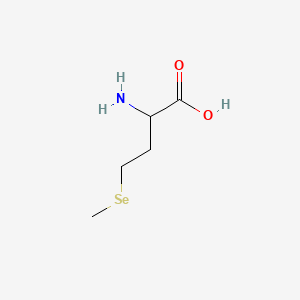
- Formula
- C5H11NO2Se
- Weight
- 196.12 Da
- PubChem CID
- 15103
- Exact Mass
- 196.9955 Da
- TPSA
- 63.3 Ų
- H-Bond Donors
- 2
- H-Bond Acceptors
- 3
- Rotatable Bonds
- 4
- Complexity
- 97
Identifiers (SMILES, InChI)
InChI=1S/C5H11NO2Se/c1-9-3-2-4(6)5(7)8/h4H,2-3,6H2,1H3,(H,7,8)
RJFAYQIBOAGBLC-UHFFFAOYSA-NReferences (4)
- [1]Effects of selenomethionine supplementation on selenium status and thyroid hormone concentrations in healthy adults
→ Selenomethionine supplementation effectively increased selenium status and influenced thyroid hormone metabolism in healthy adults, demonstrating its role in supporting thyroid function.
- [2]Comparative effects of two different forms of selenium on oxidative stress biomarkers in healthy men: a randomized clinical trial
→ This randomized trial compared selenomethionine to other selenium forms and found differential effects on oxidative stress markers, with selenomethionine showing distinct metabolic properties.
- [3]Selenium Kinetics in Humans Change Following 2 Years of Supplementation With Selenomethionine
→ After 2 years of 200 mcg/day selenomethionine supplementation, selenium kinetics changed significantly with increased incorporation into body pools and plasma selenium doubling in most compartments, though absorption rates remained unchanged.
- [4]Lippman SM, Klein EA, Goodman PJ, et al. Effect of selenium and vitamin E on risk of prostate cancer and other cancers: the Selenium and Vitamin E Cancer Prevention Trial (SELECT) JAMA (2009)
→ 200 mcg/day of L-selenomethionine over ~5.5 years was the intervention dose in 35,533 men, defining the most-studied supplemental selenomethionine dose.
Continue researching Selenomethionine
Keep scientific evidence separate from commercial availability. Review how claims are evaluated, explore question-led research paths, or inspect disclosed source records without changing the editorial conclusions on this page.