TRYPTOPHAN
Tryptophan is an essential alpha-amino acid and crucial precursor for the neurotransmitter serotonin, the hormone melatonin, and niacin (Vitamin B3). It cannot be synthesized by the human body and must be obtained through diet.
Evidence-led profile
Research snapshot
- Evidence stage
- Emerging research
- References
- 11 linked sources
- Research coverage
- 3 areas
- Editorial review
- Jul 7, 2026
Published by the PepGuide Editorial Team using our research methodology.
Overview
L-Tryptophan is an essential amino acid that serves as a precursor to serotonin and melatonin, playing a crucial role in mood regulation, sleep quality, and neurotransmitter synthesis. It works by crossing the blood-brain barrier where it converts to 5-HTP and subsequently to serotonin, influencing emotional well-being, sleep patterns, and stress response. Research supports its use for improving sleep quality, reducing anxiety and depression symptoms, and enhancing mood in healthy individuals.
Research
Reported Effects
Timing Matters:: Effectiveness heavily depends on when it's taken - some users need morning dosing due to energizing effects, while others require nighttime dosing for sleep benefits. Dose-Dependent Response:: Research and users indicate that doses ≥1g are more effective than lower doses, with typical ranges of 500mg-3g showing varying results based on individual biochemistry. Individual Variation:: Success rates are highly variable - some users report complete resolution of anxiety and sleep issues, while others experience no benefit or paradoxical effects. Combination Synergy:: Many users report better results when stacking tryptophan with magnesium, B-vitamins, or other sleep aids rather than using it alone
Serotonin precursor metabolism
L-tryptophan is an essential amino acid and the dietary precursor of serotonin (5-HT) and, downstream, melatonin. Because brain serotonin synthesis is substrate-limited and tryptophan competes with other large neutral amino acids for transport across the blood-brain barrier, supplementation can raise central serotonin, providing a rationale for effects on mood, sleep, and appetite. The kynurenine pathway consumes most dietary tryptophan and links it to immune and neuroinflammatory signaling.
- Rate-limiting precursor for brain serotonin and melatonin
- Central uptake competes with other large neutral amino acids
- Kynurenine branch connects tryptophan to immune/neuroinflammatory pathways
Clinical use and safety
Tryptophan is licensed as an antidepressant adjunct in some countries and widely sold as a supplement for mood and sleep. Evidence is modest and of variable quality. Historically, a contaminated batch of L-tryptophan caused an outbreak of eosinophilia-myalgia syndrome (EMS) in 1989, prompting regulatory restrictions; modern pharmaceutical-grade product is considered the safe form. Caution is warranted when combined with serotonergic drugs due to serotonin syndrome risk.
- Modest antidepressant and sleep benefits in controlled studies
- 1989 EMS outbreak linked to a contaminated batch shaped regulation
- Serotonin syndrome risk when combined with serotonergic agents
Safety and Limitations
Safety Profile: Tryptophan
Common Side Effects
- Drowsiness and sedation (particularly at doses >1 g; often the intended effect when used for sleep)
- Gastrointestinal symptoms: nausea, heartburn, and bloating
- Dry mouth
- Headache
- Dizziness and lightheadedness
- Blurred vision
Serious Adverse Effects
- Serotonin syndrome: Most critical risk; can occur when combined with serotonergic medications; symptoms include agitation, hyperthermia, tachycardia, hypertension, myoclonus, and in severe cases seizures and death
- Eosinophilia-myalgia syndrome (EMS): Historical outbreak in 1989 linked to contaminated L-tryptophan from a single manufacturer; led to FDA ban (since lifted); modern manufacturing appears safe, but the event underscores the importance of quality sourcing
- Excessive sedation impairing driving or operating machinery
- Rare hepatotoxicity at high doses
- Worsening of existing eosinophilic conditions
Contraindications
- Concurrent MAOI therapy (absolute contraindication—serotonin syndrome risk)
- Concurrent high-dose SSRI/SNRI therapy (relative contraindication without physician monitoring)
- Eosinophilic disorders
- Carcinoid syndrome (excess serotonin production)
- Severe hepatic impairment
- Pregnancy (high-dose supplementation may affect fetal serotonin development)
Drug Interactions
- SSRIs, SNRIs, MAOIs, triptans, tramadol: Serotonin syndrome risk—the most important interaction
- Sedatives and CNS depressants: Additive sedation
- Carbidopa: Can shunt more tryptophan to serotonin pathway, increasing both efficacy and toxicity risk
- Dextromethorphan: Serotonergic; avoid combination
- Phenothiazines: Enhanced sedation
Population-Specific Considerations
- Insomnia: Common use at 0.5–2 g before bedtime; generally effective and well tolerated
- Depression: Adjunctive use controversial; should only be combined with antidepressants under psychiatric supervision
- Quality assurance: Purchase only from GMP-certified manufacturers; EMS history underscores contamination risk
- Timing: Take away from protein-rich meals for best absorption (competes with other amino acids for transport)
- Niacin pathway: Tryptophan is also a vitamin B3 precursor; high-dose supplementation may affect niacin metabolism
Common Side Effects
- Sleep Disruption:: Paradoxically, some users report insomnia, restless sleep, or early morning waking when taking tryptophan intended for sleep improvement
- Digestive Issues:: GI problems including acid reflux, GERD, nausea, and stomach discomfort are commonly reported, particularly with 5-HTP conversion
- Energizing/Stimulating:: Multiple users describe feeling wired or anxious rather than calm, experiencing effects similar to SSRI medications
- Tolerance Development:: Several users report that tryptophan stops working after weeks or months of consistent use, requiring breaks to restore effectiveness
Mechanism of Action
Mechanism of Action: Tryptophan
Serotonin Synthesis
L-Tryptophan crosses the blood-brain barrier via the large neutral amino acid transporter (LAT1), competing with branched-chain amino acids (BCAAs). Once in serotonergic neurons, it is hydroxylated by tryptophan hydroxylase 2 (TPH2)—the rate-limiting enzyme—to produce 5-HTP, then converted to serotonin by AADC. Brain serotonin levels are directly dependent on tryptophan availability, making it the only neurotransmitter whose synthesis is diet-dependent.
Melatonin and Circadian Regulation
The serotonin-to-melatonin conversion in the pineal gland is under strict circadian control. Norepinephrine release from sympathetic fibers (triggered by darkness signals from the SCN) activates beta-adrenergic receptors, upregulating AANAT activity. Melatonin acts on MT1/MT2 receptors to entrain circadian rhythms, promote sleep onset, and modulate immune function.
Kynurenine Pathway and Immune Modulation
IDO expression is strongly induced by interferon-gamma (IFN-γ) during inflammation, shunting tryptophan away from serotonin synthesis toward kynurenine metabolites. This immune-mediated tryptophan depletion has dual effects: it starves intracellular pathogens and activated T-cells of tryptophan, while generating immunomodulatory metabolites. The balance between neuroprotective kynurenic acid and neurotoxic quinolinic acid is implicated in depression and neurodegeneration.
NAD+ Production
The terminal product of the kynurenine pathway is quinolinic acid, which is converted to nicotinic acid mononucleotide (NaMN) by quinolinate phosphoribosyltransferase, ultimately yielding NAD+. This de novo NAD+ synthesis pathway is particularly important when dietary niacin intake is low.
Gut-Brain Axis Signaling
Microbial tryptophan metabolism produces indole compounds that activate AhR signaling, promoting IL-22 production and maintaining intestinal barrier integrity. These microbial metabolites also signal to the CNS via the vagus nerve, representing a key gut-brain communication channel that influences mood and behavior.
Research protocol summary
- Typical Dose
- Most users and studies utilize 500mg-2g daily, with research suggesting doses ≥1g are more effective for sleep improvements
These values summarize cataloged research protocols. They are not personal dosing instructions or medical guidance.
Molecular Structure
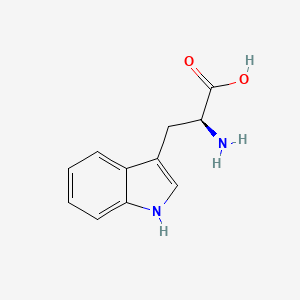
- Formula
- C11H12N2O2
- Weight
- 204.22 Da
- PubChem CID
- 6305
- Exact Mass
- 204.0899 Da
- LogP
- -1.1
- TPSA
- 79.1 Ų
- H-Bond Donors
- 3
- H-Bond Acceptors
- 3
- Rotatable Bonds
- 3
- Complexity
- 245
Identifiers (SMILES, InChI)
InChI=1S/C11H12N2O2/c12-9(11(14)15)5-7-6-13-10-4-2-1-3-8(7)10/h1-4,6,9,13H,5,12H2,(H,14,15)/t9-/m0/s1
QIVBCDIJIAJPQS-VIFPVBQESA-NResearch Indications
Primary Research Areas
As a serotonin precursor, L-tryptophan is used as an adjunct or natural antidepressant; meta-analysis shows a signal over placebo but limited-quality evidence.
Supplementation improves sleep latency and quality in some trials via serotonin/melatonin synthesis.
Shifts emotional bias positively in healthy volunteers, supporting serotonergic mood modulation.
Other Uses
Explored for mood symptoms linked to reduced serotonergic tone.
Investigated for satiety and craving regulation via serotonergic pathways.
References (11)
- [5]Effects of Diet on Sleep: A Narrative Review
→ Narrative review confirmed tryptophan's role in promoting sleep through increased serotonin production, with dietary tryptophan intake being one of the most studied nutrients for improving sleep quality.
- [2]A systematic review of the effect of L-tryptophan supplementation on mood and emotional functioning
→ Review of 11 RCTs showed that taking 0.14-3g of tryptophan daily effectively decreased anxiety and increased positive mood in healthy individuals, with four studies demonstrating significant improvements in negative feelings and happiness.
- [3]How important is tryptophan in human health?
→ Comprehensive review highlighting tryptophan's crucial role in treating depression, sleep disorders, cognitive function, and anxiety through its relationship with serotonin and melatonin synthesis, while emphasizing its importance in the brain-gut axis.
- [4]Tryptophan-enriched diet or 5-hydroxytryptophan supplementation given in a randomized controlled trial impacts social cognition on a neural and behavioral level
→ Randomized controlled trial demonstrated that tryptophan supplementation significantly improved social cognition, emotional understanding, and impulse control at both neural and behavioral levels.
- [6]Tryptophan catabolites from microbiota engage aryl hydrocarbon receptor and balance mucosal reactivity via interleukin-22
→ Study revealed that gut microbiota metabolize tryptophan into compounds that activate immune receptors and regulate intestinal inflammation, demonstrating tryptophan's role in the microbiota-gut-brain axis.
- [7]Involvement of the microbiota-gut-brain axis in chronic restraint stress: disturbances of the kynurenine metabolic pathway in both the gut and brain
→ Research showed that chronic stress disrupts tryptophan metabolism in both the gut and brain, highlighting the importance of the tryptophan-kynurenine pathway in stress-related neuropsychiatric disorders.
- [8]Inflammatory Depression-Mechanisms and Non-Pharmacological Interventions
→ Review discussed how inflammation alters tryptophan metabolism and contributes to depression, with tryptophan depletion being linked to reduced serotonin synthesis in inflammatory depression subtypes.
- [1]The impact of tryptophan supplementation on sleep quality: a systematic review, meta-analysis, and meta-regression
→ Meta-analysis found that tryptophan supplementation significantly reduced wake after sleep onset by 81 minutes per gram, with doses ≥1g showing superior effects compared to lower doses.
- [9]Wang D, Li W, Xiao Y, et al. Tryptophan for the sleeping disorder and mental symptom of new-type drug dependence: A randomized, double-blind, placebo-controlled trial Medicine (Baltimore) (2016)
→ Randomized controlled trial used oral L-tryptophan 1000 mg/day (500 mg twice daily) for 14 days, improving sleep and mental symptoms.
- [10]Shaw KA, Turner J, Del Mar C Tryptophan and 5-hydroxytryptophan for depression Cochrane Database of Systematic Reviews (2002)
→ Meta-analysis of 2 quality trials (64 patients) found tryptophan/5-HTP better than placebo for depression (OR 4.10), but evidence was insufficient to recommend routine use given quality limits and EMS safety concerns.
- [11]Murphy SE, Longhitano C, Ayres RE, et al. Tryptophan supplementation induces a positive bias in the processing of emotional material in healthy female volunteers Psychopharmacology (2006)
→ In a double-blind RCT, tryptophan 1 g three times daily for 14 days shifted emotional processing in a positive direction, opposite to the negative biases seen in depression.
Continue researching TRYPTOPHAN
Keep scientific evidence separate from commercial availability. Review how claims are evaluated, explore question-led research paths, or inspect disclosed source records without changing the editorial conclusions on this page.