Alpha-Lipoic Acid
Alpha-lipoic acid (ALA) is a sulfur-containing organosulfur compound that functions as a mitochondrial coenzyme and potent antioxidant, with clinical applications in diabetic neuropathy and metabolic health.
Evidence-led profile
Research snapshot
- Evidence stage
- Emerging research
- References
- 8 linked sources
- Research coverage
- 1 area
- Editorial review
- Mar 8, 2026
Published by the PepGuide Editorial Team using our research methodology.
Overview
Alpha-lipoic acid (ALA), also known as thioctic acid, is a naturally occurring dithiol compound synthesized in small quantities by mitochondrial lipoic acid synthase. It serves as an essential cofactor for mitochondrial α-keto acid dehydrogenase complexes, including pyruvate dehydrogenase and α-ketoglutarate dehydrogenase, making it integral to aerobic energy metabolism. Uniquely among biological antioxidants, ALA is amphiphilic (active in both aqueous and lipid environments) and can regenerate other antioxidants including vitamins C and E, coenzyme Q10, and glutathione.
The strongest clinical evidence for ALA supplementation exists for diabetic peripheral neuropathy. The SYDNEY, NATHAN, and ALADIN trials demonstrated that intravenous ALA (600 mg/day) significantly improved neuropathic symptoms including pain, burning, and numbness compared to placebo. Oral supplementation at 600 mg/day has also shown benefit, though with somewhat slower onset. In Germany, ALA has been an approved treatment for diabetic neuropathy for several decades. Additional research has explored ALA for weight management, insulin sensitivity, non-alcoholic fatty liver disease, and multiple sclerosis, with varying levels of evidence.
Commercially available ALA supplements contain a racemic mixture of R-lipoic acid (the biologically active enantiomer) and S-lipoic acid, though pure R-lipoic acid formulations are also available at premium cost. Typical oral doses range from 300 to 600 mg daily. ALA is generally well tolerated, with nausea and skin rash being the most common side effects. It can lower blood glucose levels, so individuals taking antidiabetic medications should monitor blood sugar carefully to avoid hypoglycemia.
Research
Reported Effects
Neuropathy Treatment:: Highly effective for nerve-related issues, with many users calling it the only supplement that worked for their nerve pain where other interventions failed. Dosage-Dependent Response:: Effectiveness varies significantly with dose and form, with 300-600mg daily being the most commonly effective range for therapeutic benefits. Synergistic Effects:: Works best when combined with other supplements like ALCAR, B vitamins, and CoQ10, particularly for mitochondrial and nerve support. Time to Effect:: Some users report immediate benefits while others need 30-60 days of consistent use to see significant improvements in chronic conditions
Safety and Limitations
Safety Profile: Alpha Lipoic Acid (ALA/Thioctic Acid)
Common Side Effects
- GI effects (most common): Nausea, vomiting, diarrhea, abdominal discomfort — dose-related, more frequent above 600 mg/day
- Dermatologic: Skin rash, urticaria, pruritus
- CNS: Headache, dizziness, paresthesias (tingling)
- Metabolic: Hypoglycemia (due to insulin-sensitizing effects), particularly in diabetic patients
Serious Adverse Effects
- Insulin autoimmune syndrome (IAS/Hirata disease): Rare but serious; primarily reported in Japanese and Korean populations with specific HLA genotypes (HLA-DRB1*0406) — presents as severe hypoglycemia
- Allergic reactions: Anaphylaxis reported rarely
- Hepatotoxicity: Rare cases of elevated liver enzymes
Contraindications
- Known hypersensitivity to alpha lipoic acid
- History of insulin autoimmune syndrome
- Caution in thiamine (B1) deficiency — ALA may worsen deficiency-related conditions
- Heavy alcohol use (increased risk of thiamine depletion)
Drug Interactions
- Insulin/oral hypoglycemics: ALA enhances insulin sensitivity; dose adjustments of diabetic medications may be needed to prevent hypoglycemia
- Thyroid hormones (levothyroxine): ALA may reduce circulating T3/T4 levels; monitor thyroid function
- Cisplatin/other platinum agents: ALA may reduce chemotherapy efficacy as an antioxidant — avoid concurrent use without oncologist approval
- Iron supplements: ALA chelates metals; separate administration by at least 2 hours
- Alcohol: Reduces ALA efficacy and increases risk of lactic acidosis
Special Populations
- Pregnancy (Category B-equivalent): Limited human data; animal studies show no harm at therapeutic doses; use only if clearly needed
- Pediatric: Not recommended; reports of fatal overdose in children (particularly <6 years) — keep out of reach of children
- Diabetic neuropathy: Primary therapeutic population; well-studied at 600 mg/day IV or oral (NATHAN, SYDNEY, ALADIN trials)
- Renal impairment: No dose adjustment typically required; ALA is hepatically metabolized
Monitoring Recommendations
- Blood glucose monitoring, especially in diabetic patients initiating ALA
- Thyroid function tests with chronic use
- Hepatic function periodically with long-term use
- Thiamine levels in at-risk populations (alcoholism, malnutrition)
- Monitor for signs of hypoglycemia (tremor, sweating, confusion)
Regulatory Note: ALA is a dietary supplement in the US. In Germany, it is an approved prescription medication (Thioctacid) for diabetic polyneuropathy with extensive clinical trial data.
Common Side Effects
- Gastrointestinal Issues:: Heartburn, nausea, and stomach discomfort are commonly reported, especially when taken on empty stomach or at higher doses
- Fatigue and Low Blood Sugar:: Some users experience extreme tiredness or hypoglycemic symptoms the day after taking ALA, particularly if not consuming adequate carbohydrates
- Heavy Metal Redistribution:: Concerns about ALA's chelating properties potentially redistributing heavy metals improperly if not used with appropriate protocols
- Individual Sensitivity:: Some users report anxiety, headaches, or worsening of symptoms, suggesting significant individual variation in response and need for careful dosing
Mechanism of Action
Redox Cycling & Universal Antioxidant
Alpha-lipoic acid (ALA) is a dithiol compound that functions as a cofactor and potent redox agent. Both ALA and its reduced form dihydrolipoic acid (DHLA) are active, creating a redox couple that scavenges hydroxyl radicals, hypochlorous acid, peroxynitrite, and singlet oxygen. Uniquely, this pair operates in both aqueous and lipid environments, enabling protection across all cellular compartments (PMID: 7649494).
Antioxidant Network Regeneration
DHLA regenerates other antioxidants from their oxidized forms: it reduces dehydroascorbate back to vitamin C, recycles oxidized glutathione (GSSG) to GSH via non-enzymatic thiol-disulfide exchange, and regenerates alpha-tocopherol (vitamin E) indirectly through ascorbate recycling. ALA also upregulates intracellular glutathione synthesis by enhancing cystine uptake via the xc- transporter and activating Nrf2-ARE signaling (PMID: 12489095).
Mitochondrial Cofactor Function
ALA is an essential cofactor for pyruvate dehydrogenase and alpha-ketoglutarate dehydrogenase complexes, where it serves as the acyl group carrier in oxidative decarboxylation reactions. This role directly supports mitochondrial energy metabolism and substrate flux through the TCA cycle (PMID: 9284364).
Insulin Signaling & Glucose Metabolism
ALA enhances glucose uptake by activating AMPK (AMP-activated protein kinase) and stimulating GLUT4 translocation to the plasma membrane in skeletal muscle and adipocytes. It also improves insulin receptor substrate-1 (IRS-1) phosphorylation and PI3K/Akt signaling, reducing insulin resistance (PMID: 16873688).
Anti-Inflammatory & Metal Chelation
ALA chelates transition metals (Fe²⁺, Cu²⁺, Zn²⁺) that catalyze Fenton reactions, and inhibits NF-kB activation by maintaining IkB-alpha stability, reducing downstream inflammatory cytokine production.
Research protocol summary
- Typical Dose
- 300-600mg daily is most commonly recommended, with 600mg being the standard dose for diabetic neuropathy treatment
These values summarize cataloged research protocols. They are not personal dosing instructions or medical guidance.
Pharmacokinetic Profile
- Half-life
- 0.5 h
- Tmax
- 0.75 h
Molecular Structure
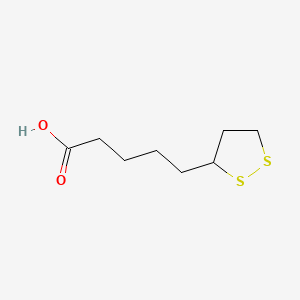
- Formula
- C8H14O2S2
- Weight
- 206.3 Da
- PubChem CID
- 864
- Exact Mass
- 206.0435 Da
- LogP
- 1.7
- TPSA
- 87.9 Ų
- H-Bond Donors
- 1
- H-Bond Acceptors
- 4
- Rotatable Bonds
- 5
- Complexity
- 150
Identifiers (SMILES, InChI)
InChI=1S/C8H14O2S2/c9-8(10)4-2-1-3-7-5-6-11-12-7/h7H,1-6H2,(H,9,10)
AGBQKNBQESQNJD-UHFFFAOYSA-NReferences (8)
- [1]Alpha-lipoic acid as a dietary supplement: molecular mechanisms and therapeutic potential
→ ALA improves glucose and ascorbate handling, increases eNOS activity, activates Phase II detoxification via Nrf2, and reduces inflammation markers through NF-kappa B repression, with beneficial effects achieved at low micromolar levels.
- [2]Alpha-lipoic Acid: An Antioxidant with Anti-aging Properties for Disease Therapy
→ Comprehensive review highlighting ALA's anti-aging effects through its antioxidant properties and potential therapeutic applications in age-related diseases.
- [3]Alpha-lipoic acid supplement in obesity treatment: A systematic review and meta-analysis of clinical trials
→ Meta-analysis demonstrating that ALA supplementation has positive effects on anthropometric indices in overweight and obese individuals, supporting its role as an anti-obesity supplement.
- [4]Alpha-lipoic acid in the treatment of psychiatric and neurological disorders: a systematic review
→ Systematic review examining clinical evidence for ALA's use in psychiatric and neurological conditions, though noting limited clinical evidence despite numerous preclinical studies.
- [5]Efficacy and Safety of the Combination of Palmitoylethanolamide, Superoxide Dismutase, Alpha Lipoic Acid, Vitamins B12, B1, B6, E, Mg, Zn and Nicotinamide for 6 Months in People with Diabetic Neuropathy
→ Six-month trial showing that a combination supplement including 300mg ALA improved diabetic neuropathy symptoms with good safety profile.
- [6]Mitochondrial Dysfunction and Neurodegenerative Disorders: Role of Nutritional Supplementation
→ Review supporting ALA as part of a combination approach for treating mitochondrial dysfunction in neurodegenerative disorders including Parkinson's and Alzheimer's disease.
- [7]The role of diet and non-pharmacologic supplements in the treatment of chronic neuropathic pain: A systematic review
→ Systematic review identifying ALA as one of several nutritional supplements with evidence for managing chronic neuropathic pain in adults.
- [8]Protective effects of alpha lipoic acid (ALA) are mediated by hormetic mechanisms
→ Research demonstrating that ALA's protective effects occur through hormetic dose responses across multiple organ systems, with beneficial adaptive responses at appropriate doses.
Continue researching Alpha-Lipoic Acid
Keep scientific evidence separate from commercial availability. Review how claims are evaluated, explore question-led research paths, or inspect disclosed source records without changing the editorial conclusions on this page.