L-Tyrosine
A precursor amino acid to dopamine, norepinephrine, and epinephrine that supports cognitive performance under stress, mood regulation, and thyroid hormone synthesis.
Evidence-led profile
Research snapshot
- Evidence stage
- Emerging research
- References
- 5 linked sources
- Research coverage
- 1 area
- Editorial review
- Mar 8, 2026
Published by the PepGuide Editorial Team using our research methodology.
Overview
L-Tyrosine is a conditionally essential amino acid synthesized from phenylalanine by the hepatic enzyme phenylalanine hydroxylase. It serves as the foundational precursor for the catecholamine neurotransmitters — dopamine, norepinephrine, and epinephrine — through a well-defined biosynthetic cascade: tyrosine is hydroxylated by tyrosine hydroxylase (the rate-limiting enzyme) to L-DOPA, decarboxylated to dopamine, and further converted to norepinephrine and epinephrine. L-Tyrosine is also the precursor to thyroid hormones (T3 and T4, synthesized by iodination of tyrosine residues in thyroglobulin) and melanin, the pigment responsible for skin, hair, and eye color, giving it a remarkably broad biosynthetic importance.
The primary evidence for L-tyrosine supplementation centers on cognitive performance under physiological stress. Military research has demonstrated that tyrosine (typically 100–150 mg/kg, or approximately 7–10 g for an average adult) significantly attenuates cognitive decline during sleep deprivation, cold exposure, high-altitude hypoxia, and sustained operational stress. Under these conditions, catecholamine turnover is accelerated, depleting neural tyrosine stores and impairing working memory, executive function, and mood. By maintaining the substrate pool for tyrosine hydroxylase, supplemental tyrosine acts as a "catecholamine reserve" that buffers against stress-induced neurotransmitter depletion. Notably, benefits are most pronounced under challenging conditions — in well-rested, non-stressed states, tyrosine supplementation provides minimal additional cognitive benefit, consistent with the rate-limiting nature of tyrosine hydroxylase activity.
For daily nootropic use, N-acetyl-L-tyrosine (NALT) is sometimes preferred for its improved solubility, though bioavailability studies suggest free-form L-tyrosine may be more effective at raising plasma tyrosine levels. Typical supplemental doses range from 500 mg to 2 g taken 30–60 minutes before anticipated stress or demanding cognitive tasks. L-Tyrosine pairs logically with l-theanine and caffeine in focus-oriented stacks, with vitamin-b-complex (B6 is a cofactor for AADC in the dopamine pathway), and with iodine when thyroid support is a concurrent goal. It offers a gentler approach to dopaminergic support compared to direct precursors like l-dopa, and complements adaptogenic stress-resilience compounds such as rhodiola-rosea and ashwagandha.
Research
Reported Effects
Individual Variation:: Effectiveness appears highly individual, with some users experiencing profound benefits while others report no noticeable effects, possibly related to baseline dopamine levels and individual neurochemistry. Tolerance Development:: Multiple users note that benefits diminish over time, with some reporting complete loss of effectiveness after weeks to months of daily use, suggesting need for cycling strategies. Synergistic Effects:: Users report enhanced effectiveness when combined with B vitamins, L-theanine, or taken alongside ADHD medications, with some noting it reduces stimulant side effects and comedowns. Timing Matters:: Effects appear most pronounced when taken on empty stomach in morning, with some users reporting better results taking a second dose mid-day rather than continuous daily use
Safety and Limitations
Safety Profile: L-Tyrosine
Common Side Effects
- Generally well-tolerated at doses of 500–2000 mg/day
- Gastrointestinal symptoms: nausea, heartburn, and stomach upset, particularly on an empty stomach
- Headache (common at higher doses >2 g/day)
- Insomnia and restlessness: tyrosine is a catecholamine precursor (dopamine, norepinephrine, epinephrine); stimulatory effects may disrupt sleep if taken later in the day
- Heart palpitations and mild tachycardia at higher doses
- Anxiety and irritability (dose-dependent, related to catecholamine stimulation)
- Mild diarrhea
Serious Adverse Effects
- Hypertensive crisis: high-dose tyrosine combined with MAO inhibitors can cause dangerous catecholamine accumulation and severe hypertension — potentially life-threatening
- Hyperthyroidism exacerbation: tyrosine is a precursor to thyroid hormones (T3/T4); supplementation may worsen hyperthyroid conditions including Graves' disease
- Migraine triggering: tyramine (a tyrosine metabolite) is a known migraine trigger; some individuals may experience increased migraine frequency
- Cardiac arrhythmias at very high doses due to excessive catecholamine stimulation
- Rare psychiatric effects: exacerbation of psychosis, mania, or severe anxiety in susceptible individuals
Contraindications
- Concurrent MAO inhibitor therapy (phenelzine, tranylcypromine, isocarboxazid): risk of hypertensive crisis due to impaired tyramine/catecholamine metabolism
- Hyperthyroidism or Graves' disease (tyrosine fuels thyroid hormone synthesis)
- Melanoma: tyrosine is a precursor to melanin; theoretical concern that supplementation may promote melanoma cell growth
- Pheochromocytoma (catecholamine-secreting tumor)
- Uncontrolled hypertension
- Known hypersensitivity to L-tyrosine
Drug Interactions
- MAO inhibitors (phenelzine, tranylcypromine): HIGH RISK — hypertensive crisis from catecholamine accumulation
- Levodopa: both compete for the same amino acid transporters across the blood-brain barrier and in the gut; tyrosine may reduce levodopa absorption and efficacy
- Thyroid hormones (levothyroxine): additive thyroid stimulation; may necessitate thyroid function monitoring and dose adjustment
- Stimulant medications (amphetamines, methylphenidate): additive catecholaminergic effects; increased risk of hypertension, tachycardia, and anxiety
- Antihypertensives: tyrosine's catecholamine-boosting effects may partially counteract antihypertensive therapy
- Antidepressants (SNRIs, NDRIs): additive norepinephrine and dopamine effects; monitor for overstimulation
Population-Specific Considerations
- Pregnancy: L-tyrosine is present in dietary protein; supplemental use has not been adequately studied; avoid high-dose supplementation
- Lactation: naturally present in breast milk; supplemental doses not well-studied; exercise caution
- Children: limited safety data for supplemental use; avoid except under medical supervision (e.g., phenylketonuria management)
- Elderly: increased cardiovascular sensitivity; start at lower doses and monitor blood pressure and heart rate
- PKU patients: tyrosine supplementation is medically indicated as phenylalanine cannot be converted to tyrosine; requires specialist management
- Timing: best taken in the morning or early afternoon; evening dosing may cause insomnia
Common Side Effects
- Neurotransmitter Imbalance:: Users and experts warn about potential serotonin depletion with prolonged use, recommending balancing with L-tryptophan or 5-HTP to maintain serotonin levels
- Overstimulation:: Some users report headaches, agitation, jitteriness, or difficulty sleeping when taking too much or too late in the day, particularly at doses above 1000mg
- Tolerance and Dependence:: Multiple reports of rapid tolerance development, with some users feeling they need increasingly higher doses or experiencing withdrawal-like symptoms when stopping
- Nutrient Requirements:: Effective conversion to neurotransmitters requires adequate B vitamins (especially B6, B9, B12), manganese, and iron, with deficiencies potentially limiting benefits
Mechanism of Action
L-Tyrosine is a conditionally essential amino acid that plays a central role in the production of catecholamine neurotransmitters. The rate-limiting step in catecholamine synthesis is the hydroxylation of tyrosine to L-DOPA by the enzyme tyrosine hydroxylase (TH), which requires tetrahydrobiopterin (BH4) as a cofactor. Under conditions of stress, increased neuronal firing, or catecholamine depletion, supplemental tyrosine provides additional substrate to maintain neurotransmitter production.
Beyond catecholamines, tyrosine is critical for thyroid hormone biosynthesis. Within thyroid follicular cells, tyrosine residues on the thyroglobulin protein are iodinated by thyroid peroxidase, forming the precursors that couple to generate triiodothyronine (T3) and thyroxine (T4). These hormones regulate basal metabolic rate, thermogenesis, and development.
Tyrosine also serves as the starting substrate for melanin production in melanocytes through the action of tyrosinase. Additionally, tyrosine residues in proteins are targets for phosphorylation by tyrosine kinases, a critical post-translational modification in cellular signaling cascades controlling growth, differentiation, and immune responses.
Research protocol summary
- Typical Dose
- Most users report success with 500-1000mg doses, taken once or twice daily, typically in morning on empty stomach for optimal absorption
These values summarize cataloged research protocols. They are not personal dosing instructions or medical guidance.
Molecular Structure
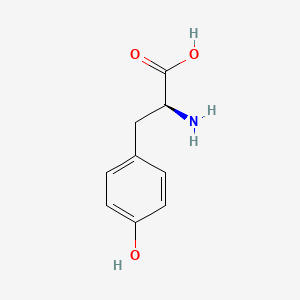
- Formula
- C9H11NO3
- Weight
- 181.19 Da
- PubChem CID
- 6057
- Exact Mass
- 181.0739 Da
- LogP
- -2.3
- TPSA
- 83.6 Ų
- H-Bond Donors
- 3
- H-Bond Acceptors
- 4
- Rotatable Bonds
- 3
- Complexity
- 176
Identifiers (SMILES, InChI)
InChI=1S/C9H11NO3/c10-8(9(12)13)5-6-1-3-7(11)4-2-6/h1-4,8,11H,5,10H2,(H,12,13)/t8-/m0/s1
OUYCCCASQSFEME-QMMMGPOBSA-NReferences (5)
- [1]Effect of tyrosine supplementation on clinical and healthy populations under stress or cognitive demands--A review
→ Review found that tyrosine supplementation may counteract decrements in neurotransmitter function and cognitive performance under stress, though effectiveness varies and benefits depend on the presence and extent of impaired neurotransmitter function.
- [3]Oral L-Tyrosine Supplementation Improves Core Temperature Maintenance in Older Adults
→ Research showed that 150mg/kg oral L-tyrosine supplementation attenuated the decline in core temperature during 90 minutes of whole-body cooling in older adults by augmenting reflex vasoconstriction responses.
- [4]Tyrosine supplementation for phenylketonuria
→ Cochrane review examining tyrosine supplementation for phenylketonuria patients to address potential tyrosine deficiency that may contribute to neuropsychological problems in this population.
- [5]Perspectives of biotechnological production of L-tyrosine and its applications
→ Review of biotechnological methods for producing L-tyrosine, highlighting its use as a dietary supplement and precursor compound for various industrial and pharmaceutical applications.
- [2]Impact of L-theanine and L-tyrosine on markers of stress and cognitive performance in response to a virtual reality based active shooter training drill
→ Study involving 80 subjects found that 2000mg L-tyrosine supplementation reduced stress biomarkers and improved cognitive performance during a high-stress virtual reality training scenario.
Continue researching L-Tyrosine
Keep scientific evidence separate from commercial availability. Review how claims are evaluated, explore question-led research paths, or inspect disclosed source records without changing the editorial conclusions on this page.