C-Peptide
C-Peptide (Connecting Peptide) is a 31-amino acid peptide cleaved from proinsulin during insulin biosynthesis. Once considered biologically inert, it is now recognized as a bioactive molecule with therapeutic potential in diabetic neuropathy, nephropathy, and vascular complications, as well as a critical biomarker for beta cell function and insulin secretion.
Evidence-led profile
Research snapshot
- Evidence stage
- Emerging research
- References
- 10 linked sources
- Research coverage
- 6 areas
- Editorial review
- Mar 8, 2026
Published by the PepGuide Editorial Team using our research methodology.
Overview
C-Peptide is generated in the regulated secretory pathway of pancreatic beta cells through the processing of proinsulin. When glucose stimulates insulin release, C-Peptide is secreted into the portal circulation in a 1:1 molar ratio with insulin. However, unlike insulin, which is extensively extracted by the liver on first pass (~50%), C-Peptide undergoes negligible hepatic extraction and is cleared primarily by the kidneys with a half-life of approximately 30-35 minutes (compared to ~5 minutes for insulin). This longer half-life and lack of hepatic extraction make C-Peptide a more reliable and stable measure of beta cell secretory function than insulin itself.
The paradigm shift regarding C-Peptide's biological activity began with observations that patients with type 1 diabetes who retained residual C-Peptide secretion experienced fewer microvascular complications than those who were completely C-Peptide-deficient. Subsequent experimental work demonstrated that C-Peptide replacement in type 1 diabetes animal models and in short-term human studies improved nerve conduction velocity, reduced glomerular hyperfiltration, increased nutritive blood flow in skin and muscle, and decreased vascular inflammation. These effects appear to be mediated through a specific cell-surface receptor, with GPR146 proposed as the primary C-Peptide receptor, though this identification remains under active investigation.
The dual nature of C-Peptide — as both a clinical biomarker and a potentially therapeutic molecule — makes it uniquely positioned in diabetes research. Its complete absence in type 1 diabetes (reflecting total beta cell destruction) and its relative preservation or elevation in type 2 diabetes (reflecting insulin resistance with compensatory hypersecretion) underpin its diagnostic utility, while its biological activities offer therapeutic possibilities for addressing the microvascular deficit specific to C-Peptide-deficient states.
Research
Diabetic Neuropathy
The most extensively studied therapeutic application of C-Peptide is in diabetic peripheral neuropathy. In type 1 diabetic patients, C-Peptide replacement has been shown to improve sensory nerve conduction velocity and vibration perception thresholds. The BB/Wor rat model of type 1 diabetes demonstrated that C-Peptide treatment for 2 months significantly improved both motor and sensory nerve conduction velocities, and partially normalized the structural changes of diabetic neuropathy including axonal degeneration and paranodal demyelination. These effects are attributed to C-Peptide's stimulation of Na+/K+-ATPase activity in nerve fibers, enhancement of endoneurial blood flow through eNOS activation, and direct neurotrophic signaling. Wahren, J. et al. (2007) — Am. J. Physiol. Endocrinol. Metab.
Diabetic Nephropathy
C-Peptide has demonstrated renoprotective effects in diabetic kidney disease. In type 1 diabetic patients with early nephropathy (microalbuminuria and glomerular hyperfiltration), C-Peptide infusion reduced glomerular filtration rate toward normal and decreased urinary albumin excretion. The mechanisms involve restoration of glomerular tubuloglomerular feedback, reduction of mesangial matrix expansion through TGF-beta suppression, and restoration of normal charge selectivity of the glomerular basement membrane. Long-term C-Peptide replacement in diabetic rats reduced glomerular hypertrophy and prevented mesangial expansion. Johansson et al. (2000) — Diabetologia
Biomarker for Beta Cell Function
C-Peptide measurement is the gold standard for assessing endogenous insulin secretion. Fasting C-Peptide levels below 0.2 nmol/L (<0.6 ng/mL) indicate severe beta cell dysfunction or destruction, as seen in type 1 diabetes. In type 2 diabetes, C-Peptide levels are typically normal to elevated in early disease (reflecting compensatory hypersecretion) and decline as beta cell failure progresses. The glucagon stimulation test (1 mg IV glucagon, with C-Peptide measured at 0 and 6 minutes) is the standard provocative test for beta cell reserve. C-Peptide measurement is also critical for distinguishing insulin-secreting tumors (insulinomas) from factitious hypoglycemia (exogenous insulin administration). Palmer et al. (2004) — Diabetes
Vascular and Endothelial Effects
C-Peptide improves microvascular blood flow in type 1 diabetic patients. Laser Doppler flowmetry studies have demonstrated that C-Peptide infusion increases skin capillary blood flow and forearm blood flow in C-Peptide-deficient diabetic subjects but not in healthy controls (who already have normal C-Peptide levels). These effects are mediated through eNOS-dependent NO release and may contribute to the reduced incidence of microvascular complications observed in type 1 diabetic patients who retain residual beta cell function. C-Peptide also reduces leukocyte adhesion to endothelial cells by decreasing expression of adhesion molecules, an early step in atherosclerotic plaque formation. Forst et al. (1998) — J. Clin. Invest.
Anti-Inflammatory Properties
Beyond vascular effects, C-Peptide exhibits broader anti-inflammatory properties. In vitro, C-Peptide suppresses high glucose-induced NF-kappaB activation and downstream inflammatory gene expression in endothelial cells, smooth muscle cells, and monocytes. C-Peptide also reduces reactive oxygen species (ROS) generation in endothelial cells exposed to hyperglycemic conditions. These anti-inflammatory effects may underlie the reduced vascular complications seen with residual C-Peptide secretion and support the concept of C-Peptide replacement as an anti-inflammatory strategy in type 1 diabetes. Cifarelli et al. (2011) — Diabetologia
Type 1 Diabetes and Residual Secretion
The DCCT (Diabetes Control and Complications Trial) demonstrated that type 1 diabetic patients with residual C-Peptide secretion (stimulated C-Peptide >0.2 nmol/L) had significantly lower rates of retinopathy, nephropathy, and neuropathy compared to those without residual secretion. This observation — that even small amounts of endogenous C-Peptide (and insulin) secretion confer protection — has been interpreted through two complementary lenses: the glycemic benefit of residual insulin secretion and the direct biological effects of C-Peptide itself. Studies preserving residual beta cell function (e.g., with immunotherapy in newly diagnosed T1D) aim to maintain this protective C-Peptide secretion. Steffes et al. (2003) — Diabetes Care
Safety and Limitations
C-Peptide has demonstrated an excellent safety profile in clinical studies, consistent with its status as an endogenous human peptide. In short-term infusion studies (up to 3 hours) and longer-term subcutaneous administration trials (up to 3 months), no significant adverse effects attributable to C-Peptide have been reported. No immunogenicity, injection site reactions, or systemic toxicity was observed. Importantly, C-Peptide does not cause hypoglycemia — it has no direct insulin-like effects on glucose disposal. The biological effects of C-Peptide appear to be self-limiting, with activity primarily observed in C-Peptide-deficient states (type 1 diabetes) and minimal effects in healthy individuals with normal endogenous C-Peptide levels, suggesting a physiological ceiling effect. Theoretical concerns include the possibility that exogenous C-Peptide could promote vascular smooth muscle proliferation, but this has not been observed at physiological concentrations.
Clinical Research Protocols
- Biomarker assessment (fasting): Fasting C-Peptide measured via immunoassay. Normal range: 0.5-2.0 ng/mL (0.17-0.67 nmol/L). <0.2 nmol/L indicates severe beta cell deficiency.
- Glucagon stimulation test: 1 mg glucagon IV; C-Peptide measured at baseline and 6 minutes post-injection. Peak C-Peptide <0.2 nmol/L confirms severe beta cell failure.
- Mixed-meal tolerance test (MMTT): Standardized liquid meal (Boost/Ensure). C-Peptide measured at 0, 30, 60, 90, 120 minutes. AUC calculation provides integrated measure of beta cell function. Preferred by TrialNet for type 1 diabetes trials.
- Therapeutic infusion protocols (research): IV infusion at 5-30 pmol/kg/min to achieve physiological C-Peptide levels (1-3 nmol/L). Subcutaneous dosing: 600-1800 nmol/day in divided doses.
- Key trials: Wahren et al. neuropathy studies (3-month SC C-Peptide in T1D); Cebix phase 2b trial (ersattra/synthetic C-Peptide for diabetic neuropathy — discontinued 2015 due to lack of efficacy in primary endpoint).
- Duration: Biomarker studies: single time-point to longitudinal (DCCT 6.5-year follow-up). Therapeutic studies: 1 hour infusion to 12 months SC administration.
Subpopulation Research
- Type 1 diabetes: Complete or near-complete absence of C-Peptide. Replacement studies show improvement in nerve function and renal hemodynamics.
- Type 2 diabetes: Normal to elevated C-Peptide (early disease) declining to low levels (advanced disease). Elevated C-Peptide is a marker of insulin resistance and associated with cardiovascular risk.
- LADA (Type 1.5): Intermediate C-Peptide levels. Rate of C-Peptide decline helps differentiate LADA from type 2 diabetes and predicts time to insulin dependence.
- Gestational diabetes: C-Peptide measurement in cord blood reflects fetal beta cell stimulation by maternal hyperglycemia (Pedersen hypothesis).
- Insulinoma: Inappropriately elevated C-Peptide in the setting of hypoglycemia confirms endogenous hyperinsulinism. C-Peptide suppression test (insulin-induced hypoglycemia fails to suppress C-Peptide) is diagnostic.
- Bariatric surgery: Post-surgical C-Peptide changes track beta cell recovery and predict diabetes remission.
- Chronic kidney disease: Elevated C-Peptide due to reduced renal clearance; must be interpreted with caution as a beta cell marker in CKD.
Mechanism of Action
C-Peptide exerts its biological effects through several interconnected signaling pathways:
GPR146 Receptor Binding: C-Peptide has been proposed to signal through GPR146, an orphan G protein-coupled receptor identified through ligand-receptor deorphanization studies. Binding activates pertussis toxin-sensitive Gi/Go proteins, leading to downstream signaling cascades. However, this receptor assignment remains debated, and some studies suggest additional or alternative receptor mechanisms.
Na+/K+-ATPase Activation: A well-established downstream effect of C-Peptide signaling is stimulation of Na+/K+-ATPase activity in renal tubular cells, erythrocytes, and nerve fibers. In diabetes, Na+/K+-ATPase activity is impaired, contributing to intracellular sodium accumulation and cellular dysfunction. C-Peptide replacement restores this pump activity, normalizing ion homeostasis.
Endothelial Nitric Oxide Synthase (eNOS) Activation: C-Peptide stimulates eNOS through Ca²+-dependent mechanisms and ERK1/2 MAPK pathway activation, promoting nitric oxide (NO) release from endothelial cells. This enhances microvascular blood flow, which is reduced in diabetes-related microvascular disease.
Anti-Inflammatory Endothelial Effects: C-Peptide attenuates nuclear factor-kappa B (NF-kappaB) activation in endothelial cells stimulated by high glucose or inflammatory cytokines. This reduces expression of adhesion molecules (VCAM-1, P-selectin) and inflammatory chemokines (MCP-1, IL-8), thereby decreasing leukocyte-endothelial interactions and vascular inflammation.
MAPK/ERK Signaling: C-Peptide activates ERK1/2 and p38 MAPK pathways in a pertussis toxin-sensitive manner, mediating proliferative, anti-apoptotic, and transcriptional effects in various cell types including endothelial cells, renal mesangial cells, and neuronal cells.
Research protocol summary
- Route
- Intravenous (clinical/research), Subcutaneous
These values summarize cataloged research protocols. They are not personal dosing instructions or medical guidance.
Reconstitution Calculator
Pharmacokinetic Profile
C-Peptide — Pharmacokinetic Curve
Intravenous (clinical/research), SubcutaneousIllustrative model from the listed half-life and time to peak, not measured concentration data.
Ongoing & Future Research
- Long-acting C-Peptide analogs: Development of PEGylated or fatty-acid-conjugated C-Peptide formulations to extend half-life for once-daily or less frequent dosing, overcoming the pharmacokinetic limitations of native C-Peptide.
- C-Peptide receptor definitive identification: Continued research to confirm or revise the GPR146 assignment and characterize the full signaling cascade of C-Peptide at its receptor.
- Neuroprotection beyond neuropathy: Investigation of C-Peptide's effects on central nervous system diabetic complications, including cognitive decline and diabetic encephalopathy.
- Biomarker for beta cell mass: Development of C-Peptide-based algorithms (in combination with imaging and other biomarkers) to estimate residual beta cell mass for clinical decision-making in diabetes.
- C-Peptide in islet transplantation: C-Peptide as a marker of graft function and long-term viability following islet or pancreas transplantation.
- Combination with GLP-1 agonists: Exploring whether C-Peptide supplementation alongside GLP-1 receptor agonists provides additive microvascular benefits in type 1 diabetes.
Molecular Structure
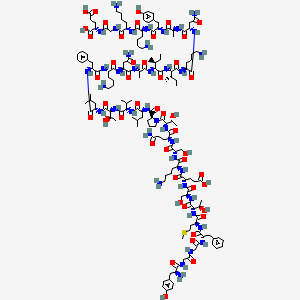
- Formula
- C₁₂₉H₂₁₁N₃₅O₄₈
- Weight
- 3020.29 Da
- CAS
- 54041-40-4 (human C-Peptide)
- PubChem CID
- 16132316
- Exact Mass
- 3463.8255 Da
- LogP
- -13.9
- TPSA
- 1430 Ų
- H-Bond Donors
- 48
- H-Bond Acceptors
- 53
- Rotatable Bonds
- 118
- Complexity
- 7850
Identifiers (SMILES, InChI)
InChI=1S/C158H251N39O46S/c1-17-84(9)126(153(237)182-102(44-29-34-65-163)137(221)186-112(74-118(166)206)142(226)171-86(11)131(215)183-110(73-94-48-52-96(204)53-49-94)146(230)177-99(41-26-31-62-160)135(219)175-98(40-25-30-61-159)134(218)170-78-122(210)173-106(158(242)243)56-59-124(213)214)193-154(238)127(85(10)18-2)192-132(216)87(12)172-143(227)113(75-119(167)207)185-136(220)100(42-27-32-63-161)178-147(231)111(72-92-38-23-20-24-39-92)184-144(228)107(68-81(3)4)188-155(239)129(89(14)201)195-152(236)125(83(7)8)191-148(232)108(69-82(5)6)187-151(235)116-45-35-66-197(116)157(241)130(90(15)202)196-140(224)103(54-57-117(165)205)179-149(233)114(79-198)189-138(222)101(43-28-33-64-162)176-139(223)104(55-58-123(211)212)180-150(234)115(80-199)190-156(240)128(88(13)200)194-141(225)105(60-67-244-16)181-145(229)109(71-91-36-21-19-22-37-91)174-121(209)77-168-120(208)76-169-133(217)97(164)70-93-46-50-95(203)51-47-93/h19-24,36-39,46-53,81-90,97-116,125-130,198-204H,17-18,25-35,40-45,54-80,159-164H2,1-16H3,(H2,165,205)(H2,166,206)(H2,167,207)(H,168,208)(H,169,217)(H,170,218)(H,171,226)(H,172,227)(H,173,210)(H,174,209)(H,175,219)(H,176,223)(H,177,230)(H,178,231)(H,179,233)(H,180,234)(H,181,229)(H,182,237)(H,183,215)(H,184,228)(H,185,220)(H,186,221)(H,187,235)(H,188,239)(H,189,222)(H,190,240)(H,191,232)(H,192,216)(H,193,238)(H,194,225)(H,195,236)(H,196,224)(H,211,212)(H,213,214)(H,242,243)/t84-,85-,86-,87-,88+,89+,90+,97-,98-,99-,100-,101-,102-,103-,104-,105-,106-,107-,108-,109-,110-,111-,112-,113-,114-,115-,116-,125-,126-,127-,128-,129-,130-/m0/s1
JMHFFDIMOUKDCZ-NTXHZHDSSA-NResearch Indications
Diabetic Neuropathy
C-peptide replacement in Type 1 diabetes improves sensory nerve conduction velocity and quantitative sensory testing in early-stage neuropathy. A 52-week trial showed 25% improvement in vibration perception threshold.
Administration of C-peptide for up to 3 months ameliorates autonomic nerve dysfunction in Type 1 diabetic patients.
C-peptide replacement prevents abnormalities of neurotrophins and nociceptive neuropeptides in diabetic models, with optimal effects requiring physiological C-peptide concentrations.
Diabetic Vasculopathy
C-peptide replacement therapy conserves vascular function and prevents endothelial cell death, microvascular permeability, and vascular inflammation in Type 1 diabetes models.
Evidence from animal and in vitro experiments shows C-peptide replacement improves renal lesions through anti-inflammatory, anti-apoptotic, and anti-oxidative mechanisms when C-peptide is deficient.
Research Protocols
intravenous Injection
Administered via intravenous injection.
| Goal | Dose | Frequency | Duration |
|---|---|---|---|
| Beta cell reserve | 1 mg | Per protocol | — |
subcutaneous Injection
In short-term infusion studies (up to 3 hours) and longer-term subcutaneous administration trials (up to 3 months), no significant adverse effects attributable to C-Peptide have been reported. Subcutaneous dosing: 600-1800 nmol/day in divided doses.
| Goal | Dose | Frequency | Duration |
|---|---|---|---|
| Glucagon stimulation test | 1 mg | Per protocol | — |
| Long-acting C-Peptide analogs | See literature | Daily | — |
Interactions
Peptide Interactions
- Combination with GLP-1 agonists: Exploring whether C-Peptide supplementation alongside GLP-1 receptor agonists provides additive microvascular benefits in type 1 diabetes.
Reported Research Timeline
Rapid onset expected; half-life of ~30-35 minutes indicates fast-acting pharmacokinetics
In short-term infusion studies (up to 3 hours) and longer-term subcutaneous administration trials (up to 3 months), no significant adverse effects...
The BB/Wor rat model of type 1 diabetes demonstrated that C-Peptide treatment for 2 months significantly improved both motor and sensory nerve...
Continued use as directed
Quality Indicators
What to look for
- Multiple peer-reviewed studies available
Caution
- Short half-life may require frequent dosing
- Injection site reactions reported
Frequently Asked Questions
References (10)
- [8]Lim, Y. C. et al C-Peptide and GPR146: A Potential Receptor-Ligand Pair PLoS ONE (2015)
- [1]
- [2]Johansson, B. L. et al Beneficial Effects of C-Peptide on Incipient Nephropathy and Neuropathy in Patients with Type 1 Diabetes Mellitus Diabet. Med. (2000)
- [4]Forst, T. et al Biological Activity of C-Peptide on the Skin Microcirculation in Patients with Insulin-Dependent Diabetes Mellitus J. Clin. Invest. (1998)
- [5]Steffes, M. W. et al Beta-Cell Function and the Development of Diabetes-Related Complications in the Diabetes Control and Complications Trial Diabetes Care (2003)
- [6]Cifarelli, V. et al C-Peptide Reduces High-Glucose-Induced Apoptosis of Endothelial Cells and Decreases NAD(P)H-Oxidase Reactive Oxygen Species Generation Diabetologia (2011)
- [7]Yosten, G. L. et al Evidence for an Interaction of Neuronostatin with the GPR107 Receptor Peptides (2014)
- [3]Palmer, J. P. et al C-Peptide Is the Appropriate Outcome Measure for Type 1 Diabetes Clinical Trials to Preserve Beta-Cell Function Diabetes (2004)
- [9]Shaw, J. A. et al Residual C-Peptide Secretion and Its Relationship to Glycemic Outcomes in Type 1 Diabetes: A Systematic Review and Meta-Analysis Diabetes Care (2023)
- [10]Kobayashi, K. et al Preservation of Residual C-Peptide Secretion as a Therapeutic Target in Type 1 Diabetes Diabetologia (2022)
Continue researching C-Peptide
Keep scientific evidence separate from commercial availability. Review how claims are evaluated, explore question-led research paths, or inspect disclosed source records without changing the editorial conclusions on this page.