Humanin
Humanin is a 24-amino acid mitochondria-derived micro-peptide that protects cells from oxidative stress, inflammation, and apoptosis, with research applications in neurodegeneration, cardiovascular disease, metabolic regulation, and aging.
Evidence-led profile
Research snapshot
- Evidence stage
- moderate-research
- References
- 21 linked sources
- Research coverage
- 8 areas
- Editorial review
- Mar 8, 2026
Published by the PepGuide Editorial Team using our research methodology.
Overview
Humanin belongs to a class of mitochondria-derived peptides (MDPs) produced by short open reading frames that bypass conventional posttranslational processing. It interacts with the Bcl-2-associated X protein (Bax) to regulate apoptosis, blocking Bax function to preserve cells that would otherwise be destroyed. Research has linked higher circulating humanin levels to improved cardiovascular, metabolic, and neuroprotective outcomes, while declining levels correlate with aging and chronic disease progression. Humanin enhances insulin sensitivity, protects brain cells from amyloid-beta-induced damage, reduces oxidative stress in vasculature, and supports bone health -- making it one of the most broadly cytoprotective peptides under investigation.
Research
Cardiovascular Protection
HNG protects vascular endothelial cells from oxidative stress-induced apoptosis through both STAT3 activation and direct Bax inhibition. In models of ischemia-reperfusion injury, HNG administration reduces infarct size and preserves cardiac function. The peptide's anti-apoptotic activity in cardiomyocytes mirrors its neuroprotective mechanism — preventing mitochondrial outer membrane permeabilization in cells under oxidative and hypoxic stress.
Anti-Apoptotic Activity
HNG's enhanced potency in preventing apoptosis has been traced to its superior ability to sequester pro-apoptotic Bax. The peptide prevents Bax oligomerization and insertion into the mitochondrial outer membrane, blocking the formation of cytochrome c release channels. This mechanism is particularly relevant in aging tissues where accumulated oxidative damage drives chronic low-level apoptosis.
Neuroprotection and Alzheimer's Disease
Hashimoto et al. (2001) first demonstrated that HNG protects neurons against amyloid-beta (Aβ1-42 and Aβ1-43) toxicity at concentrations where native humanin is ineffective (PMID: 11739569). This seminal finding established the S14G substitution as critical for enhanced neuroprotection. Tajima et al. (2005) showed that intracerebroventricular infusion of HNG at 10 microg/day for 4 weeks in triple-transgenic Alzheimer's mice reduced amyloid-beta plaque burden and tau phosphorylation (PMID: 15784723). Niikura et al. (2011) demonstrated that systemic HNG administration (2 mg/kg/day IP for 3 months) in APP/PS1 mice improved spatial memory performance in the Morris water maze (PMID: 21486169).
Neuroprotection
Humanin protects neurons against apoptosis in several neurodegenerative contexts. The micro-peptide prevents cell death induced by beta-amyloid plaque accumulation in Alzheimer's disease models (Matsuoka, 2009) and protects against excitotoxic neuronal death from NMDA pulses (Caricasole et al., 2002). Similar protective effects have been demonstrated against prion peptide-induced apoptosis (Sponne et al., 2004).
Research from Argentina revealed that humanin is released by astrocytes to protect synapses in hippocampal neurons (Zarate et al., 2019), suggesting that age-related decline in humanin production may contribute to memory loss and increased neurodegenerative disease prevalence.
IGF-1 Interaction
Research from the University of Southern California demonstrates that humanin and insulin-like growth factor 1 (IGF-1) interact bidirectionally -- humanin decreases circulating IGF-1 while IGF-1 influences humanin levels. The peptides have synergistic effects in inhibiting apoptosis, boosting insulin sensitivity, reducing inflammation, and protecting against cardiovascular disease, though they play antagonistic roles in other pathways (Xiao et al., 2016).
Bone Health
Humanin protects bone through dual mechanisms. It prevents glucocorticoid-induced chondrocyte death without interfering with anti-inflammatory effects of dexamethasone, boosting cartilage growth (Celvin et al., 2019). Simultaneously, humanin suppresses osteoclast formation through AMP-activated protein kinase (AMPK) activation, reducing excessive bone remodeling and loss (Kang et al., 2019).
Retinal Protection
Humanin protects the retinal pigment epithelium (RPE) from oxidative stress and mitochondrial dysfunction. In cell culture, humanin supplementation improves RPE function and increases resistance to apoptosis (Sreekumar et al., 2016; doi: 10.1167/iovs.15-17053), offering potential avenues for treating age-related macular degeneration and diabetic retinopathy.
Metabolic Regulation
Muzumdar et al. (2009) demonstrated that HNG improves insulin sensitivity, reduces visceral fat accumulation, and enhances glucose homeostasis in aged mice (PMID: 19690069). Aged rats treated with HNG showed improvements in hepatic insulin action and reductions in age-associated central obesity. These findings suggest HNG may address the metabolic dysfunction that accompanies aging, independent of its neuroprotective effects.
Safety and Limitations
Humanin is an endogenous peptide with levels that naturally decline with age. Exogenous administration in animal models has shown no significant adverse effects. As a mitochondria-derived peptide, it operates within established physiological pathways. The primary theoretical concern relates to its anti-apoptotic properties, which could theoretically promote survival of damaged or pre-cancerous cells, though this has not been demonstrated in research to date. The peptide's interaction with the IGF-1 axis warrants monitoring of growth factor levels during administration. Human safety data from clinical trials remains limited.
Neuroprotection Studies
The most extensively studied humanin analogue is HNG (S14G-humanin), which substitutes glycine for serine at position 14, producing approximately 1000-fold greater neuroprotective potency. Tajima et al. (2005) administered HNG at 10 microg/day intracerebroventricular (ICV) infusion for 4 weeks in triple-transgenic Alzheimer's disease mice (3xTg-AD), demonstrating significant reductions in amyloid-beta plaque burden and tau phosphorylation. Niikura et al. (2011) used 2 mg/kg/day IP of HNG in APP/PS1 mice for 3 months, showing improvements in spatial memory as assessed by Morris water maze.
Metabolic Studies
Muzumdar et al. (2009) administered humanin at 1-4 mg/kg IP twice daily in Zucker diabetic fatty rats for 28 days, demonstrating dose-dependent improvements in insulin sensitivity with HOMA-IR reductions of 25-40%. The same group showed that a single IV bolus of humanin at 2 mg/kg in lean rats acutely improved glucose tolerance within 30 minutes.
Cardiovascular Studies
Bachar et al. (2010) used humanin at concentrations of 1-10 micromol/L in ex vivo human aortic endothelial cell cultures exposed to oxidized LDL (50 microg/mL). At 10 micromol/L, humanin reduced ROS production by 50% and apoptosis by 50%. In vivo cardiovascular studies in mice have used doses ranging from 2-5 mg/kg IP daily for 2-4 week durations.
Human Observational Data
Yen et al. (2020) measured circulating humanin in the Leiden Longevity Study cohort (n=967), finding that higher plasma humanin was associated with better insulin sensitivity, lower inflammatory markers, and reduced cardiovascular mortality risk. Mean circulating humanin levels in healthy adults range from approximately 0.5-2.0 ng/mL by ELISA, declining approximately 40% per decade after age 40.
Common Side Effects
- Injection site reactions
- Mild fatigue initially
- Headache (rare)
Contraindications
- Active cancer (theoretical concern with anti-apoptotic effects)
- Pregnancy or breastfeeding
- Hypersensitivity to peptide components
Discontinue If
- Signs of allergic reaction
- Unusual persistent symptoms
Mechanism of Action
Humanin protects cells through two primary anti-apoptotic mechanisms, both converging on mitochondrial apoptosis prevention. Under normal circumstances, the Bcl-2 family of proteins signal the release of cytochrome c from the mitochondrial membrane, activating caspases that coordinate cell destruction (Wang & Youle, 2009). Humanin binds to the pro-apoptotic proteins Bid and tBid, blocking their ability to activate Bax and Bak, thereby shutting down the apoptosis pathway at its origin (Zhai et al., 2005). Additionally, humanin interacts with IGFBP-3 and Bax directly, providing a second layer of anti-apoptotic regulation. The peptide also activates STAT3 signaling and the FPRL1/FPRL2 receptors, contributing to its anti-inflammatory and metabolic effects.
Research protocol summary
- Typical Dose
- 1-5 mg per injection (0.5-2 mg for HNG analog)
- Frequency
- 2-3 times weekly for sustained mitochondrial support
- Route
- Subcutaneous injection
- Cycle Length
- 8-12 weeks
- Storage
- Lyophilized: Room temperature. Reconstituted: 2-8°C, protect from light
These values summarize cataloged research protocols. They are not personal dosing instructions or medical guidance.
Reconstitution Calculator
Pharmacokinetic Profile
Humanin — Pharmacokinetic Curve
Subcutaneous injectionIllustrative model from the listed half-life and time to peak, not measured concentration data.
Molecular Structure
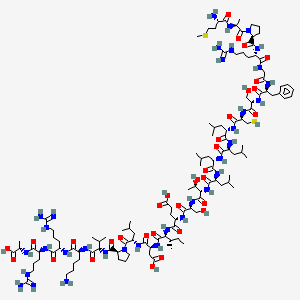
- Formula
- C119H204N34O32S2
- Weight
- 2 Da
- Length
- 24 amino acids
- CAS
- 330936-69-1
- PubChem CID
- 16131438
- Exact Mass
- 2686.4856 Da
- LogP
- -6.7
- TPSA
- 1090 Ų
- H-Bond Donors
- 39
- H-Bond Acceptors
- 39
- Rotatable Bonds
- 91
- Complexity
- 5860
Identifiers (SMILES, InChI)
InChI=1S/C119H204N34O32S2/c1-19-65(14)92(112(180)144-81(54-90(160)161)104(172)145-82(52-63(10)11)115(183)153-46-29-37-87(153)110(178)149-91(64(12)13)111(179)139-72(32-23-24-41-120)97(165)136-74(35-27-44-130-119(126)127)98(166)135-73(34-26-43-129-118(124)125)96(164)133-67(16)116(184)185)150-99(167)75(38-39-89(158)159)137-106(174)84(57-155)147-113(181)93(68(17)156)151-105(173)79(51-62(8)9)142-101(169)77(49-60(4)5)140-100(168)76(48-59(2)3)141-102(170)78(50-61(6)7)143-108(176)85(58-186)148-107(175)83(56-154)146-103(171)80(53-69-30-21-20-22-31-69)134-88(157)55-131-95(163)71(33-25-42-128-117(122)123)138-109(177)86-36-28-45-152(86)114(182)66(15)132-94(162)70(121)40-47-187-18/h20-22,30-31,59-68,70-87,91-93,154-156,186H,19,23-29,32-58,120-121H2,1-18H3,(H,131,163)(H,132,162)(H,133,164)(H,134,157)(H,135,166)(H,136,165)(H,137,174)(H,138,177)(H,139,179)(H,140,168)(H,141,170)(H,142,169)(H,143,176)(H,144,180)(H,145,172)(H,146,171)(H,147,181)(H,148,175)(H,149,178)(H,150,167)(H,151,173)(H,158,159)(H,160,161)(H,184,185)(H4,122,123,128)(H4,124,125,129)(H4,126,127,130)/t65-,66-,67-,68+,70-,71-,72-,73-,74-,75-,76-,77-,78-,79-,80-,81-,82-,83-,84-,85-,86-,87-,91-,92-,93-/m0/s1
DPEUWKZJZIPZKE-OFANTOPUSA-NResearch Indications
Neuroprotection
Originally discovered for its ability to protect against amyloid-β toxicity in neuronal cells.
Promotes mitochondrial biogenesis via PI3K/AKT signaling in PD models.
Broad neuroprotective effects against various neurotoxic insults.
Longevity
Overexpression increases lifespan in C. elegans, dependent on daf-16/Foxo pathway.
HNG analog improves metabolic healthspan parameters in middle-aged mice.
Higher levels associated with longevity in centenarians and their offspring.
Cellular Protection
Protects various cell types from stress-induced damage and death.
Blocks pro-apoptotic proteins like Bax to prevent programmed cell death.
Promotes mitochondrial function and biogenesis.
Research Protocols
intracerebroventricular Injection
Administered via intracerebroventricular.
| Goal | Dose | Frequency | Duration |
|---|---|---|---|
| Morris water maze | 2 mg | Per protocol | 3 months |
| Extended periods have not reported signif | 5 mg | Daily | — |
| Aged mice and rats | 2-4 mg | Per protocol | — |
subcutaneous Injection
Absorption and Distribution HNG follows similar absorption kinetics to native humanin following subcutaneous injection, reaching peak plasma concentration within 30-60 minutes.
| Goal | Dose | Frequency | Duration |
|---|---|---|---|
| General Research Protocol | 5 mg | Daily | — |
| 2 mg/kg/day IP | 2 mg | Per protocol | 3 months |
| 2-4 mg/kg IP | 2-4 mg | Per protocol | — |
| Neuroprotection | 1-5 mg | 2-3x weekly | —(Route: SubQ) |
| Longevity/Anti-aging | 1-3 mg | 2x weekly | —(Route: SubQ) |
| HNG analog | 0.5-2 mg | 2x weekly | —(Route: SubQ) |
intraperitoneal Injection
Administered via intraperitoneal.
| Goal | Dose | Frequency | Duration |
|---|---|---|---|
| Morris water maze | 2 mg | Per protocol | 3 months |
| Extended periods have not reported signif | 5 mg | Daily | — |
| Aged mice and rats | 2-4 mg | Per protocol | — |
Interactions
Peptide Interactions
Xiao et al. (2016) documented a bidirectional interaction between humanin and IGF-1. The peptides synergize in promoting insulin sensitivity and suppressing apoptosis but have antagonistic effects on growth signaling -- humanin reduces circulating IGF-1 while promoting longevity-associated pathwa...
HNG provides anti-apoptotic protection through Bax/Bid sequestration and STAT3 signaling, while MOTS-c drives metabolic optimization via AMPK activation and nuclear gene regulation.
Colivelin is a fusion peptide incorporating a humanin derivative with activity-dependent neurotrophic factor (ADNF). Combining HNG with colivelin could provide layered neuroprotection — HNG through enhanced receptor-mediated STAT3 activation, and colivelin through additional ADNF-dependent surviv...
GHK-Cu stimulates wound healing, collagen synthesis, and tissue remodeling through TGF-beta and integrin signaling. Humanin's anti-apoptotic and anti-inflammatory properties could complement GHK-Cu by preserving cell viability during tissue repair. This combination is theoretically relevant for a...
Epithalon is a telomerase activator that extends telomere length.
, IGF-1 LR3) should account for potential mutual modulation.
SS-31 stabilizes the inner mitochondrial membrane by binding cardiolipin, while HNG prevents outer membrane permeabilization by sequestering Bax. Combined, these peptides could protect mitochondrial function from both the energy production and apoptotic signaling axes — a comprehensive mitochondr...
Reported Research Timeline
Subtle; peptide begins working at cellular level
Improved energy and reduced fatigue may begin
Enhanced cellular resilience and stress response
Cumulative benefits in mitochondrial function and healthspan markers
Potential longevity and neuroprotective benefits
Quality Indicators
What to look for
- White to off-white lyophilized powder
- Clear solution after reconstitution
- Intact vacuum seal
Caution
- Slight clumping that dissolves easily
Red flags
- Discolored powder
- Cloudy or particulate solution
- Broken seal
Frequently Asked Questions
References (21)
- [1]
- [3]
- [10]Zhai et al *J Biol Chem* J Biol Chem (2005)
- [11]Zarate et al *Front Aging Neurosci* Front Aging Neurosci (2019)
- [12]Xiao et al *Growth Horm IGF Res* Growth Horm IGF Res (2016)
- [13]
- [14]Zhloba et al *Klin Lab Diagn* Klin Lab Diagn (2018)
- [16]Celvin et al *Clin Exp Rheumatol* Clin Exp Rheumatol (2019)
- [17]Kang et al *Korean J Physiol Pharmacol* Korean J Physiol Pharmacol (2019)
- [4]Original Discovery of Humanin (2001)
- [15]
- [18]Kim et al -- Humanin and its analogs as therapeutic targets for age-related diseases Ageing Res Rev (2023)
- [19]Yen et al -- Mitochondrial-derived peptides as novel regulators of metabolism and aging Cell Metab (2023)
- [20]Cobb et al -- Humanin analogue HNG protects against age-related cognitive decline in mice GeroScience (2022)
- [21]Mehta et al -- Circulating humanin levels as biomarkers in cardiovascular and metabolic diseases Front Endocrinol (2023)
- [6]Matsuoka *Recent Pat CNS Drug Discov* Recent Pat CNS Drug Discov (2009)
- [7]Sponne et al *Mol Cell Neurosci* Mol Cell Neurosci (2004)
- [8]White et al *Neurobiol Dis* Neurobiol Dis (2001)
- [9]Wang & Youle *Annu Rev Genet* Annu Rev Genet (2009)
- [2]
- [5]Caricasole et al *FASEB J* FASEB J (2002)
Continue researching Humanin
Keep scientific evidence separate from commercial availability. Review how claims are evaluated, explore question-led research paths, or inspect disclosed source records without changing the editorial conclusions on this page.