GLP-1
GLP-1 (Glucagon-Like Peptide-1) is an endogenous incretin hormone produced by intestinal L-cells that regulates glucose homeostasis, appetite, and gastric emptying. It is the parent compound for major pharmaceutical GLP-1 receptor agonists including semaglutide, liraglutide, and exenatide.
Evidence-led profile
Research snapshot
- Evidence stage
- Emerging research
- References
- 12 linked sources
- Research coverage
- 8 areas
- Editorial review
- Mar 8, 2026
Published by the PepGuide Editorial Team using our research methodology.
Overview
GLP-1 is one of two primary incretin hormones (alongside GIP) responsible for the "incretin effect" — the observation that oral glucose produces a greater insulin response than intravenous glucose at equivalent plasma glucose levels. Approximately 50-70% of postprandial insulin secretion is attributed to incretin hormones. GLP-1 is released within minutes of food intake, initially via neural signals (vagal afferents) and subsequently through direct nutrient contact with L-cells.
The active form, GLP-1(7-36) amide, has an extremely short half-life of approximately 2 minutes due to rapid cleavage by the enzyme dipeptidyl peptidase-4 (DPP-4), which removes the N-terminal histidine-alanine dipeptide to produce the inactive metabolite GLP-1(9-36) amide. This rapid degradation led to two major pharmaceutical strategies: DPP-4 inhibitors (gliptins) that prevent GLP-1 breakdown, and GLP-1 receptor agonists that are resistant to DPP-4 cleavage and have extended half-lives through structural modifications.
GLP-1 receptor (GLP-1R) distribution extends well beyond the pancreas, with expression in the brain (hypothalamus, brainstem, hippocampus), heart, vasculature, kidney, gastrointestinal tract, and immune cells. This broad receptor distribution underlies the pleiotropic effects of GLP-1 and its pharmaceutical analogs on appetite, cardiovascular function, neuroprotection, and inflammation.
Research
GLP-1 and Appetite Regulation
Central GLP-1 signaling plays a critical role in energy homeostasis. GLP-1-producing neurons in the nucleus tractus solitarius (NTS) project to hypothalamic nuclei involved in appetite regulation. Peripheral GLP-1 from L-cells also accesses the brain through the area postrema (a circumventricular organ lacking a blood-brain barrier) and through vagal afferent pathways. The anorexigenic effect of GLP-1 involves activation of POMC/CART neurons and inhibition of NPY/AgRP neurons in the arcuate nucleus, as well as modulation of hedonic feeding through mesolimbic dopamine circuits.
GLP-1 Receptor Distribution and Pleiotropic Effects
GLP-1R is expressed in multiple organ systems: pancreas (beta cells, alpha cells, delta cells), brain (hypothalamus, brainstem, cortex, hippocampus), heart (cardiomyocytes, endothelium), kidney (proximal tubule), gastrointestinal tract (stomach, intestine), lung, and immune cells (macrophages, T cells). This broad distribution accounts for the diverse pharmacological effects of GLP-1 receptor agonists, including neuroprotection, cardioprotection, renal protection, and anti-inflammatory properties observed in preclinical and clinical studies.
The Incretin Effect
The incretin effect was first described in the 1960s when researchers observed that oral glucose produced 2-3 times greater insulin secretion than intravenous glucose at matched plasma glucose levels. GLP-1 was identified as a key mediator of this effect in the 1980s following the cloning and characterization of the proglucagon gene. In type 2 diabetes, the incretin effect is significantly impaired, contributing to postprandial hyperglycemia. Importantly, while GLP-1 secretion may be reduced in type 2 diabetes, the beta cell response to exogenous GLP-1 is largely preserved, providing the therapeutic rationale for GLP-1 receptor agonists. Nauck MA et al. (1986) — Diabetologia 29, 46-52.
GLP-1 in Type 2 Diabetes
Patients with type 2 diabetes exhibit reduced postprandial GLP-1 secretion and an impaired incretin effect, though the GLP-1 receptor on beta cells remains responsive to supraphysiological GLP-1 levels. Continuous intravenous infusion of native GLP-1 normalizes fasting and postprandial glucose in type 2 diabetes patients, demonstrating the therapeutic potential of the GLP-1 pathway — but the 2-minute half-life makes native GLP-1 clinically impractical, motivating the development of DPP-4-resistant analogs. Holst JJ (2007) — Physiol. Rev. 87, 1409-1439.
Pharmaceutical Development from GLP-1
The native GLP-1 molecule has been the template for an entire class of pharmaceutical agents:
- Exenatide (Byetta/Bydureon): Based on exendin-4 (from Gila monster venom), a naturally DPP-4-resistant GLP-1R agonist with ~50% sequence homology to human GLP-1. Half-life: 2.4 hours (twice daily) or extended-release (weekly).
- Liraglutide (Victoza/Saxenda): Human GLP-1 analog with Arg34Lys substitution and C16 palmitoyl fatty acid acylation at Lys26 for albumin binding. Half-life: ~13 hours (daily dosing).
- Semaglutide (Ozempic/Wegovy/Rybelsus): Human GLP-1 analog with Aib8 substitution (DPP-4 resistance) and C18 fatty diacid acylation at Lys26. Half-life: ~7 days (weekly dosing, or daily oral).
- Dulaglutide (Trulicity): GLP-1 analog fused to modified IgG4 Fc fragment. Half-life: ~5 days (weekly dosing).
- Tirzepatide (Mounjaro/Zepbound): Dual GIP/GLP-1 receptor agonist with C20 fatty diacid acylation. Half-life: ~5 days (weekly dosing).
Clinical Research Protocols
As an endogenous hormone, GLP-1 itself is not administered as a therapeutic agent due to its ~2-minute half-life. Clinical research protocols involving native GLP-1 typically use continuous intravenous infusion for mechanistic studies:
GLP-1 Infusion Studies: Continuous IV infusion at 0.5-1.5 pmol/kg/min to achieve supraphysiological plasma GLP-1 levels. Used in acute metabolic studies to characterize insulin secretion, glucagon suppression, and gastric emptying effects. Duration typically 4-8 hours.
Meal Tolerance Tests with GLP-1 Measurement: Standard mixed-meal tolerance tests with serial blood sampling for GLP-1 (total and active) at 0, 15, 30, 60, 90, and 120 minutes post-meal. Active GLP-1 requires DPP-4 inhibitor-treated sample tubes. Used to characterize the incretin effect in health and disease.
DPP-4 Inhibitor Studies: Oral DPP-4 inhibitors (sitagliptin, vildagliptin, saxagliptin, linagliptin, alogliptin) that extend endogenous GLP-1 half-life by 2-3 fold. Standard dosing: sitagliptin 100 mg daily, vildagliptin 50 mg twice daily. These raise active GLP-1 levels by 50-100% but produce modest clinical effects compared to exogenous GLP-1 receptor agonists that achieve supraphysiological receptor activation.
Ongoing & Future Research
Active areas of GLP-1 biology research include:
-
Neuroprotection and Neurodegeneration: GLP-1R expression in the brain has prompted investigation of GLP-1 receptor agonists for Alzheimer's disease (NCT04777396 — semaglutide EVOKE/EVOKE+ trials), Parkinson's disease (NCT03659682 — exenatide), and other neurodegenerative conditions. Preclinical evidence suggests GLP-1R activation reduces neuroinflammation, enhances synaptic plasticity, and improves cerebral glucose utilization.
-
Addiction and Reward Pathways: GLP-1R signaling in mesolimbic dopamine circuits modulates reward-seeking behavior. Clinical trials are investigating GLP-1 receptor agonists for alcohol use disorder (NCT06014086), with preclinical data showing reduced alcohol, nicotine, and cocaine self-administration in animal models.
-
Multi-Agonist Development: Beyond approved dual (tirzepatide) and Phase 3 triple (retatrutide) agonists, next-generation molecules targeting GLP-1R alongside other metabolic receptors (FGF21, amylin, PYY) are in early development.
-
Oral GLP-1 Receptor Agonists: Small molecule oral GLP-1 receptor agonists (orforglipron by Eli Lilly, danuglipron by Pfizer) are in Phase 3 development, potentially offering pill-based alternatives to injectable peptide agonists.
-
GLP-1 and Cancer: Epidemiological studies and mechanistic research are investigating potential effects of GLP-1R signaling on cancer risk and progression, including thyroid (C-cell), pancreatic, and colorectal cancers.
Comparison to Related Compounds
| Parameter | GLP-1 (endogenous) | GIP (endogenous) | Semaglutide | Liraglutide | Exenatide | Tirzepatide |
|---|---|---|---|---|---|---|
| Source | Intestinal L-cells | Intestinal K-cells | Synthetic analog | Synthetic analog | Exendin-4 based | Synthetic dual agonist |
| Half-life | ~2 minutes | ~5-7 minutes | ~7 days | ~13 hours | 2.4 hours (IR) | ~5 days |
| Receptor | GLP-1R | GIPR | GLP-1R | GLP-1R | GLP-1R | GIPR + GLP-1R |
| DPP-4 substrate | Yes (rapid cleavage) | Yes (rapid cleavage) | No (Aib8 resistant) | No (acylation protects) | No (naturally resistant) | No (resistant) |
| Insulin secretion | Glucose-dependent | Glucose-dependent | Glucose-dependent | Glucose-dependent | Glucose-dependent | Glucose-dependent |
| Glucagon suppression | Yes | No (stimulates) | Yes | Yes | Yes | Partial |
GLP-1 vs. GIP: Both are incretin hormones that potentiate glucose-dependent insulin secretion, but they differ in several ways: GLP-1 suppresses glucagon while GIP may stimulate it under certain conditions; GLP-1 strongly slows gastric emptying while GIP has minimal effect; GLP-1 has potent anorexigenic central effects while GIP's role in appetite is debated. In type 2 diabetes, the insulinotropic response to GIP is impaired while the response to GLP-1 is largely preserved. Nauck MA & Meier JJ (2018) — Diabetes Obes. Metab. 20(S1), 5-21.
GLP-1 vs. Pharmaceutical Analogs: Native GLP-1 is clinically impractical due to its 2-minute half-life. All pharmaceutical analogs incorporate structural modifications for DPP-4 resistance (exenatide: exendin-4 sequence; liraglutide: Arg34Lys; semaglutide: Aib8) and half-life extension (fatty acid acylation for albumin binding or Fc fragment fusion). These modifications enable once-daily to once-weekly dosing while maintaining the glucose-dependent mechanism of action that minimizes hypoglycemia risk.
Safety and Limitations
As an endogenous hormone, native GLP-1 is inherently safe at physiological concentrations. The safety considerations relevant to the GLP-1 system relate primarily to pharmaceutical GLP-1 receptor agonists that produce supraphysiological receptor activation: gastrointestinal effects (nausea, vomiting, diarrhea) from delayed gastric emptying and central satiety signaling; thyroid C-cell tumor risk (observed in rodents, uncertain human relevance); pancreatitis (rare, mechanism debated); gallbladder disease (associated with rapid weight loss); and injection site reactions. The glucose-dependent mechanism of GLP-1-mediated insulin secretion inherently limits hypoglycemia risk, which is a fundamental safety advantage over older insulin secretagogues (sulfonylureas) that stimulate insulin release regardless of glucose levels. Nauck MA et al. (2017) — Diabetes Care 40, 984-999.
Common Side Effects
- Gastrointestinal Distress:: Nausea, vomiting, and constipation are the most frequently reported user side effects.
- Muscle Loss:: Loss of muscle mass is a significant concern, often requiring high protein intake and resistance training to mitigate.
- Islet Cell Apoptosis:: In diseased states, GLP-1 therapies help retard islet cell apoptosis, which is a positive secondary effect.
- Gallbladder Issues:: Rapid weight loss associated with GLP-1 can increase the risk of gallbladder-related complications.
Mechanism of Action
GLP-1 exerts its effects through the GLP-1 receptor (GLP-1R), a class B G-protein-coupled receptor (GPCR) that signals primarily through Gs-cAMP-PKA and Gs-cAMP-Epac2 pathways:
Glucose-Dependent Insulin Secretion (Insulinotropic Effect): GLP-1 binds GLP-1R on pancreatic beta cells, activating adenylyl cyclase and increasing intracellular cAMP. This potentiates glucose-stimulated insulin secretion (GSIS) by enhancing calcium influx through voltage-gated calcium channels and by closing KATP channels. Crucially, this effect is glucose-dependent — insulin secretion is potentiated only when glucose levels are elevated, minimizing hypoglycemia risk. Holst JJ (2007) — Physiol. Rev. 87, 1409-1439.
Glucagon Suppression: GLP-1 suppresses glucagon secretion from pancreatic alpha cells, reducing hepatic glucose output. This effect is also glucose-dependent and is mediated both directly (alpha cell GLP-1R) and indirectly (through paracrine insulin and somatostatin signaling from beta and delta cells).
Gastric Emptying: GLP-1 slows gastric emptying through vagal afferent signaling, reducing the rate of nutrient delivery to the small intestine and blunting postprandial glucose excursions. This "ileal brake" mechanism is a major contributor to postprandial glucose control.
Central Appetite Regulation: GLP-1 acts on GLP-1R in the hypothalamic arcuate nucleus, paraventricular nucleus, and brainstem (nucleus tractus solitarius, area postrema) to reduce appetite, decrease food intake, and promote satiety. Central GLP-1 signaling also modulates reward-related feeding through effects on mesolimbic dopamine pathways.
Beta Cell Preservation: GLP-1 promotes beta cell proliferation, inhibits apoptosis, and enhances beta cell neogenesis in preclinical models, suggesting a role in preserving functional beta cell mass. The clinical significance of these effects in humans remains under investigation. Drucker DJ (2018) — Cell Metab. 27, 740-756.
Cardiovascular Effects: GLP-1R expression on cardiomyocytes, vascular endothelium, and smooth muscle mediates direct cardiovascular effects including improved myocardial glucose uptake, endothelial function, and reduced inflammation. These effects underpin the cardiovascular benefits observed with pharmaceutical GLP-1 receptor agonists.
Pharmacokinetic Profile
- Half-life
- ~2 minutes (native, due to DPP-4 cleavage)
- Tmax
- 0.016666666666666666 h
Molecular Structure
- Formula
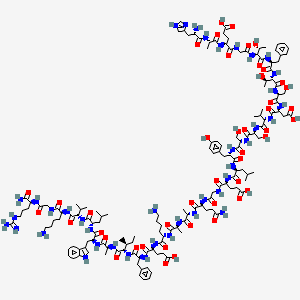
- C149H225N39O46 (GLP-1(7-36) amide)
- Weight
- 3297.6 Da
- CAS
- 89750-14-1
- PubChem CID
- 16133831
- Exact Mass
- 3296.6659 Da
- LogP
- -14.2
- TPSA
- 1390 Ų
- H-Bond Donors
- 49
- H-Bond Acceptors
- 50
- Rotatable Bonds
- 109
- Complexity
- 7660
Identifiers (SMILES, InChI)
InChI=1S/C149H226N40O45/c1-17-76(10)119(146(232)167-80(14)126(212)175-104(60-86-63-159-91-36-25-24-35-89(86)91)136(222)177-100(56-73(4)5)137(223)186-117(74(6)7)144(230)174-93(37-26-28-52-150)128(214)160-65-110(197)168-92(122(154)208)39-30-54-158-149(155)156)188-138(224)102(57-83-31-20-18-21-32-83)178-133(219)98(47-51-115(204)205)173-132(218)94(38-27-29-53-151)170-124(210)78(12)164-123(209)77(11)166-131(217)97(44-48-109(153)196)169-111(198)66-161-130(216)96(46-50-114(202)203)172-134(220)99(55-72(2)3)176-135(221)101(59-85-40-42-88(195)43-41-85)179-141(227)106(68-190)182-143(229)108(70-192)183-145(231)118(75(8)9)187-140(226)105(62-116(206)207)180-142(228)107(69-191)184-148(234)121(82(16)194)189-139(225)103(58-84-33-22-19-23-34-84)181-147(233)120(81(15)193)185-112(199)67-162-129(215)95(45-49-113(200)201)171-125(211)79(13)165-127(213)90(152)61-87-64-157-71-163-87/h18-25,31-36,40-43,63-64,71-82,90,92-108,117-121,159,190-195H,17,26-30,37-39,44-62,65-70,150-152H2,1-16H3,(H2,153,196)(H2,154,208)(H,157,163)(H,160,214)(H,161,216)(H,162,215)(H,164,209)(H,165,213)(H,166,217)(H,167,232)(H,168,197)(H,169,198)(H,170,210)(H,171,211)(H,172,220)(H,173,218)(H,174,230)(H,175,212)(H,176,221)(H,177,222)(H,178,219)(H,179,227)(H,180,228)(H,181,233)(H,182,229)(H,183,231)(H,184,234)(H,185,199)(H,186,223)(H,187,226)(H,188,224)(H,189,225)(H,200,201)(H,202,203)(H,204,205)(H,206,207)(H4,155,156,158)/t76-,77-,78-,79-,80-,81+,82+,90-,92-,93-,94-,95-,96-,97-,98-,99-,100-,101-,102-,103-,104-,105-,106-,107-,108-,117-,118-,119-,120-,121-/m0/s1
DTHNMHAUYICORS-KTKZVXAJSA-NResearch Indications
Type 2 Diabetes (FDA-Approved)
Multiple GLP-1 receptor agonists FDA-approved since 2005 (exenatide, liraglutide, semaglutide, dulaglutide, tirzepatide). Stimulate glucose-dependent insulin secretion, suppress glucagon, and slow gastric emptying. Superior to many other antihyperglycemic classes.
Semaglutide (Ozempic) FDA-approved (Jan 2025) to reduce risk of kidney disease worsening and kidney failure in patients with diabetic nephropathy.
Obesity (FDA-Approved)
Semaglutide (Wegovy) and tirzepatide (Zepbound) FDA-approved for chronic weight management in adults with BMI >=30 or >=27 with comorbidity. Achieve 15-20%+ body weight reduction through central appetite suppression and delayed gastric emptying.
Tirzepatide (Zepbound) FDA-approved (Dec 2024) for moderate-to-severe OSA in adults with obesity. First GLP-1 based therapy indicated for sleep apnea.
Cardiovascular (FDA-Approved)
Semaglutide (Wegovy) FDA-approved (2024) for reduction of serious cardiovascular events (heart attack, stroke, CV death) in patients with cardiovascular disease and obesity/overweight. SELECT trial demonstrated 20% reduction in MACE.
Emerging evidence for benefits in heart failure with preserved ejection fraction (HFpEF). STEP-HFpEF trial showed improvements in symptoms, physical limitations, and body weight.
Research Protocols
intravenous Injection
Overview GLP-1 is one of two primary incretin hormones (alongside GIP) responsible for the "incretin effect" — the observation that oral glucose produces a greater insulin response than intravenous glucose at equivalent plasma glucose levels. Research The Incretin Effect The incretin effect was fi
| Goal | Dose | Frequency | Duration |
|---|---|---|---|
| DPP-4 Inhibitor Studies | 100 mg, 50 mg | Twice daily | —(Route: Intravenous Injection, Oral) |
oral
Overview GLP-1 is one of two primary incretin hormones (alongside GIP) responsible for the "incretin effect" — the observation that oral glucose produces a greater insulin response than intravenous glucose at equivalent plasma glucose levels. Research The Incretin Effect The incretin effect was fi
| Goal | Dose | Frequency | Duration |
|---|---|---|---|
| DPP-4 Inhibitor Studies | 100 mg, 50 mg | Twice daily | —(Route: Intravenous Injection, Oral) |
Interactions
Peptide Interactions
- Oral GLP-1 Receptor Agonists: Small molecule oral GLP-1 receptor agonists (orforglipron by Eli Lilly, danuglipron by Pfizer) are in Phase 3 development, potentially offering pill-based alternatives to injectable peptide agonists.
As a 30-31 amino acid peptide derived from the proglucagon gene, GLP-1 plays a central role in postprandial glucose homeostasis by enhancing glucose-dependent insulin secretion, suppressing glucagon release, slowing gastric emptying, and promoting satiety.
- Oral GLP-1 Receptor Agonists: Small molecule oral GLP-1 receptor agonists (orforglipron by Eli Lilly, danuglipron by Pfizer) are in Phase 3 development, potentially offering pill-based alternatives to injectable peptide agonists.
- Multi-Agonist Development: Beyond approved dual (tirzepatide) and Phase 3 triple (retatrutide) agonists, next-generation molecules targeting GLP-1R alongside other metabolic receptors (FGF21, amylin, PYY) are in early development.
- Multi-Agonist Development: Beyond approved dual (tirzepatide) and Phase 3 triple (retatrutide) agonists, next-generation molecules targeting GLP-1R alongside other metabolic receptors (FGF21, amylin, PYY) are in early development.
Reported Research Timeline
Rapid onset expected; half-life of ~2 minutes (native, due to DPP-4 cleavage) indicates fast-acting pharmacokinetics
Meal Tolerance Tests with GLP-1 Measurement: Standard mixed-meal tolerance tests with serial blood sampling for GLP-1 (total and active) at 0, 15,...
Due to short half-life (~2 minutes (native, due to DPP-4 cleavage)), effects are expected per-dose; consistent daily administration maintains...
Regular administration schedule required; effects are dose-dependent and do not persist between doses
Quality Indicators
What to look for
- Multiple peer-reviewed studies available
Caution
- Short half-life may require frequent dosing
- Injection site reactions reported
Red flags
- Potential carcinogenicity concerns
Frequently Asked Questions
References (12)
- [1]GLP-1-based therapies for diabetes, obesity and beyond
→ This review confirms GLP-1 therapies like semaglutide and tirzepatide are highly effective for glucose control and weight loss while reducing cardiovascular and renal mortality.
- [7]
- [2]Hypoglycemic effect of C. butyricum-pMTL007-GLP-1 engineered probiotics on type 2 diabetes mellitus
→ Engineered probiotics designed to continuously deliver GLP-1 successfully lowered blood glucose, improved islet cell function, and restored gut microbiota in diabetic models.
- [3]GDF8 and activin A blockade protects against GLP-1-induced muscle loss while enhancing fat loss
→ GLP-1 receptor agonists can cause significant muscle loss as a side effect, but blocking myostatin and activin A can preserve muscle mass and optimize metabolic outcomes.
- [4]2023 AHA/ACC/ACCP/ASPC/NLA/PCNA Guideline for the Management of Patients With Chronic Coronary Disease
→ Clinical guidelines now formally recommend GLP-1 receptor agonists for patients with chronic coronary disease and type 2 diabetes to reduce major adverse cardiovascular events.
- [5]The role of glucagon-like peptide-1 in reproduction: from physiology to therapeutic perspective
→ GLP-1 RAs show potential in managing reproductive health disorders like PCOS by restoring menstrual frequency and improving metabolic health.
- [6]GLP-1 rescued gestational diabetes mellitus-induced suppression of fetal thalamus development
→ Animal models suggest GLP-1 may protect fetal neurological development, specifically correcting impaired thalamocortical axon growth caused by maternal diabetes.
- [9]
- [10]Nauck, M. A. & Meier, J. J Incretin hormones: Their role in health and disease Diabetes Obes. Metab. (2018)
- [11]
- [12]McLean BA et al — Revisiting the Complexity of GLP-1 Action — From Sites of Synthesis to Receptor Activation Endocr. Rev. (2021)
- [8]Drucker, D. J Mechanisms of Action and Therapeutic Application of Glucagon-like Peptide-1 Cell Metab. (2018)
Continue researching GLP-1
Keep scientific evidence separate from commercial availability. Review how claims are evaluated, explore question-led research paths, or inspect disclosed source records without changing the editorial conclusions on this page.