PT-141
PT-141 (Bremelanotide) is a synthetic melanocortin receptor agonist that acts centrally on MC3R and MC4R to modulate sexual arousal, and is the first FDA-approved peptide therapy for hypoactive sexual desire disorder in premenopausal women.
Evidence-led profile
Research snapshot
- Evidence stage
- FDA-approved use recorded
- References
- 17 linked sources
- Research coverage
- 17 areas
- Editorial review
- Mar 8, 2026
Published by the PepGuide Editorial Team using our research methodology.
Overview
PT-141 was originally developed as a sunless tanning agent derived from Melanotan II, itself an analog of the endogenous melanocortin peptide alpha-MSH. During clinical trials for skin pigmentation, researchers observed that PT-141 consistently induced penile erections as a side effect, leading to its redevelopment as a treatment for sexual dysfunction. Unlike sildenafil and similar drugs that act peripherally on blood vessel dilation through phosphodiesterase-5 inhibition, PT-141 acts on the central nervous system, specifically targeting melanocortin-4 receptors in the hypothalamus and limbic system. This mechanism enables PT-141 to influence sexual desire and arousal at the neurological level rather than simply facilitating mechanical erectile function.
The development of PT-141 by Palatin Technologies represents a landmark in the understanding of melanocortin signaling in human sexual behavior. It established that the melanocortin system, long known for its roles in pigmentation and energy homeostasis, plays a critical role in the central regulation of sexual function.
Research
Long-Term Safety and Efficacy
Clayton et al. (2022) conducted an open-label extension following 684 women for up to 18 months. Efficacy was sustained without tachyphylaxis at median usage of 2-3 doses per month. Nausea incidence declined from approximately 40% initially to approximately 18% by month 12, likely reflecting MC4R desensitization in brainstem emetic centers. No cardiovascular safety signals emerged with long-term use.
Male Erectile Dysfunction
Diamond et al. (2004) demonstrated efficacy of intranasal bremelanotide in a placebo-controlled trial in 20 men with mild-to-moderate ED. RigiScan monitoring showed clinically significant erectile responses (rigidity >60% at tip and base for >5 minutes) in 67% of subjects, including men with diabetes-related ED and post-prostatectomy patients who had failed sildenafil. The central mechanism enables efficacy independent of peripheral vascular function.
Hemorrhagic Shock
Giuliani et al. (2012) demonstrated organ-protective effects of melanocortin agonists including bremelanotide in rodent hemorrhagic shock models. MC4R activation reduced inflammatory cytokine production (TNF-alpha, IL-6), neutrophil infiltration, and organ injury through NF-kappaB inhibition, suggesting potential critical care applications.
Intranasal Efficacy in Female Sexual Arousal
Diamond et al. (2006) administered intranasal PT-141 at 10 mg and 20 mg doses to premenopausal women with female sexual arousal disorder (FSAD) in a randomized, double-blind, placebo-controlled crossover design (n=18). Vaginal photoplethysmography measured genital blood flow during exposure to erotic visual stimuli. The 20 mg intranasal dose produced significant increases in vaginal pulse amplitude (p<0.05) and subjective arousal scores compared to placebo. These data confirmed that the central melanocortin mechanism produces measurable physiological arousal responses in women via the nasal route.
Intranasal Efficacy in Male Erectile Dysfunction
Diamond et al. (2004) conducted the pivotal intranasal PT-141 study: a double-blind, placebo-controlled evaluation in 20 men with mild-to-moderate erectile dysfunction. Intranasal doses of 7 mg and 20 mg were tested. RigiScan monitoring showed that 67% of subjects achieved clinically significant erectile responses (rigidity >60% at both base and tip for >5 minutes) at the 20 mg dose, compared to 20% with placebo. Remarkably, the study included men with diabetes-related ED and post-prostatectomy patients who had previously failed sildenafil — populations where PDE5 inhibitors typically show poor response rates.
The onset of erectile response occurred within 15-30 minutes of intranasal administration, significantly faster than the 45-60 minutes typically required for subcutaneous delivery. Duration of effect was approximately 4-6 hours from the nasal dose.
Blood Pressure Concerns and Route Switch
Clinical data across multiple intranasal trials consistently showed transient systolic blood pressure increases of 6-12 mmHg and diastolic increases of 4-8 mmHg within 30-60 minutes of intranasal dosing. While these elevations were self-limiting (resolving within 2-4 hours), the FDA's Division of Bone, Reproductive and Urologic Products expressed concern about cardiovascular risk in patients with undiagnosed or poorly controlled hypertension using an on-demand sexual dysfunction treatment.
Palatin Technologies subsequently demonstrated that subcutaneous delivery of 1.75 mg bremelanotide produced smaller blood pressure effects (mean systolic increase ~3 mmHg, diastolic ~2 mmHg) with a more gradual pharmacokinetic profile. The SC formulation was advanced through Phase 3 RECONNECT trials and received FDA approval in June 2019 as Vyleesi.
Bioavailability Comparison: Intranasal vs Subcutaneous
Pharmacokinetic studies comparing the two routes revealed critical differences:
- Intranasal (7-20 mg): Tmax 15-30 min, bioavailability ~5-10%, variable absorption (CV 40-60%), Cmax/AUC ratio indicating rapid spike-and-decline profile
- Subcutaneous (1.75 mg): Tmax ~60 min, bioavailability ~100%, consistent absorption (CV 15-25%), smoother pharmacokinetic profile
The low intranasal bioavailability (~5-10%) required doses 4-10 fold higher than SC to achieve equivalent systemic exposure. However, the rapid Tmax created disproportionately high peak concentrations relative to total drug exposure, which drove the blood pressure signal.
Neural Pathway Integration
The neuropeptide systems do not operate in isolation. The integrated model of erectile neural control involves:
- Central initiation: Psychogenic arousal activates the MPOA/PVN, which sends descending signals via the spinal cord to the sacral parasympathetic nucleus (S2–S4)
- Parasympathetic activation: Cavernous nerve stimulation releases NO and VIP, producing active corporal relaxation
- Sensory amplification: Tactile stimulation releases CGRP and substance P from sensory terminals, reinforcing local vasodilation through the reflex arc
- Sympathetic withdrawal: Parasympathetic activation reciprocally inhibits sympathetic outflow, reducing norepinephrine and NPY release
- Detumescence: Sympathetic reactivation releases norepinephrine and NPY, producing contraction and resumption of flaccidity
Giuliano & Rampin (2000) mapped these integrated circuits in rodent models, demonstrating that selective lesioning of specific neuropeptide pathways produces predictable erectile deficits.
Diabetic Neuropathy and Erectile Dysfunction
Diabetes mellitus produces selective neuropathic damage to penile nerve populations. Immunohistochemical studies reveal significant loss of VIP-containing and CGRP-containing nerve fibers in diabetic corporal tissue, while NPY-containing sympathetic fibers are relatively spared. This creates a pathological imbalance: reduced pro-erectile NANC/sensory neuropeptide tone with maintained anti-erectile sympathetic tone. Lincoln et al. (1987) demonstrated selective VIP nerve fiber depletion in penile tissue from diabetic men, providing a neuropeptide-based explanation for the high prevalence of ED in diabetes (50–75%).
Spinal Cord Injury Models
Spinal cord injury (SCI) disrupts descending supraspinal input while variably preserving local reflex arcs. In complete SCI above the sacral segments, psychogenic erection is lost but reflex erection (mediated by local sensory neuropeptide release — CGRP, substance P) may be preserved. Conversely, sacral SCI damages the local parasympathetic pathways (VIP, NO release) while preserving psychogenic pathways. This dissociation has been critical for understanding the relative contributions of different neuropeptide systems to erectile function (Biering-Sorensen & Sonksen, 2001).
Central vs Peripheral Mechanisms
Neuropeptides participate in erectile regulation at both central and peripheral levels. Centrally, VIP acts in the PVN to facilitate oxytocin release and pro-erectile descending signaling. NPY in the MPOA modulates sexual motivation and copulatory behavior. CGRP in the dorsal horn of the spinal cord processes penile sensory afferents. Peripherally, these same peptides act directly on corporal smooth muscle and vasculature as described above. The dual central-peripheral roles make neuropeptide systems complex but potentially powerful therapeutic targets (Giuliano et al., 1993).
Phase III RECONNECT Trials (HSDD)
Kingsberg et al. (2019) reported results from two pivotal randomized, double-blind, placebo-controlled Phase III trials (Studies 301 and 302) enrolling 1,247 premenopausal women with generalized acquired HSDD. Patients self-administered bremelanotide 1.75 mg SC as needed for 24 weeks. Primary endpoints were change in satisfying sexual events (SSE) per month and Female Sexual Distress Scale-Desire/Arousal/Orgasm (FSDS-DAO) score. Bremelanotide significantly increased SSEs (mean increase 1.0 over placebo, p<0.001) and reduced sexual distress scores. Approximately 25% of bremelanotide-treated patients achieved clinically meaningful improvement versus 17% for placebo.
Female Sexual Arousal
Diamond et al. (2006) used vaginal photoplethysmography to measure genital arousal in premenopausal women with female sexual arousal disorder (FSAD). Intranasal bremelanotide at 20 mg significantly increased vaginal pulse amplitude during erotic visual stimulation compared to placebo (p<0.05), confirming physiological arousal effects in women.
Hypoactive Sexual Desire Disorder (HSDD)
The pivotal RECONNECT Phase 3 clinical trials (Studies 301 and 302) enrolled over 1,247 premenopausal women with HSDD. Kingsberg et al. (2019) reported that PT-141 (1.75 mg subcutaneous injection, administered as needed at least 45 minutes before anticipated sexual activity) significantly increased the number of satisfying sexual events (SSEs) and improved scores on the Female Sexual Distress Scale-Desire/Arousal/Orgasm (FSDS-DAO) compared to placebo. Approximately 25% of PT-141-treated patients experienced clinically meaningful improvement in desire, compared to 17% in the placebo group (p<0.001). These trials formed the basis for FDA approval in June 2019.
The FDA label limits use to no more than one dose per 24 hours and no more than 8 doses per month due to concerns about tachyphylaxis and blood pressure effects with frequent dosing.
Hemorrhagic Shock and Organ Protection
Research in animal models has revealed that melanocortin agonists including PT-141 may have significant applications beyond sexual function. Giuliani et al. (2007) demonstrated that MC4R activation in rodent hemorrhagic shock models reduced organ injury and improved survival rates. The protective effects appear mediated through:
- Inhibition of NF-kappaB-dependent inflammatory signaling
- Reduced neutrophil infiltration into organs
- Decreased production of TNF-alpha, IL-6, and other pro-inflammatory cytokines
- Improved cardiovascular function during hemorrhagic resuscitation
These findings have spurred interest in melanocortin agonists as potential emergency medicine therapeutics for trauma and shock.
Melanocortin Signaling and Energy Homeostasis
PT-141 has been used extensively as a pharmacological tool to study melanocortin receptor function. Cone (2006) reviewed the expanding roles of MC3R and MC4R in energy homeostasis, feeding behavior, cardiovascular regulation, and inflammation. Research using PT-141 and related melanocortin agonists has elucidated:
- MC4R's role as a critical mediator of leptin's anorexigenic effects
- Melanocortin involvement in cardiovascular autonomic regulation
- MC3R's distinct role in energy partitioning and fat storage
- Central melanocortin influence on inflammatory responses
Female Sexual Arousal Disorder
Beyond HSDD, PT-141 has been investigated for female sexual arousal disorder (FSAD). Diamond et al. (2006) conducted a study using vaginal photoplethysmography to measure genital arousal in women exposed to erotic stimuli after PT-141 administration. Results showed significant increases in vaginal blood flow and subjective arousal compared to placebo, confirming that PT-141's central mechanism produces measurable physiological arousal responses in women.
Safety and Limitations
The safety profile of PT-141 is well-characterized from Phase 3 clinical trials enrolling over 1,247 women and post-marketing surveillance:
- Nausea: The most common adverse effect, reported in ~40% of patients in clinical trials. Typically mild to moderate and self-limiting within hours. Frequency decreases with repeated use
- Flushing: Reported in ~20% of patients; transient, typically lasting 30-60 minutes
- Headache: Reported in ~11% of patients
- Injection site reactions: Reported in ~5.4% of patients; generally mild
- Blood pressure: Transient increases in systolic and diastolic blood pressure (mean ~3-6 mmHg). The intranasal formulation showed larger BP increases and was abandoned. Not recommended in uncontrolled hypertension or cardiovascular disease
- Focal hyperpigmentation: Reported with repeated use, particularly in facial and gingival areas; typically reversible with discontinuation
- Contraindications: Uncontrolled hypertension, cardiovascular disease. Should not be used with naltrexone (melanocortin interaction). Limited to 8 doses per month per FDA labeling
RECONNECT Phase 3 Trials (HSDD in Premenopausal Women)
The pivotal RECONNECT studies (NCT02333071 and NCT02338960) used the following protocol: 1.75 mg bremelanotide administered via subcutaneous autoinjector into the abdomen, at least 45 minutes before anticipated sexual activity. Dosing was limited to once per 24 hours and no more than 8 doses per month. Study population: premenopausal women aged 21-55 with generalized acquired HSDD for at least 6 months, with a stable partner. Treatment duration was 24 weeks with a 4-week follow-up. Primary endpoints were change in satisfying sexual events (SSE) and FSDS-DAO score. Kingsberg et al. (2019) reported a mean increase of 1.0 SSE per month over placebo (p<0.001).
Open-Label Extension Study
Clayton et al. (2022) followed 684 women for up to 18 months in an open-label extension. Participants self-administered 1.75 mg SC as needed (max 8 doses/month). Median usage was 2-3 doses per month. Efficacy was sustained without tachyphylaxis, and nausea incidence declined from ~40% in early months to ~18% by month 12.
Male Erectile Dysfunction Trials
Diamond et al. (2004) used intranasal administration at doses of 7 mg and 20 mg in a double-blind, placebo-controlled crossover design in 20 men with mild-to-moderate ED. RigiScan monitoring demonstrated rigidity >60% at tip and base for >5 minutes in 67% of subjects at the 20 mg dose. Wessells et al. (2000) used subcutaneous doses of 0.025 mg/kg in 10 normal male volunteers, achieving erection in 80% of subjects within 30-45 minutes.
Female Sexual Arousal Study
Diamond et al. (2006) administered intranasal PT-141 at 10 mg and 20 mg doses to premenopausal women with FSAD in a randomized, double-blind, placebo-controlled crossover design (n=18). Vaginal photoplethysmography measured genital blood flow during erotic visual stimulation. The 20 mg dose produced significant increases in vaginal pulse amplitude (p<0.05) and subjective arousal compared to placebo.
Common Side Effects
- Nausea (40%)
- Flushing (20%)
- Headache (11%)
- Injection site reactions
- Transient blood pressure decrease
- FDA black box warning for blood pressure effects
Contraindications
- Uncontrolled hypertension
- Cardiovascular disease
- Use of nitrate medications
- Pregnancy or breastfeeding
Discontinue If
- Severe or persistent nausea/vomiting
- Significant blood pressure drop or dizziness
- Chest pain or irregular heartbeat
- Severe headache or vision changes
- Prolonged erection exceeding 4 hours
Mechanism of Action
PT-141 functions as a non-selective agonist at melanocortin receptors, with particular affinity for MC3R and MC4R subtypes. Its mechanism of action for sexual function involves:
Central Melanocortin Activation: PT-141 crosses the blood-brain barrier and binds to MC4R receptors in the medial preoptic area (MPOA) of the hypothalamus and other limbic structures. Wessells et al. (2000) demonstrated that activation of these receptors triggers downstream dopaminergic and oxytocinergic signaling pathways associated with sexual arousal and motivation.
Dopamine Release: MC4R activation by PT-141 stimulates dopaminergic neurons in the paraventricular nucleus (PVN) of the hypothalamus, increasing dopamine release in brain regions associated with reward and sexual behavior. Martin & MacIntyre (2004) showed that this dopaminergic mechanism is essential for PT-141's pro-erectile effects in animal models.
Oxytocin Pathway: PT-141 stimulates oxytocin release from hypothalamic neurons, which contributes to its pro-sexual effects through actions on spinal cord circuits involved in erectile function and genital arousal. Argiolas et al. (2000) established the oxytocin-mediated spinal pathway as a key effector of melanocortin-induced erection.
NO-Independent Mechanism: Unlike PDE5 inhibitors, PT-141's mechanism does not depend on nitric oxide/cGMP signaling in the penile vasculature. This NO-independent pathway explains its efficacy in patients who fail to respond to sildenafil, including those with diabetes-related ED and post-prostatectomy patients.
Research protocol summary
- Typical Dose
- Women: 1.75mg (FDA-approved); Men: 1-2mg; Start 0.5mg test dose for tolerance
- Frequency
- As needed before sexual activity; max 1 dose per 24 hours
- Route
- Subcutaneous injection
- Cycle Length
- Use as needed for sexual enhancement
- Storage
- Refrigerate at 2-8°C, use reconstituted solution within 30 days
These values summarize cataloged research protocols. They are not personal dosing instructions or medical guidance.
Reconstitution Calculator
Pharmacokinetic Profile
PT-141 — Pharmacokinetic Curve
Subcutaneous injectionIllustrative model from the listed half-life and time to peak, not measured concentration data.
Molecular Structure
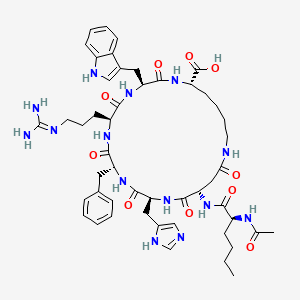
- Formula
- C50H68N14O10
- Weight
- 1025.18 Da
- CAS
- 189691-06-3
- PubChem CID
- 9941379
- Exact Mass
- 1024.5243 Da
- LogP
- 0.7
- TPSA
- 379 Ų
- H-Bond Donors
- 13
- H-Bond Acceptors
- 12
- Rotatable Bonds
- 17
- Complexity
- 1950
Identifiers (SMILES, InChI)
InChI=1S/C50H68N14O10/c1-3-4-16-35(58-29(2)65)43(67)64-41-25-42(66)54-20-11-10-18-37(49(73)74)60-46(70)39(23-31-26-56-34-17-9-8-15-33(31)34)62-44(68)36(19-12-21-55-50(51)52)59-45(69)38(22-30-13-6-5-7-14-30)61-47(71)40(63-48(41)72)24-32-27-53-28-57-32/h5-9,13-15,17,26-28,35-41,56H,3-4,10-12,16,18-25H2,1-2H3,(H,53,57)(H,54,66)(H,58,65)(H,59,69)(H,60,70)(H,61,71)(H,62,68)(H,63,72)(H,64,67)(H,73,74)(H4,51,52,55)/t35-,36-,37-,38+,39-,40-,41-/m0/s1
FFHBJDQSGDNCIV-MFVUMRCOSA-NResearch Indications
Sexual Health
FDA-approved for treatment of HSDD in premenopausal women.
Effective in men including PDE5 inhibitor-resistant cases via CNS pathways.
Enhances sexual arousal and desire in women.
Quality of Life
Reduces distress related to low sexual desire.
Enhanced satisfaction reported in clinical trials.
Hormonal
FDA-approved (Vyleesi, June 2019) for premenopausal women with acquired, generalized HSDD. Two Phase III RCTs in 1,247 women. On-demand 1.75mg SC injection (PMID: 31429064).
Neurological
Nonselective melanocortin receptor agonist (MC1R, MC4R) that modulates CNS arousal pathways. Phase III trials showed 25% improvement in sexual desire scores vs 17% placebo.
Research Protocols
intranasal Injection
The compound progressed through clinical development initially as an intranasal formulation for male erectile dysfunction, but transient blood pressure elevations with the intranasal route led to reformulation as a subcutaneous injection. Intranasal bremelanotide at 20 mg significantly increased vag
| Goal | Dose | Frequency | Duration |
|---|---|---|---|
| General Research Protocol | 1.75 mg | Per protocol | 24 weeks |
| Women | 20 mg | Per protocol | — |
| No serious adverse events | 7 mg, 20 mg, 10 mg, 2.5 mg, 1.75 mg | Per protocol | —(Route: Subcutaneous Injection, Intranasal) |
| Male ED - Standard | 1.5-2mg | As needed, 30-45min before | —(Route: Nasal) |
| Female Sexual Dysfunction | 1-1.5mg | As needed, max 1 dose/24hr | —(Route: Nasal) |
subcutaneous Injection
Melanocortin receptor agonist for sexual dysfunction research. Administered subcutaneously with gradual titration.
| Goal | Dose | Frequency | Duration |
|---|---|---|---|
| Phase 1 | 500 mcg | Once daily | Weeks 1-8 |
| Phase 2 | 1,000 mcg | Once daily | Weeks 9-12 |
| Phase 3 | 1,500 mcg | Once daily | Weeks 13-16(FDA-approved on-demand dose (Vyleesi) is 1.75 mg SC before intercourse) |
Reconstitution Guide (10mg vial + 3mL BAC water)
- Wipe vial tops with alcohol swab
- Draw 3.0 mL bacteriostatic water into syringe
- Inject slowly down the inside wall of the peptide vial
- Gently swirl to dissolve — never shake
- Resulting concentration: 3.33 mg/mL
- For 500 mcg dose: draw 15 units (0.15 mL)
- For 1,000 mcg dose: draw 30 units (0.30 mL)
- For 1,500 mcg dose: draw 45 units (0.45 mL)
- Store reconstituted vial refrigerated at 2-8°C
Interactions
Peptide Interactions
The rapid onset of intranasal PT-141 (15-30 min) was pharmacokinetically compatible with PDE5 inhibitor timing (sildenafil Tmax ~60 min). The complementary central (PT-141) and peripheral (PDE5i) mechanisms suggested potential for combination therapy in refractory ED. Molinoff et al. (2003) noted...
PT-141 Nasal + Oxytocin Nasal Both PT-141 and oxytocin have been administered intranasally for sexual function applications.
Substance P Substance P is an 11-amino acid tachykinin peptide (Arg-Pro-Lys-Pro-Gln-Gln-Phe-Phe-Gly-Leu-Met-NH2) released from sensory C-fiber terminals in the penis.
Both bremelanotide and melanotan II are melanocortin receptor agonists derived from alpha-MSH. Bremelanotide (PT-141) is MC4R-selective while melanotan II is non-selective across MC1R-MC5R. Concurrent use produces overlapping receptor activation with increased risk of nausea, flushing, and unpredictable melanocortin-mediated effects (Hadley, 2005).
Reported Research Timeline
Mild nausea or facial flushing possible
Onset of effects - increased arousal and desire
Peak effects - enhanced sexual response
Gradual diminishment of effects
No tolerance development reported with intermittent use
Quality Indicators
What to look for
- FDA-approved pharmaceutical grade (Vyleesi) from licensed pharmacy
- White crystalline powder (pure PT-141)
- Clear solution when reconstituted
- Proper labeling with concentration and purity
Caution
- Compounded versions - ensure pharmacy is licensed and follows USP standards
Red flags
- Colored or oily appearance indicating impurities or degradation
- Cloudy solution after reconstitution
- Unknown source without quality documentation
Frequently Asked Questions
References (17)
- [1]FDA Approval Trial for HSDD (2019)
- [2]Male Erectile Dysfunction Clinical Trial (2017)
- [3]Mechanism of Action Study (2016)
- [4]Long-term Safety Profile of Bremelanotide in Clinical Practice
- [5]PT-141 Efficacy in Treatment-Resistant Sexual Dysfunction
- [15]
- [16]
- [17]
- [6]Wessells H, Fuciarelli K, Hansen J, et al Synthetic melanotropic peptide initiates erections in men with psychogenic erectile dysfunction: double-blind, placebo controlled crossover study J Urol (2000)
- [7]Diamond LE, Earle DC, Heiman JR, et al An effect on the subjective sexual response in premenopausal women with sexual arousal disorder by bremelanotide (PT-141), a melanocortin receptor agonist J Sex Med (2006)
- [8]Diamond LE, Earle DC, Rosen RC, et al Double-blind, placebo-controlled evaluation of the safety, pharmacokinetic properties and pharmacodynamic effects of intranasal PT-141, a melanocortin receptor agonist, in healthy males and patients with mild-to-moderate erectile dysfunction Int J Impot Res (2004)
- [9]
- [10]Argiolas A, Melis MR, Murgia S, Schiöth HB ACTH- and alpha-MSH-induced grooming, stretching, yawning and penile erection in male rats: site of action in the brain and role of melanocortin receptors Brain Res Bull (2000)
- [11]Kingsberg SA, Clayton AH, Portman D, et al Bremelanotide for the treatment of hypoactive sexual desire disorder: two randomized phase 3 trials Obstet Gynecol (2019)
- [12]Giuliani D, Ottani A, Altavilla D, et al Melanocortins and the cholinergic anti-inflammatory pathway Adv Exp Med Biol (2007)
- [14]Clayton AH, Lucas J, DeRogatis LR, Jordan R Long-term safety and efficacy of bremelanotide for hypoactive sexual desire disorder J Womens Health (2022)
- [13]
Continue researching PT-141
Keep scientific evidence separate from commercial availability. Review how claims are evaluated, explore question-led research paths, or inspect disclosed source records without changing the editorial conclusions on this page.