Epithalon
Epithalon (Epitalon) is a synthetic tetrapeptide (Ala-Glu-Asp-Gly) derived from the pineal gland extract Epithalamin, studied for its ability to activate telomerase, elongate telomeres, and extend lifespan in animal models. It also modulates melatonin secretion, gene expression, and has demonstrated anti-tumor properties in rodent research.
Evidence-led profile
Research snapshot
- Evidence stage
- Emerging research
- References
- 14 linked sources
- Research coverage
- 30 areas
- Editorial review
- Mar 8, 2026
Published by the PepGuide Editorial Team using our research methodology.
Overview
Epithalon acts primarily through activation of telomerase, the enzyme responsible for maintaining telomere length at chromosome ends. Telomere shortening is a hallmark of cellular aging, and by inducing telomerase activity Epithalon has been shown to extend telomeres in human somatic cell cultures. Beyond its telomere effects, the peptide influences gene expression across immune, connective tissue, and circadian regulatory pathways. In rodent models, Epithalon has extended lifespan by up to 27% and reduced spontaneous tumor incidence, positioning it as a multi-target geroprotective compound.
Research
Lifespan Extension
In SHR mice, Epithalon extended lifespan by up to 27% while reducing spontaneous tumor incidence (Anisimov et al., 2003). Earlier studies in fruit flies, mice, and rats demonstrated mortality reductions of up to 52% (Anisimov et al., 1998).
Gene Expression Modulation
Short peptides including AEDG interact directly with DNA at promoter regions, modulating transcription of genes involved in immune function, tissue maintenance, and circadian regulation. This mechanism is distinct from classical receptor-mediated signaling and represents a novel mode of peptide bioregulation (Khavinson et al., 2013).
Solubility and Formulation Advantages
Acetate salts of short peptides demonstrate superior aqueous solubility compared to free acid or TFA salt forms. In practical terms, Epithalon Acetate reconstitutes more rapidly and completely in bacteriostatic water or saline, reducing the risk of incomplete dissolution that can occur with the free acid form at higher concentrations. This is particularly relevant for research protocols requiring precise dosing.
Telomerase Activation
The foundational telomerase activation data for Epithalon was established by Khavinson and colleagues using human fetal fibroblasts and retinal pigment epithelial cells. Epithalon induced both telomerase activity and measurable telomere elongation, overcoming the Hayflick limit in treated cultures (Khavinson et al., 2003). These results are salt-form independent.
Oral Bioavailability of Short Peptides
Dipeptides and tripeptides are transported across the intestinal epithelium by the proton-coupled oligopeptide transporters PepT1 (SLC15A1) and PepT2 (SLC15A2). These transporters accept di- and tripeptides with broad sequence specificity, providing a physiological mechanism for oral absorption of short bioregulatory peptides. Longer peptides (4+ amino acids) are generally too large for PepT1/2 transport and are degraded by brush-border and cytosolic peptidases before absorption.
Short Peptide Bioregulation
The systematic investigation of peptide length requirements by the Khavinson group revealed that bioregulatory peptides as short as two amino acids can modulate gene expression in tissue-specific patterns. This work challenged the conventional assumption that peptides require receptor binding for biological activity, proposing instead a direct peptide-DNA interaction model (Khavinson et al., 2021).
Aging and Telomere Biology
Supplementation with Epithalon in insects and rodents has shown that the peptide can decrease mortality by more than half and prolong life by as much as 27% (Anisimov et al., 199800034-7)). This effect is driven by multiple mechanisms: restoration of youthful gene expression patterns, reduction of lipid peroxidation and oxidative protein damage (Kozina, 2007), and activation of telomerase in human somatic cells leading to telomere elongation (Khavinson et al., 2003). Additional studies have confirmed effects on biomarkers of aging and spontaneous tumor incidence (Anisimov, 2003).
Cancer
Research in rat models has shown that daily administration of Epithalon reduces tumor growth (Vinogradova et al., 2007). The peptide is under investigation as a potential adjuvant in Her-2/neu positive breast cancers, leukemia, and testicular cancer. One primary mechanism appears to involve regulation of the PER1 gene, a circadian rhythm regulator in the hypothalamus that is frequently under-expressed in cancer patients (Gery et al., 2006).
Retinal Protection
In rats with retinitis pigmentosa, Epithalon improved retinal outcomes in 90% of subjects by preserving normal eye structure and enhancing bioelectric function of the retina (Khavinson et al., 2002).
Study Limitations
While the results are striking, several methodological limitations should be noted:
- Non-randomized: Group assignment was not randomized, introducing potential selection bias
- Open-label: Neither subjects nor investigators were blinded
- Single center: Conducted at one institution in St. Petersburg
- Primarily Russian authorship: The research group has not been independently replicated by external investigators
- Incomplete reporting: Full statistical methodology and raw data have not been made available for external review
- Historical controls: Some comparisons used population-level mortality data rather than concurrent controls
Despite these limitations, the study remains notable for its duration (12 years), its mortality endpoint (the gold standard in longevity research), and the magnitude of the observed effect.
Dosing Strategies: 5 mg vs 10 mg
Published protocols describe two primary dosing tiers:
- 5 mg/day x 10 days: The conservative protocol, used in some human observational studies and representing the minimum dose expected to achieve gene regulatory effects. This dose is typically administered subcutaneously.
- 10 mg/day x 10 days: The standard protocol used in Khavinson's clinical observations. The higher dose provides greater margin for inter-individual variability in absorption and peptide degradation. Some protocols split the 10 mg dose into two 5 mg injections (morning and evening) to maintain more consistent peptide exposure.
No head-to-head dose-comparison studies have been published, and dose selection appears to have been guided by clinical experience rather than formal dose-finding trials.
Dilman's Neuroendocrine Framework
Professor Vladimir Dilman (1925-2001) proposed the "elevation theory" of aging: the hypothalamus progressively loses sensitivity to negative feedback from peripheral hormones, driving compensatory increases in cortisol, insulin, and gonadotropins that accelerate aging. Dilman's framework predicts that agents restoring hypothalamic sensitivity -- including pineal peptides like epithalamin (the crude extract from which epithalon was derived) -- could correct the neuroendocrine "drift" underlying age-related metabolic syndrome, immunosuppression, and cancer susceptibility (Dilman & Dean, 1992).
Epithalon's ability to restore melatonin secretion patterns in elderly subjects directly addresses a key prediction of Dilman's theory: that pineal gland involution drives circadian dysregulation that compounds other aging processes.
Khavinson's Course-Based Studies
The foundational work by Anisimov and Khavinson in rodent lifespan studies used epithalon administered in 10-day courses with intervals of several months between courses. Female Swiss-derived SHR mice receiving epithalon courses showed a 27% increase in maximum lifespan and significantly reduced spontaneous tumor incidence compared to controls (Anisimov et al., 2003). Earlier studies in CBA mice demonstrated that 5 courses of epithalon given over the animals' lifespan extended maximum lifespan by 12.3% (Anisimov et al., 1998).
The 12-Year Human Study
The landmark study enrolled 266 elderly subjects (aged 60-74 at baseline) in St. Petersburg, Russia, and followed them from 1989 to 2001. The study included three groups:
- Treatment group (n=79): Received annual 10-day courses of thymalin + epithalon
- Thymalin-only group (n=62): Received annual 10-day courses of thymalin alone
- Control group (n=125): Received no peptide treatment
Key findings after 12 years (Khavinson et al., 2003):
- Mortality reduction: The combined thymalin + epithalon group showed approximately 50% reduction in mortality compared to controls (mortality rate 5.4/1000 person-years vs 10.5/1000 in controls)
- Thymalin alone: Also reduced mortality but to a lesser degree than the combination, supporting the added value of epithalon
- Immune restoration: Treatment groups showed normalization of T-cell subsets, NK cell activity, and immunoglobulin levels
- Melatonin: The combination group showed restored nocturnal melatonin peak amplitude
- Cardiovascular markers: Improved endothelial function and reduced cardiovascular mortality
- Cancer incidence: Reduced incidence of new cancer diagnoses in the treatment groups
Immune Biomarker Data
Detailed immune profiling from the human study and related investigations showed:
- CD3+ T cells: Increased from below-normal to normal range in 67% of treated subjects
- CD4/CD8 ratio: Normalized from inverted (<1.0) to physiological range (1.5-2.5)
- NK cell activity: Increased cytotoxicity by 30-40% compared to baseline
- IL-2 production: Enhanced lymphocyte IL-2 secretion, supporting T-cell proliferation
- Immunoglobulins: Normalization of IgG and IgA levels in subjects with baseline immunodeficiency
Melatonin Regulation
Epithalon modulates melatonin synthesis and release by affecting pineal gland expression of AANAT and pCREB transcription factor (Khavinson et al., 2003). Studies in elderly primates showed that Epithalon restores melatonin secretion toward youthful patterns, with implications for circadian rhythm normalization and sleep quality.
Subcutaneous vs Intravenous Administration
- Subcutaneous (SC): The most common route in published protocols. SC injection provides slower absorption and slightly prolonged exposure compared to IV, partially compensating for the peptide's short half-life. Typical injection sites include the abdomen, deltoid, or anterior thigh.
- Intravenous (IV): Used in some Russian clinical settings. IV administration achieves higher peak plasma concentrations but shorter duration of exposure. Some practitioners prefer IV for the first 2-3 days of a course followed by SC for the remainder, though this approach lacks formal comparative data.
Both routes bypass gastrointestinal degradation, which would render the tetrapeptide inactive if taken orally.
Telomerase Activation and DNA Protection
In vitro experiments on human somatic cells showed that Epithalon activates telomerase, leading to telomere elongation and reduced accumulation of DNA errors over successive divisions (Khavinson et al., 2003). This telomere-protective effect is considered a key mechanism underlying the peptide's geroprotective properties, as telomere attrition drives replicative senescence and genomic instability.
Immune System Modulation
Research in aging rats demonstrated that Epithalon boosts expression of interferon gamma in lymphocytes, a critical cytokine for activating macrophages, natural killer cells, and T cells against viral infections (Lin'kova et al., 2012). The peptide also upregulates CD5 (promoting immune cell differentiation) and IL-2 (regulating white blood cell proliferation) at the gene promoter level (Khavinson et al., 2013).
Skin Health and Fibroblast Activation
Epithalon activates fibroblasts by 30-45% in mouse models, enhancing production of extracellular matrix components including collagen and elastin (Lin'kova et al., 2016). The peptide also decreases caspase-3 activity in the apoptosis pathway, protecting fibroblasts and other skin cells from programmed cell death and extending their functional lifespan.
Telomere Study Designs
Published telomere studies with epithalon have employed several designs:
- In vitro cell culture: Human fetal fibroblasts and retinal pigment epithelial cells treated with epithalon at concentrations of 10^-6 to 10^-9 M showed telomerase activation and telomere elongation measured by Southern blot and qFISH (Khavinson et al., 2003).
- Rodent lifespan studies: Indirect evidence from lifespan extension and reduced cancer incidence supports telomere-protective effects in vivo, though direct telomere length measurements in treated vs control animals are limited in the published literature.
- Human observational: No controlled human studies measuring telomere length before and after epithalon courses have been published in peer-reviewed journals, representing a significant gap in the evidence base.
Anti-Tumor Effects
Daily Epithalon administration in rodent cancer models reduced tumor growth and prevented metastasis to distant tissues (Vinogradova et al., 2007). The peptide inhibited spontaneous mammary tumor development in HER-2/neu transgenic mice (Anisimov et al., 2002; Anisimov et al., 2002) and reduced spontaneous carcinogenesis in C3H/He mice (Kossoy et al., 2006). One proposed mechanism involves activation of PER1, a circadian rhythm gene under-expressed in cancer that sensitizes cells to ionizing radiation (Gery et al., 2006).
Acute vs Chronic Administration
Comparison of single-course (acute) vs multi-course (chronic) administration reveals important differences:
- Single course: Produces measurable effects on melatonin secretion and immune markers lasting approximately 3-4 months. Telomerase activation has been observed after a single 10-day course in vitro, but in vivo persistence data are limited.
- Repeated courses (6-12 month intervals): The multi-course approach used in Khavinson's long-term human observations. Repeated courses appear to produce cumulative benefits, with each course reinforcing transcriptional changes before they fully decay. The 12-year human study combining epithalon with thymalin used annual or biannual courses and demonstrated sustained mortality reduction (Khavinson et al., 2003).
- Continuous daily administration: Not employed in Khavinson's clinical work. Animal lifespan studies used periodic courses rather than continuous dosing. The rationale is that continuous exposure may lead to receptor desensitization or tachyphylaxis, whereas pulsed courses maintain responsiveness.
Supporting Rodent Evidence
The human study findings are supported by extensive rodent research:
- Epithalon courses extended maximum lifespan by 27% in SHR mice and reduced spontaneous tumor incidence (Anisimov et al., 2003)
- Thymalin administration restored thymic structure and T-cell function in aged rodents
- Combined treatment in aged rats showed greater improvements in immune markers than either peptide alone
- The pineal extract epithalamin (from which epithalon was derived) extended lifespan in multiple rodent strains (Anisimov et al., 1998)
Comparative Activity
Studies within the bioregulator program suggest that dipeptide fragments retain approximately 20-40% of the biological activity of their parent tetrapeptides in gene expression assays, though this varies by target gene and assay system. The reduced activity reflects the loss of binding contacts provided by the C-terminal residues, which contribute to DNA interaction specificity and affinity.
Skin Health
Research in skin stem cell cultures shows that Epithalon, even at very low concentrations, increases proliferation of stem cells in rats regardless of age, with fibroblast proliferation rates increasing by as much as 45% (Chalisova et al., 2014).
Beyond fibroblast proliferation, Epithalon decreases rates of apoptosis and increases functional activity of fibroblasts, leading to normalization of the intracellular matrix. This shifts the balance in aging skin toward more youthful production of collagen, elastin, and other structural proteins (Khavinson et al., 2020b). This research has opened a new field termed "gerontocosmetology," focused on holistic skin health during aging -- encompassing immune barrier function, wound healing, and thermoregulation alongside appearance.
Sleep and Circadian Rhythm
Epithalon regulates PER1 expression and modulates melatonin production through action at arylalkylamine-N-acetyltransferase and pCREM genes, restoring normal sleep-wake cycles in aged animals (Korkushko et al., 2007). Since circadian disruption impacts cognitive function, wound healing, immune response, growth hormone secretion, and cardiovascular health, restoration of normal sleep patterns has broad implications for aging.
Brain and Neuronal Differentiation
Research in cell culture shows that Epithalon influences gene expression in neurogenic differentiation and protein synthesis. Through epigenetic modulation, it increases expression of key neuronal proteins by up to 1.8-fold via binding with specific histone proteins (Khavinson et al., 2020):
- Nestin -- intermediate filament protein involved in axonal growth and stem cell differentiation into neurons
- GAP43 -- "plasticity protein" critical for neuronal growth cones, axonal regeneration, and learning
- Beta-Tubulin III -- microtubule element involved in neuronal development and oxidative stress responses
- Doublecortin -- microtubule-associated protein critical for neuronal migration and complex brain structure development
Epithalon has also been shown to promote neuronal stem cell differentiation, driving growth and development of neurons from stem cell progenitors (Caputi et al., 2019). With enhanced CNS penetration, N-Acetyl Epithalon Amidate is expected to produce more potent neuronal effects than standard Epithalon.
Immune Health
Cell culture research shows that Epithalon alters expression of immune signaling molecules including CD5 (immune cell differentiation), IL-2 (white blood cell production), arylalkylamine-N-acetyltransferase (melatonin production), and interferon gamma (macrophage and NK cell activation) (Lin'kova et al., 2013). The ability of Epithalon to regulate immune function is significant because immune deterioration is a primary driver of aging, with dysregulated immunity contributing to chronic inflammation, cardiovascular disease, and dementia.
Chromatin State Modulation
Short peptides including Ala-Glu sequences have been shown to affect chromatin condensation in human buccal epithelium cells. In aged individuals, chromatin becomes more heterochromatinized, reducing gene expression capacity. Short bioregulatory peptides can partially reverse this age-related chromatin condensation, restoring a more transcriptionally active (euchromatic) state. This epigenetic mechanism may underlie some of the geroprotective effects attributed to short peptide bioregulators (Khavinson et al., 2004).
Safety and Limitations
In rodent and primate studies conducted over periods of months to years, Epithalon has shown a favorable safety profile with no reported significant adverse effects. The peptide did not increase tumor incidence in any published study and in fact consistently reduced spontaneous tumor development. Human safety data remain limited to small observational studies conducted primarily in Russia. The short half-life (~30 minutes) suggests rapid clearance. No contraindications have been formally established in the published literature, and long-term safety data from large controlled human trials are not yet available.
Subpopulation Research
- Elderly animals: Most Epithalon research specifically targets aging populations. Lifespan extension studies used aged mice and rats (PMID: 9625205, PMID: 14501829).
- Cancer-prone strains: Studied in SHR mice (spontaneous hypertension/cancer prone), HER-2/neu transgenic mice (breast cancer model), and C3H/He mice (spontaneous carcinogenesis) with consistent tumor reduction (PMID: 11891647, PMID: 12381844, PMID: 16530135).
- Retinal disease: Khavinson et al. (2002) demonstrated benefits specifically in rats with retinitis pigmentosa (PMID: 12195243).
- Sex differences: Studies in female SHR mice showed significant lifespan extension and tumor reduction (PMID: 14501829). Both male and female animals studied across the literature.
Mechanism of Action
Epithalon activates telomerase, the ribonucleoprotein enzyme that adds TTAGGG repeats to telomere ends, counteracting the progressive shortening that occurs with each cell division. In vitro studies on human fetal fibroblasts and retinal pigment epithelial cells confirmed that Epithalon induces both telomerase activity and measurable telomere elongation (Khavinson et al., 2003).
The peptide also interacts directly with gene promoter regions, modulating expression of genes involved in immune function (CD5, IL-2), extracellular matrix maintenance (MMP2), and protein synthesis (Tram1) (Khavinson et al., 2013). Additionally, Epithalon stimulates melatonin production by enhancing expression of arylalkylamine-N-acetyltransferase (AANAT) and pCREB transcription factor in the pineal gland (Khavinson et al., 2003).
Research protocol summary
- Typical Dose
- 10000mcg
- Route
- Subcutaneous injection, intravenous
- Storage
- Refrigerate 2-8°C
These values summarize cataloged research protocols. They are not personal dosing instructions or medical guidance.
Reconstitution Calculator
Pharmacokinetic Profile
Epithalon — Pharmacokinetic Curve
Subcutaneous injection, intravenousIllustrative model from the listed half-life and time to peak, not measured concentration data.
Ongoing & Future Research
- Continued investigation of Epithalon's gene promoter interactions and epigenetic effects (PMID: 23644895).
- Research into stabilized derivatives (N-Acetyl Epithalon Amidate) with improved pharmacokinetic profiles.
- Interest in Epithalon's circadian rhythm restoration potential for jet lag, shift work, and age-related sleep disruption.
- Exploration of Epithalon as an adjunct to cancer immunotherapy, based on its immune-stimulating and anti-tumor properties.
- Investigation of combination approaches with other Khavinson bioregulator peptides (Vilon, Livagen, Cortagen) for organ-specific aging intervention.
Molecular Structure
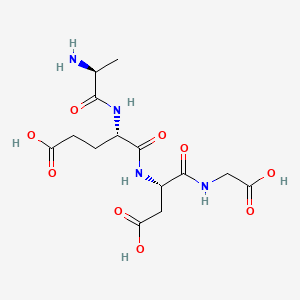
- Formula
- C14H22N4O9
- Weight
- 390.349 Da
- CAS
- 307297-39-8
- PubChem CID
- 219042
- Exact Mass
- 390.1387 Da
- LogP
- -5.5
- TPSA
- 225 Ų
- H-Bond Donors
- 7
- H-Bond Acceptors
- 10
- Rotatable Bonds
- 12
- Complexity
- 607
Identifiers (SMILES, InChI)
InChI=1S/C14H22N4O9/c1-6(15)12(25)17-7(2-3-9(19)20)14(27)18-8(4-10(21)22)13(26)16-5-11(23)24/h6-8H,2-5,15H2,1H3,(H,16,26)(H,17,25)(H,18,27)(H,19,20)(H,21,22)(H,23,24)/t6-,7-,8-/m0/s1
HGHOBRRUMWJWCU-FXQIFTODSA-NResearch Indications
Hormonal
Reactivates telomerase (hTERT) in human somatic cells, extending telomere length dose-dependently. Khavinson et al. 2003 (PMID: 12937682); confirmed in 2025 Biogerontology study (PMID: 40908429).
Restores pineal gland melatonin secretion in aged monkeys and humans. Studied in geriatric populations aged 60-80 (St. Petersburg Institute of Bioregulation and Gerontology).
Immune
Increases lymphocyte proliferation in the thymus, enhancing interferon-gamma production by T-cells. Preclinical animal models.
Reduced spontaneous tumor formation and metastasis in mouse models. Preclinical evidence from rodent studies.
Neurological
Produced positive clinical effect in 90% of treated patients in a human clinical trial on retinitis pigmentosa. Small clinical study.
Increased superoxide dismutase, glutathione peroxidase, and glutathione-S-transferase in aging rat models. Preclinical evidence.
Longevity Protocol
Extended protocols of 10-20 day courses repeated 2-3 times annually show cumulative telomere elongation. Clinical case report demonstrated telomere length increase from 6.45 to 6.59 kb and biological age reduction of 7.9 years over 12 months.
Long-term Epithalon administration reduced spontaneous tumor incidence and metastasis in aging mice, suggesting sustained courses may provide cumulative cancer-protective benefits.
Extended protocol combining Epithalon with complementary therapies showed measurable biological age reduction through multiple biomarkers over sustained treatment periods.
Neuroendocrine Restoration
Long course protocols restore melatonin secretion by the aging pineal gland in both primates and humans, with sustained benefits for circadian rhythm and sleep architecture.
Extended Epithalon courses increase SOD, glutathione peroxidase, and glutathione-S-transferase activity in aging tissues, providing sustained protection against oxidative damage.
Anti-Aging & Telomere Biology
Epithalon reactivates telomerase catalytic subunit (hTERT) in human somatic cells, extending telomere length beyond the Hayflick limit in fibroblast cultures. N-acetyl amidate form is proposed to have improved stability.
In vitro studies show epithalon extends replicative lifespan of human fibroblasts by 44% through telomerase-dependent mechanisms. Clinical evidence in humans remains limited to small Russian studies.
Neuroendocrine & Antioxidant
Epithalon directly influences pineal gland melatonin synthesis. Animal studies suggest restoration of age-related melatonin decline, though human data is preliminary.
Preclinical research indicates antioxidant, neuroprotective, and antimutagenic effects through both specific pineal mechanisms and nonspecific antioxidant pathways. Not yet validated in controlled human trials.
Research Protocols
inhaled Injection
The mucociliary apparatus is the nasal cavity's primary defense mechanism, clearing inhaled particles, pathogens, and allergens toward the nasopharynx for swallowing.
| Goal | Dose | Frequency | Duration |
|---|---|---|---|
| General Research Protocol | 50-600 mcg | Per protocol | — |
| General Research Protocol | 5-25 mg, 1-5 mg | Per protocol | — |
intranasal Injection
Epithalon (Intranasal) refers to the administration of the synthetic tetrapeptide Ala-Glu-Asp-Gly via the intranasal route, leveraging the nose-to-brain pathway to potentially achieve higher central nervous system concentrations than conventional subcutaneous injection. This article focuses specific
| Goal | Dose | Frequency | Duration |
|---|---|---|---|
| Limitations | 50-600 mcg | Per protocol | —(Route: Intranasal) |
| Standard IN protocol | 1-3 mg, 2-6 mg | Per protocol | — |
| Frequency | See literature | Daily | — |
| Disadvantages vs IN | 5-10 mg, 2-6 mg, 1-3 mg | Once daily | 10-20 days(Route: Subcutaneous Injection, Intranasal) |
intravenous Injection
Subcutaneous vs Intravenous Administration - Subcutaneous (SC): The most common route in published protocols. - Intravenous (IV): Used in some Russian clinical settings.
| Goal | Dose | Frequency | Duration |
|---|---|---|---|
| Some human observational studies and repr | 5 mg, 10 mg | Per protocol | 10 days |
| Human observational studies | 5-10 mg | Per protocol | — |
intramuscular Injection
| Goal | Dose | Frequency | Duration |
|---|---|---|---|
| [Thymalin](/docs/peptides/thymalin) | 10 mg | Daily | —(Route: Subcutaneous Injection, Intramuscular Injection) |
subcutaneous Injection
Telomerase-activating tetrapeptide. Administered in short intensive cycles: 20 days on, 4-6 months off.
| Goal | Dose | Frequency | Duration |
|---|---|---|---|
| Standard cycle | 5,000 mcg (5 mg) | Once daily | 20 days(Evening/bedtime. Then 4-6 month off-cycle. ~2 cycles per year.) |
| Alternative intensive cycle | 10,000 mcg (10 mg) | Once daily | 10 days(Same total cycle dose (100 mg). Then 4-6 month off-cycle.) |
Reconstitution Guide (10mg vial + 2mL BAC water)
- Wipe vial tops with alcohol swab
- Draw 2.0 mL bacteriostatic water into syringe
- Inject slowly down the inside wall of the peptide vial
- Gently swirl to dissolve — never shake
- Resulting concentration: 5 mg/mL
- For 5 mg dose: draw 100 units (1.00 mL) — full syringe
- Store reconstituted vial refrigerated at 2-8°C
intraperitoneal Injection
- Rodent Equivalent: 0.1-1.0 µg/day intraperitoneal injection for 10 days per course, with 2-5 courses administered over the animal's remaining lifespan (Anisimov et al., 1998).
| Goal | Dose | Frequency | Duration |
|---|---|---|---|
| Rodent Equivalent | 0.1-1.0 µg | Per protocol | 10 days(Route: Intraperitoneal) |
topical
Administered via topical.
sublingual Injection
Sublingual or intranasal delivery systems are being explored as alternatives to injection, but subcutaneous administration remains the established research route.
oral
Epithalon IN + Melatonin (Circadian Support) Epithalon stimulates endogenous melatonin production through pineal gland mechanisms, while exogenous melatonin (0.5-3 mg oral, 30-60 minutes before bedtime) provides immediate circadian support.
| Goal | Dose | Frequency | Duration |
|---|---|---|---|
| Some human observational studies and repr | 5 mg, 10 mg | Per protocol | 10 days |
| Human observational studies | 5-10 mg | Per protocol | — |
| General Research Protocol | 50-600 mcg | Per protocol | — |
| Production through pineal gland mechanism | 0.5-3 mg | Per protocol | — |
| General Research Protocol | 5-25 mg, 1-5 mg | Per protocol | — |
Interactions
Peptide Interactions
Since epithalon restores endogenous melatonin secretion, exogenous melatonin supplementation between courses could maintain circadian benefits. Some practitioners combine low-dose melatonin (0.3-1 mg) nightly between epithalon courses.
The best-documented combination. The 12-year Khavinson study used alternating or concurrent 10-day courses of epithalon (pineal peptide) and thymalin (thymic peptide), achieving 50% mortality reduction in elderly subjects. See Thymalin-Epithalon Combination Protocol for detailed analysis.
- Both are broad gene expression modulators. Epithalon activates telomerase and modulates immune/circadian genes, while GHK-Cu affects ~32% of human genes toward youthful patterns. Theoretical complementary anti-aging through telomeric and epigenomic mechanisms.
Both target fundamental aging mechanisms — Epithalon via telomere maintenance, Humanin via mitochondrial protection. Theoretical multi-target geroprotective synergy.
Epithalon modulates immune gene expression (CD5, IL-2, IFN-gamma) while Thymosin Alpha-1 directly activates T-cell and NK cell immunity. Potential synergy for immune system rejuvenation in aging.
Epithalon IN + Pinealon IN (Same Pathway, Complementary Targets) Both peptides can be administered intranasally, sharing the same nose-to-brain delivery pathway but targeting different downstream mechanisms.
Intranasal Epithalon may provide enhanced bioavailability to the optic pathway compared to systemic injection, given the proximity of the olfactory bulb to the optic chiasm. Combining with Retinalamin (which targets retinal tissue directly) provides comprehensive visual system support from two an...
Semax is the most clinically validated intranasal peptide, with regulatory approval in Russia and extensive safety data over decades. Combining Semax IN (for BDNF modulation and acute neuroprotection) with Epithalon IN (for telomerase activation and melatonin regulation) provides complementary ne...
The classic Khavinson anti-aging combination of thymic (Vilon) and pineal (Epithalon) bioregulators, with each administered via its optimal route: Vilon orally (leveraging PepT1 dipeptide transport) and Epithalon intranasally (leveraging nose-to-brain delivery). This route-optimized combination m...
Cortagen's neuroprotective and nerve regeneration effects complement Epithalon's pineal and retinal activity. Both are tetrapeptides suitable for intranasal delivery. Co-administration could provide comprehensive CNS bioregulation covering telomere maintenance (Epithalon), circadian regulation (E...
Epithalon restores endogenous melatonin secretion patterns through pineal AANAT modulation, while DSIP (Delta Sleep-Inducing Peptide) directly promotes delta-wave sleep architecture. The combination provides complementary mechanisms for circadian rhythm normalization and sleep quality improvement...
Combining Semax IN (for BDNF modulation and acute neuroprotection) with Epithalon IN (for telomerase activation and melatonin regulation) provides complementary neuroprotective and anti-aging mechanisms via the same delivery route.
Epithalon modulates neuroendocrine function including HPA axis-related gene expression. As a pineal bioregulator, it influences the circadian cortisol-melatonin balance. ACTH-driven cortisol elevation may counteract epithalon's circadian normalization effects by suppressing pineal melatonin synthesis. Monitor adrenal function and circadian biomarkers when combining epithalon with ACTH or corticotropin-based therapies.
Reported Research Timeline
Rapid onset expected; half-life of ~30 minutes indicates fast-acting pharmacokinetics
Due to short half-life (~30 minutes), effects are expected per-dose; consistent daily administration maintains therapeutic levels
Regular administration schedule required; effects are dose-dependent and do not persist between doses
Quality Indicators
What to look for
- Well-established safety profile
- Extensive peer-reviewed research base
Caution
- Short half-life may require frequent dosing
Red flags
- Potential carcinogenicity concerns
Frequently Asked Questions
References (14)
- [13]Khavinson V, Razumovsky M, Trofimova S, et al Pineal-regulating tetrapeptide epitalon improves eye retina condition in retinitis pigmentosa Neuro Endocrinol Lett (2002)
- [1]Anisimov VN, Mylnikov SV, Khavinson VK Pineal peptide preparation epithalamin increases the lifespan of fruit flies, mice and rats Mech Ageing Dev (1998)
- [10]Anisimov VN, Khavinson VK, Alimova IN, et al Epithalon decelerates aging and suppresses development of breast adenocarcinomas in transgenic her-2/neu mice Bull Exp Biol Med (2002)
- [12]Khavinson VK, Shataeva LK, Chernova AA Effect of regulatory peptides on gene transcription Bull Exp Biol Med (2003)
- [11]Gery S, Komatsu N, Baldjyan L, et al The circadian gene per1 plays an important role in cell growth and DNA damage control in human cancer cells Mol Cell (2006)
- [14]
- [2]Khavinson VK, Bondarev IE, Butyugov AA Epithalon peptide induces telomerase activity and telomere elongation in human somatic cells Bull Exp Biol Med (2003)
- [3]Anisimov VN et al Effect of Epitalon on biomarkers of aging, life span and spontaneous tumor incidence in female Swiss-derived SHR mice Biogerontology (2003)
- [5]Lin'kova NS, Kuznik BI, Khavinson VK Peptide Ala-Glu-Asp-Gly and interferon gamma: their role in immune response during aging Adv Gerontol (2012)
- [6]Lin'kova NS et al Peptide Regulation of Skin Fibroblast Functions during Their Aging In Vitro Bull Exp Biol Med (2016)
- [7]Vinogradova IA, Bukalev AV, Zabezhinski MA, et al Effect of Ala-Glu-Asp-Gly peptide on life span and development of spontaneous tumors in female rats Bull Exp Biol Med (2007)
- [8]Kossoy G, Anisimov VN, Ben-Hur H, et al Effect of the synthetic pineal peptide epitalon on spontaneous carcinogenesis in female C3H/He mice In Vivo (2006)
- [9]Anisimov VN et al Inhibitory effect of the peptide epitalon on the development of spontaneous mammary tumors in HER-2/neu transgenic mice Int J Cancer (2002)
- [4]Khavinson VK, Tarnovskaya SI, Linkova NS, et al Short cell-penetrating peptides: a model of interactions with gene promoter sites Bull Exp Biol Med (2013)
Continue researching Epithalon
Keep scientific evidence separate from commercial availability. Review how claims are evaluated, explore question-led research paths, or inspect disclosed source records without changing the editorial conclusions on this page.