Beta-Glucans
Beta-glucans are a group of naturally occurring polysaccharides composed of glucose monomers linked by beta-glycosidic bonds, found in the cell walls of cereals, fungi, yeast, and bacteria. They are recognized for their immunomodulatory properties and ability to support cardiovascular and metabolic health.
Evidence-led profile
Research snapshot
- Evidence stage
- Emerging research
- References
- 4 linked sources
- Research coverage
- 1 area
- Editorial review
- Mar 8, 2026
Published by the PepGuide Editorial Team using our research methodology.
Overview
Beta-glucans are a diverse class of polysaccharides consisting of D-glucose monomers joined by beta-glycosidic linkages. Their biological activity and physical properties vary significantly depending on their source and structural characteristics, including molecular weight, degree of branching, and solubility. Cereal-derived beta-glucans, particularly those from oats and barley, are predominantly beta-1,3/1,4-linked and are soluble fibers that form viscous solutions in the gastrointestinal tract, while fungal and yeast beta-glucans are typically beta-1,3/1,6-linked and are recognized primarily for their immune-stimulating effects.
The cardiovascular benefits of oat beta-glucan have been well established, with regulatory agencies in multiple countries authorizing health claims related to cholesterol reduction. The viscous gel formed by soluble beta-glucans in the intestine slows the absorption of cholesterol and bile acids, leading to reduced serum LDL cholesterol concentrations. Additionally, this gel formation moderates postprandial glucose and insulin responses, which may benefit individuals with insulin resistance or type 2 diabetes.
Fungal and yeast-derived beta-glucans interact with pattern recognition receptors on innate immune cells, particularly Dectin-1 and complement receptor 3 (CR3), triggering downstream signaling cascades that enhance phagocytosis, cytokine production, and natural killer cell activity. These immunomodulatory properties have prompted investigation into their potential roles in infection resistance, wound healing, and adjunctive cancer therapy. Beta-glucans are available as dietary supplements and are also incorporated into functional foods and medical nutrition products.
Research
Reported Effects
Immune Defense:: Clinical evidence strongly supports its use in reducing the duration and severity of respiratory infections.. Metabolic Health:: Highly effective for lipid profile improvement, particularly when sourced from oats.. Digestive Health:: Acts as a functional fiber that improves bowel regularity and gut microbiota composition.. Cancer Support:: Emerging as a significant adjuvant therapy to boost immune response during conventional cancer treatments.
Safety and Limitations
Common Side Effects
- Gastrointestinal symptoms are the most frequently reported adverse effects, including flatulence, bloating, abdominal discomfort, and diarrhea, particularly during the initial days of supplementation.
- Nausea has been reported in a minority of users, generally resolving with continued use or dose reduction.
- Mild headache and fatigue have been occasionally noted in clinical trial participants, though causality is not firmly established.
Contraindications
- Immunocompromised individuals or those on immunosuppressive therapy should exercise caution, as beta-glucans are potent immunomodulators that stimulate macrophage, NK cell, and dendritic cell activity. Overstimulation of the immune system could theoretically exacerbate autoimmune conditions or interfere with immunosuppressive regimens.
- Individuals with known hypersensitivity to mushroom-derived products (for fungal-source beta-glucans) or to oats and barley (for cereal-source beta-glucans).
- Patients with active autoimmune diseases such as lupus, rheumatoid arthritis, or multiple sclerosis should consult a physician before use.
Drug Interactions
- Immunosuppressants (cyclosporine, tacrolimus, azathioprine, mycophenolate): Beta-glucans may counteract immunosuppressive effects by upregulating immune cell activity, potentially leading to graft rejection or disease flares.
- Antihypertensive medications: Some beta-glucan preparations may modestly lower blood pressure, creating additive hypotensive effects.
- Anticoagulants and antiplatelet agents: Certain fungal beta-glucans have demonstrated mild anticoagulant properties in vitro; monitor for increased bleeding risk.
- Antidiabetic medications: Soluble beta-glucans from oats can slow glucose absorption, potentially enhancing hypoglycemic effects.
Special Populations
- Pregnancy and lactation: Insufficient safety data exists for supplemental doses; dietary intake from food sources (oats, barley) is considered safe.
- Pediatric use: Limited clinical data; use in children should be supervised by a healthcare provider.
- Organ transplant recipients: Strongly discouraged without physician oversight due to immune activation potential.
Monitoring
- Monitor immune markers (WBC differential, inflammatory cytokines) in immunocompromised patients.
- Blood glucose monitoring in diabetic patients using soluble beta-glucan supplements.
- Blood pressure monitoring when combining with antihypertensives.
- Periodic assessment of gastrointestinal tolerance.
Common Side Effects
- Gastrointestinal Distress:: High doses of fiber-based beta-glucans may cause bloating or flatulence in sensitive individuals.
- Interactions:: May theoretically interfere with immunosuppressant medications due to its immune-stimulating nature.
- Mild Fatigue:: Some users report temporary changes in energy levels as the immune system is modulated.
Mechanism of Action
Pattern Recognition & Innate Immune Activation
Beta-glucans are polysaccharides composed of glucose monomers linked by beta-1,3-glycosidic bonds (with beta-1,6 branches in fungal sources). They function as pathogen-associated molecular patterns (PAMPs) recognized by pattern recognition receptors on innate immune cells. The primary receptor is Dectin-1 (CLEC7A), a C-type lectin receptor on macrophages, dendritic cells, and neutrophils that specifically binds beta-1,3-glucan chains with a minimum of seven glucose residues (PMID: 11572932).
Dectin-1/Syk/NF-kB Signaling Cascade
Dectin-1 engagement by beta-glucan triggers phosphorylation of its intracellular hemITAM motif by Src family kinases, recruiting and activating Syk kinase. Syk activates the CARD9-Bcl10-MALT1 complex, which drives NF-kB and MAPK signaling. This results in transcription of pro-inflammatory cytokines (TNF-alpha, IL-1beta, IL-6), chemokines (CXCL8, CCL3), and reactive oxygen species production via NADPH oxidase assembly. Dectin-1 also collaborates with TLR2 for synergistic cytokine production (PMID: 17159984).
Trained Immunity (Innate Immune Memory)
Beta-glucans induce trained immunity — a form of innate immune memory mediated by epigenetic reprogramming. Exposure to beta-glucan causes monocytes/macrophages to undergo histone modifications (H3K4me3, H3K27ac) at promoters of inflammatory genes via an mTOR-HIF-1alpha metabolic shift from oxidative phosphorylation to aerobic glycolysis. This primes cells for enhanced cytokine responses to subsequent infections for weeks to months (PMID: 22442370).
Complement Activation & Adaptive Immunity
Particulate beta-glucans activate the alternative complement pathway by binding complement receptor 3 (CR3/CD11b-CD18) on neutrophils, enhancing phagocytosis and tumor cell cytotoxicity. Beta-glucans also bridge innate and adaptive immunity by promoting dendritic cell maturation and antigen presentation, enhancing Th1 and Th17 responses (PMID: 17895382).
Cholesterol-Lowering (Cereal Beta-Glucans)
Oat/barley beta-1,3/1,4-glucans form a viscous gel in the intestinal lumen that traps bile acids, increasing their fecal excretion and driving hepatic cholesterol conversion to bile acids via CYP7A1 upregulation, reducing circulating LDL cholesterol.
Research protocol summary
- Typical Dose
- Multi-mushroom extracts often standardize to 20-30% beta-glucan content for transparency.
These values summarize cataloged research protocols. They are not personal dosing instructions or medical guidance.
Molecular Structure
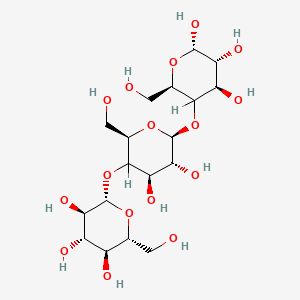
- Formula
- C18H32O16
- Weight
- 504.4 Da
- PubChem CID
- 439262
- Exact Mass
- 504.1690 Da
- LogP
- -6.9
- TPSA
- 269 Ų
- H-Bond Donors
- 11
- H-Bond Acceptors
- 16
- Rotatable Bonds
- 7
- Complexity
- 641
Identifiers (SMILES, InChI)
InChI=1S/C18H32O16/c19-1-4-7(22)8(23)12(27)17(31-4)34-15-6(3-21)32-18(13(28)10(15)25)33-14-5(2-20)30-16(29)11(26)9(14)24/h4-29H,1-3H2/t4-,5-,6-,7-,8+,9-,10-,11-,12-,13-,14?,15?,16+,17+,18+/m1/s1
FYGDTMLNYKFZSV-URKRLVJHSA-NReferences (4)
- [1]Beta Glucan: Supplement or Drug? From Laboratory to Clinical Trials
→ This review highlights beta-glucans as potent immunostimulants with over 80 clinical trials evaluating their role in immune reaction modulation and cancer treatment support.
- [2]Interaction between β-glucans and gut microbiota: a comprehensive review
→ Research confirms that beta-glucans act as prebiotic fibers that stimulate beneficial gut bacteria, leading to improved metabolic health and intestinal fermentation.
- [3]The effect of oat β-glucan on LDL-cholesterol, non-HDL-cholesterol and apoB for CVD risk reduction: a systematic review and meta-analysis of randomised-controlled trials
→ A meta-analysis of randomized controlled trials found that oat beta-glucan significantly reduces LDL-cholesterol and apoB, markers for cardiovascular disease risk.
- [4]Effect and Tolerability of a Nutritional Supplement Based on a Synergistic Combination of β-Glucans and Selenium- and Zinc-Enriched Saccharomyces cerevisiae in Volunteers Receiving the Influenza or the COVID-19 Vaccine
→ A clinical study showed that yeast-based beta-glucans increased CD4+ T cell levels in vaccinated individuals, suggesting an adjuvant effect on vaccine responses.
Continue researching Beta-Glucans
Keep scientific evidence separate from commercial availability. Review how claims are evaluated, explore question-led research paths, or inspect disclosed source records without changing the editorial conclusions on this page.