Selank
Selank is a synthetic heptapeptide analogue of the immunomodulatory peptide tuftsin, developed at the Institute of Molecular Genetics of the Russian Academy of Sciences as an anxiolytic nootropic with GABAergic and monoaminergic activity.
Evidence-led profile
Research snapshot
- Evidence stage
- Established research record
- References
- 14 linked sources
- Research coverage
- 13 areas
- Editorial review
- Mar 8, 2026
Published by the PepGuide Editorial Team using our research methodology.
Overview
Selank was designed by extending the natural tetrapeptide tuftsin (Thr-Lys-Pro-Arg) with a Pro-Gly-Pro tripeptide tail to improve metabolic stability. This modification preserves tuftsin's immunomodulatory activity while conferring potent anxiolytic and nootropic effects mediated through GABAergic and monoaminergic systems. Unlike benzodiazepines, Selank produces anxiolysis without sedation, cognitive impairment, or dependence liability. Its dual action on both the immune and nervous systems makes it a unique peptide in the regulatory peptide class.
Research
Blood-Brain Barrier Penetration
As a glyproline peptide, Selank exhibits inherent BBB permeability superior to most oligopeptides. Glyprolines are well known for regulatory, protective, and repair-promoting effects throughout the body (Bakaeva et al., 2017). The N-acetylation and amidation of Selank further enhance this BBB penetration, increasing both the amount of peptide reaching the CNS and its receptor binding potency once there.
Anxiety
Perhaps the most thoroughly studied property of Selank is its anxiolytic activity. Research shows effects comparable to benzodiazepines, including reduced anxiety, lower stress, and improved mood via interaction with the GABAA receptor system (Volkova et al., 2016). Critically, Selank does not appear to be habit-forming, unlike benzodiazepines which carry well-known abuse and dependence potential. Selank may even assist in weaning patients from benzodiazepine dependence.
Combination studies with benzodiazepines have shown additive benefits, particularly in treating the often-resistant form of anxiety known as unpredictable chronic mild stress (Kasian et al., 2016).
Modifications: Acetylation and Amidation
N-Acetylation alters the charge, hydrophobicity, and size of the peptide, primarily extending half-life without affecting overall function (Linster & Wirtz, 2018; Ree et al., 2018). Most human proteins are naturally N-acetylated, making this a well-characterized modification.
Amidation protects against proteolytic degradation, enhances pH stability, increases receptor binding affinity, and improves lipid solubility for better BBB penetration. Natural amidated peptides include oxytocin, thyroid releasing hormone, and vasopressin. The combination of both modifications produces synergistic enhancement of Selank's CNS activity.
Anticoagulant Properties
Animal studies have revealed that Selank helps regulate the coagulation cascade, maintaining homeostasis and offsetting effects of both hypercoagulation and, to a lesser extent, bleeding (Liapina et al., 2006). Supporting this, research in rat mesenteric vessels shows that glyprolines prevent microcirculation hypercoagulation resulting from immobilization (Kopylova et al., 2003). This gentle regulation of coagulation without overcompensation makes Selank attractive for developing blood clot prophylactics as an alternative to heparin.
Gene Expression Effects
Selank influences the expression of genes encoding enkephalins and inflammatory cytokines, providing a molecular basis for its combined anxiolytic and immunomodulatory actions. These gene-level effects connect neuroendocrine and immune system regulation through shared peptidergic pathways.
Ongoing & Future Research
- Investigation of N-Acetyl Selank Amidate as an enhanced-stability derivative with potentially superior pharmacokinetics
- Research into Selank's effects on microglial activation and neuroinflammation in neurodegenerative disease models
- Exploration of Selank in PTSD and trauma-related anxiety, building on its GABAergic and enkephalinergic mechanisms
- Studies on Selank's gut-brain axis effects given its tuftsin-derived immunomodulatory properties and the gut immune system's role in anxiety
- Interest in Selank for withdrawal symptom management (alcohol, benzodiazepine) given its GABAergic effects without dependence liability
Nootropic and Cognitive Enhancement
Research has demonstrated nootropic activity of Selank in animal models, with improvements in learning and memory consolidation. These effects are associated with modulation of neurotransmitter systems and enhanced neurotrophic factor expression in brain regions critical for cognition. Kozlovskii & Danchev (2003) — Neurosci. Behav. Physiol.
Immune Modulation
As a tuftsin analogue, Selank retains immunomodulatory properties including enhancement of phagocyte activity and regulation of cytokine balance. Studies have demonstrated its capacity to modulate both innate and adaptive immune responses, suggesting potential applications in immune dysregulation. Uchakina et al. (2008) — Int. Immunopharmacol.
Neuroprotection and BDNF
Selank increases expression of BDNF and modulates monoamine neurotransmitter levels in the brain, supporting neuronal survival, plasticity, and differentiation. Its interaction with the GABA system has been confirmed through studies showing altered GABAergic signaling following Selank administration. Kozlovskaya et al. (2003) — Bull. Exp. Biol. Med.
Cognitive Enhancement
Nasal administration of Selank in rats produces changes in mRNA levels for 36 different genes associated with plasma membrane function and ion-dependent learning and memory (Kolomin et al., 2013). Treated rats show increased memory trace stability, resulting in greater long-term retention of learning. Selank also rescues memory and learning following brain damage by inhibiting the catecholamine system and offsetting excitotoxic neuron death -- a process seen in head injury, drug overdose, and neurodegenerative diseases like Parkinson's disease.
Selank increases BDNF levels, which stimulates neuronal growth and differentiation. The enhanced BBB penetration of N-Acetyl Selank Amidate likely makes it a more potent nootropic than standard Selank.
Immune System
Animal studies demonstrate that Selank suppresses production of the inflammatory cytokine IL-6 (Uchakina et al., 2008). IL-6 is secreted by macrophages, bone marrow cells, and blood vessel cells. It mediates fever, neutrophil production, B cell growth, and in the CNS plays roles in sleep-associated memory consolidation and pain perception.
Research in rats suggests that Selank may modulate IL-6 expression in the CNS and thereby help reduce pain associated with asthenic symptoms in psychiatric conditions (Zozulia et al., 2008). This observation supports the hypothesis of a link between psychiatric conditions and physical pain, and suggests glyprolines may serve as regulators of neurogenic pain.
Anxiolytic Effects
Selank produces anxiolytic effects comparable to benzodiazepines in animal models of anxiety, without the associated sedation, muscle relaxation, or dependence. Its mechanism involves modulation of GABAergic neurotransmission and monoamine metabolism, providing a distinct pharmacological profile from classical anxiolytics. Zozulya et al. (2001) — Bull. Exp. Biol. Med.
Comparative studies have confirmed Selank's anxiolytic potency across multiple behavioral paradigms, demonstrating efficacy in both acute and chronic anxiety models. Seredenin et al. (2008) — Bull. Exp. Biol. Med.
Neurological/Immunological Mechanisms
GABAergic modulation:
- Selank enhances GABAergic inhibitory neurotransmission without direct benzodiazepine receptor binding (Kozlovskaya et al., PMID: 14631520)
- Modulates GABA-A receptor sensitivity through allosteric mechanisms
- Unlike benzodiazepines, does not downregulate GABA receptor expression with chronic use, explaining the absence of tolerance and dependence
Monoamine modulation:
- Increases serotonin metabolism and turnover in the hippocampus, frontal cortex, and hypothalamus
- Modulates dopamine and norepinephrine levels in emotion-regulating brain regions
- Stabilizes the serotonin/norepinephrine balance, contributing to mood-stabilizing effects distinct from SSRIs
Neurotrophic signaling:
- Upregulates BDNF expression, activating TrkB → PI3K/Akt and MAPK/ERK pathways
- Promotes neuronal plasticity, dendritic branching, and synaptogenesis in hippocampal circuits
- BDNF effects contribute to both anxiolytic and nootropic properties
Immunological mechanisms (tuftsin core):
- The Thr-Lys-Pro-Arg tetrapeptide core activates phagocytic cells via tuftsin receptors (neuropilin-1/NRP1)
- Enhances macrophage phagocytosis, neutrophil chemotaxis, and natural killer cell activity
- Modulates cytokine production: influences IL-6, TNF-α, and enkephalin gene expression
- Regulates the balance between pro-inflammatory and anti-inflammatory cytokine networks
Enkephalin gene regulation:
- Selank influences proenkephalin gene expression, connecting its anxiolytic effects to endogenous opioid peptide systems
- This enkephalin modulation may partially explain its analgesic and stress-protective properties
Safety and Limitations
Selank is approved in Russia as a nasal spray (0.15% solution) for the treatment of anxiety disorders and neurasthenia. Clinical studies and post-marketing surveillance have demonstrated a favorable safety profile with minimal reported adverse effects. No sedation, cognitive impairment, dependence, or withdrawal symptoms have been observed, distinguishing Selank from benzodiazepine anxiolytics. No significant adverse events have been reported in clinical trials. Its short half-life limits systemic accumulation risk. Long-term safety data outside of Russian clinical settings remain limited.
Common Side Effects
- Minimal side effects - excellent safety profile
- No sedation or cognitive impairment
- No tolerance, dependence, or withdrawal
Contraindications
- Known peptide allergies
- Pregnancy or breastfeeding
- Consult healthcare provider with multiple psychiatric medications
Discontinue If
- Severe allergic reactions (rash, breathing difficulty, swelling)
- Persistent injection site reactions or infection signs
- Unusual mood changes or increased anxiety
- Severe headaches or neurological symptoms
- Contaminated product signs (unusual smell, cloudiness)
- Unexplained fatigue or cognitive impairment
- Skin reactions or immune hypersensitivity
Mechanism of Action
Selank exerts its anxiolytic effects primarily through modulation of the GABAergic system, enhancing inhibitory neurotransmission without directly binding to benzodiazepine receptors. It influences the metabolism and release of monoamine neurotransmitters, including serotonin, dopamine, and norepinephrine, contributing to its anxiolytic and mood-stabilizing properties.
The peptide also increases brain-derived neurotrophic factor (BDNF) expression, supporting neuronal plasticity, survival, and differentiation. Its immunomodulatory activity derives from its tuftsin core, which activates phagocytic cells and modulates cytokine production. Selank has been shown to influence the expression of genes encoding enkephalins and inflammatory cytokines, linking its neuromodulatory and immunoregulatory actions.
Research protocol summary
- Typical Dose
- 250-500mcg per dose
- Frequency
- 1-2x daily (morning and/or evening)
- Route
- Intranasal
- Cycle Length
- 2-8 weeks on
- Storage
- Reconstituted: 2-8°C, use within 30 days
These values summarize cataloged research protocols. They are not personal dosing instructions or medical guidance.
Reconstitution Calculator
Pharmacokinetic Profile
Selank — Pharmacokinetic Curve
IntranasalIllustrative model from the listed half-life and time to peak, not measured concentration data.
Molecular Structure
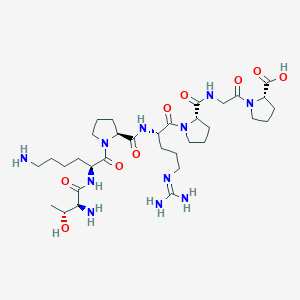
- Formula
- C33H57N11O9
- Weight
- 751.89 Da
- Length
- 7 amino acids
- CAS
- 129954-34-3
- PubChem CID
- 11765600
- Exact Mass
- 751.4341 Da
- LogP
- -6.1
- TPSA
- 322 Ų
- H-Bond Donors
- 9
- H-Bond Acceptors
- 12
- Rotatable Bonds
- 19
- Complexity
- 1360
Identifiers (SMILES, InChI)
InChI=1S/C33H57N11O9/c1-19(45)26(35)29(49)41-20(8-2-3-13-34)30(50)44-17-6-11-23(44)28(48)40-21(9-4-14-38-33(36)37)31(51)43-16-5-10-22(43)27(47)39-18-25(46)42-15-7-12-24(42)32(52)53/h19-24,26,45H,2-18,34-35H2,1H3,(H,39,47)(H,40,48)(H,41,49)(H,52,53)(H4,36,37,38)/t19-,20+,21+,22+,23+,24+,26+/m1/s1
JTDTXGMXNXBGBZ-YVHUGQOKSA-NResearch Indications
Anxiety
Clinical trials show significant reduction in anxiety symptoms comparable to benzodiazepines but without sedation or amnesia.
Research indicates effectiveness in PTSD treatment.
Reduces anticipatory anxiety and performance stress.
Cognitive
Improves memory consolidation and learning capacity.
Enhanced sustained attention during demanding cognitive tasks.
BDNF upregulation supports long-term brain health.
Immune
Balances immune system function through cytokine regulation.
Shows activity against influenza, HSV, and cytomegalovirus.
Modulates inflammatory gene expression.
Neurological
Enhanced stability analog of Selank (tuftsin derivative). Selank is approved in Russia for anxiety disorders. The N-acetyl amidate form has improved bioavailability and BBB penetration. Anxiolytic effects are mediated through GABA-ergic modulation without sedation.
Modulates BDNF and NGF expression, enhancing memory consolidation and learning. Animal studies show improved performance in memory tasks. The acetylated form provides prolonged nootropic activity compared to native Selank.
Normalizes stress-induced changes in brain monoamine levels (serotonin, dopamine, norepinephrine) in animal models. Stabilizes enkephalin degradation, prolonging endogenous anxiolytic peptide activity.
Immunological
As a tuftsin analog, N-Acetyl Selank Amidate retains immunomodulatory properties. Influences IL-6, T-helper cell balance, and innate immune function. Selank has demonstrated antiviral properties against influenza in preclinical studies.
Research Protocols
intranasal Injection
Intranasal spray provides fastest onset (15-30 minutes) and is non-invasive. Popular for as-needed anxiety relief.
| Goal | Dose | Frequency | Duration |
|---|---|---|---|
| Acute anxiety relief | 300-600mcg (1-2 sprays) | Once daily or as-needed | —(Route: Nasal spray) |
subcutaneous Injection
Anxiolytic neuropeptide administered subcutaneously. Cycle pattern: 4 weeks on, 4 weeks off to prevent tachyphylaxis.
| Goal | Dose | Frequency | Duration |
|---|---|---|---|
| Loading phase | 300 mcg | Once daily | Weeks 1-2 |
| Full dose | 500 mcg | Once daily | Weeks 3-4(4 weeks on, 4 weeks off cycle. Total protocol: 8-16 weeks.) |
Reconstitution Guide (5mg vial + 3mL BAC water)
- Wipe vial tops with alcohol swab
- Draw 3.0 mL bacteriostatic water into syringe
- Inject slowly down the inside wall of the peptide vial
- Gently swirl to dissolve — never shake
- Resulting concentration: 1.67 mg/mL
- For 300 mcg dose: draw 18 units (0.18 mL)
- For 500 mcg dose: draw 30 units (0.30 mL)
- Store reconstituted vial refrigerated at 2-8°C
Interactions
Peptide Interactions
Enhanced cognitive and anxiolytic effects when combined.
Complementary stress response mechanisms.
Both enhance BDNF via different pathways.
Balanced anxiety relief and cognition enhancement.
Balanced anxiety reduction and wakefulness.
Selank exhibits anxiolytic effects similar to low-dose benzodiazepines (diazepam, phenazepam) via allosteric modulation of the GABAA receptor, but without amnesia, withdrawal, or dependence. Co-administration with benzodiazepines may produce additive CNS depressant effects. Source: Kasian et al., Front Pharmacol 2016 (PMC4757669).
Reported Research Timeline
Mild anxiety reduction begins
Improved mental clarity and focus
Enhanced stress resilience and emotional stability
Peak cognitive enhancement effects
Sustained benefits for several days
Quality Indicators
What to look for
- White to off-white lyophilized powder without clumping
- Clear, colorless reconstituted solution
- Clear batch information, purity testing, expiration dates
- Appropriate packaging and cold shipping
Caution
- Unusual smell or burning sensation may indicate bacterial contamination
- Room temperature shipping of nasal spray
Red flags
- Yellowing, clumping, or moisture exposure
- Persistent cloudiness after reconstitution
Frequently Asked Questions
References (14)
- [9]Seredenin, S. B. et al Comparative analysis of anxiolytic effect of Selank Bull. Exp. Biol. Med. (2008)
- [10]Kozlovskii, I. I. & Danchev, N. D Nootropic activity of Selank Neurosci. Behav. Physiol. (2003)
- [1]GABAergic Gene Expression Study (2016)
- [2]GAD Clinical Trial (2008)
- [3]BDNF Enhancement Study (2010)
- [4]Memory Consolidation Study (2007)
- [5]Inflammation-Related Gene Expression Modulation
- [8]Zozulya, A. A. et al Selank anxiolytic effects Bull. Exp. Biol. Med. (2001)
- [7]Antiviral Activity Study
- [13]
- [12]Kozlovskaya, M. M. et al Interaction of Selank with the GABA system Bull. Exp. Biol. Med. (2003)
- [14]Medvedev et al — Anxiolytic profile of Selank in generalized anxiety disorder Zh. Nevrol. Psikhiatr. (2014)
- [11]
- [6]
Continue researching Selank
Keep scientific evidence separate from commercial availability. Review how claims are evaluated, explore question-led research paths, or inspect disclosed source records without changing the editorial conclusions on this page.